































Table of Contents
- Key Points
- What is LLaMA?
- The History and Evolution of LLaMA
- Implementing LLaMA and Best Use Methods
- Advantages and Disadvantages of Using LLaMA
- Common Use Cases for LLaMA
- Frequently Asked Questions about LLaMA
- Related Questions


What is LLaMA?
Defining LLaMA: An Open Source Language Model
LLaMA, which stands for Large Language Model Meta AI, is an open-source language model designed to advance research in artificial intelligence. Unlike proprietary models with restricted access, LLaMA operates on open data and makes its code available for public use. This open-source nature fosters collaboration, innovation, and a deeper understanding of how these models function.
This makes it a particularly appealing choice for those seeking more flexible and understandable AI Tools. LLaMA models are built with open data, which allows the code to be open for all to use. This open nature of LLaMA provides several key benefits:
Transparency and Customization
LLaMA’s open-source architecture ensures that its workings are transparent. This transparency allows researchers and developers to scrutinize the model's internal mechanisms, understand its strengths and weaknesses, and identify potential biases.
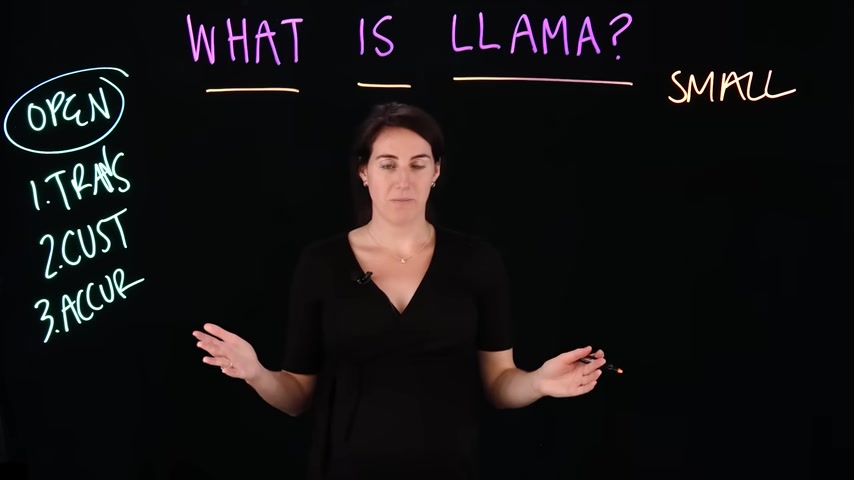
Furthermore, the customization options available with LLaMA are extensive. Developers can fine-tune the model for specific tasks, tailoring it to particular domains or applications. This level of customization is crucial for achieving optimal performance in niche areas, allowing organizations to adapt the model to their precise needs. There are many benefits to customization and being able to parse the mode, creating smaller models and fine tuning to make sure the model works specific to the use case
.
Enhanced Accuracy and Efficiency
Compared to many other LLMs, LLaMA distinguishes itself by achieving high accuracy with relatively smaller model sizes. This efficiency stems from architectural innovations that enable LLaMA to perform effectively with fewer parameters. The result is a model that requires less computational power and fewer resources to train and deploy. This smaller size and open model, there is less time and costs
.
The History and Evolution of LLaMA
LLaMA's Journey: From Inception to Today
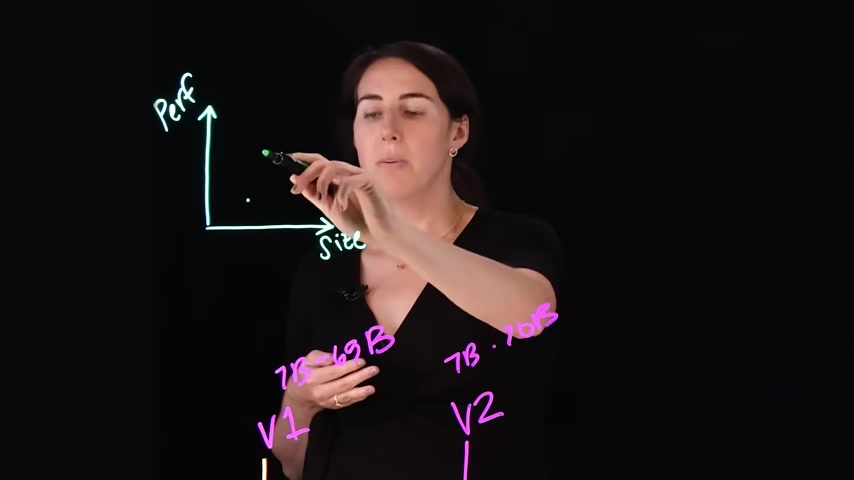
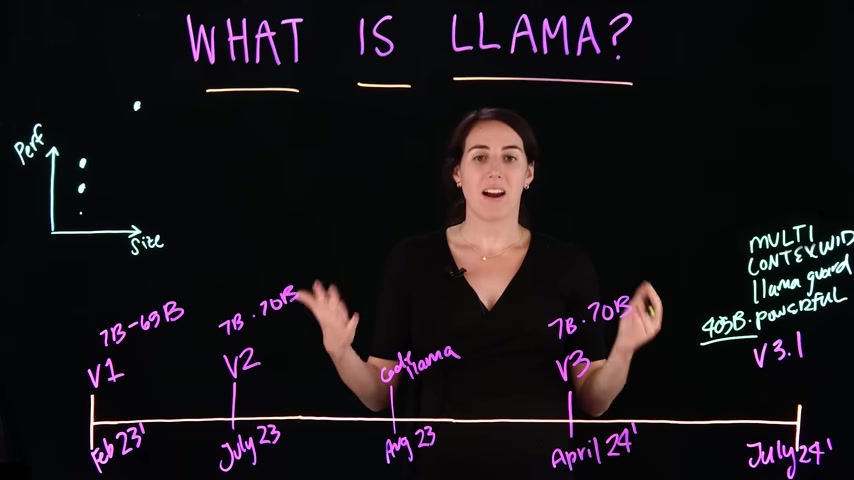
The story of LLaMA is one of continuous improvement and innovation. Since its initial release, LLaMA has undergone several significant updates, each iteration bringing new capabilities and enhancements. Understanding this history provides valuable insight into the model's current state and future direction. To fully understand the history, you must explore the different versions and models of LLaMA. The history is shown to use through this timeline:
-
LLaMA Version 1 (February 2023): The initial release of LLaMA in February 2023 introduced a range of models, from 7 billion to 65 billion parameters. Even in its first version, LLaMA demonstrated impressive performance, establishing itself as a competitive open-source alternative to larger, proprietary models.
-
LLaMA Version 2 (July 2023): LLaMA 2 arrived in July 2023 with significant performance improvements, particularly in the 7 billion parameter model. This update also increased the context length, allowing the model to process longer sequences of text and enhancing its ability to handle more complex tasks. By focusing on the 7 Billion Model and going up to 70 Billion Parameter, they saw stronger performance for the model relative to the same size .
-
Code LLaMA (August 2023): Code LLaMA, released in August 2023, was specifically designed for code generation tasks. This domain-specific model excelled at programming-related tasks, offering developers a powerful tool for code completion, bug fixing, and software development. These code models are more domain specific than prior models released .
-
LLaMA Version 3 (April 2024): The eagerly awaited LLaMA 3 launched in April 2024, featuring substantial architectural enhancements and a significant increase in scale. With models up to 405 billion parameters, LLaMA 3 achieved state-of-the-art performance on a variety of benchmarks, solidifying its position as a leading open-source LLM. The LLaMA 3 is also multi lingual allowing the ability to converse in many languages .
-
LLaMA Version 3.1 (July 2024): The latest LLaMA has released July 27, 2024 to introduce new techniques for LLaMA guard, providing better safety and security for the model. You can also use the model as an LLM judge and use synthetic data generation to help build your own model .
Performance Enhancements Over Time
Each version of LLaMA has focused on improving performance relative to model size. Early versions aimed to match the performance of larger models with fewer parameters, while later versions pushed the boundaries of what was possible, achieving state-of-the-art results on numerous benchmarks. This relentless pursuit of efficiency and accuracy has made LLaMA a favorite among researchers and practitioners.
Performance Comparison:
| Model | Release Date | Parameters | Key Improvements |
|---|---|---|---|
| LLaMA v1 | Feb 2023 | 7B - 65B | Initial release, competitive with larger models |
| LLaMA v2 | July 2023 | 7B - 70B | Improved performance, increased context length |
| Code LLaMA | Aug 2023 | N/A | Domain-specific model for code generation |
| LLaMA v3 | April 2024 | Up to 405B | State-of-the-art performance, architectural enhancements |
| LLaMA v3.1 | July 2024 | N/A | Improved security with LLaMA Guard |
Common Use Cases for LLaMA
Data Generation and Augmentation
LLaMA's powerful language generation capabilities make it an ideal tool for generating synthetic data. This is particularly useful in situations where real-world data is scarce, sensitive, or difficult to obtain. By creating synthetic datasets, researchers can train and evaluate models without compromising privacy or incurring high data acquisition costs. Use the 405 Billion parameter model and generating your own data .
Serving as an LLM Judge
With its strong performance and comprehensive Knowledge Base, LLaMA can serve as a judge for evaluating other language models. By comparing the outputs of different models against a reference standard, LLaMA can provide valuable insights into their relative strengths and weaknesses. The ability to use the model and acting as a LLM judge .
Domain-Specific Applications
The customization options available with LLaMA make it well-suited for a wide range of domain-specific applications. Whether it's fine-tuning the model for medical text analysis, financial forecasting, or legal document processing, LLaMA's flexibility allows it to be adapted to the unique requirements of various industries. It is useful for developers that want to use open source models for code development and other uses
.





Most people like































Report
Please select a reason for reporting
- 13 Reasons to Switch from Snapchat to Text Messaging
- 7 Powerful Speech to Text Apps to Boost Productivity
- 10 Best Speech to Text Tools for Effortless Transcription
- 13 Free Tools to Easily Transcribe Audio to Text
- 15 Surprising Ways Google's Speech-to-Text Boosts Productivity
- 7 Best Free Online Audio to Text Transcription Tools
- 9 Tips to Transcribe Speech to Text Faster and Better
- 13 Best Speech to Text Software for Windows 10 in 2023
- 7 Tips for Choosing the Best Transcriber for Audio to Text
- 11 Reasons Why Dragon Speech-to-Text Apps are Game-Changers
- 6 Secrets to Enhance Your Speech to Text Transcription
- 6 Brilliant Ways to Boost Productivity with Talk-to-Text on Your MacBook
- 6 Ways Transcription Software Converts Audio to Text
- 8 Tips to Transcribe Speech to Text Like a Pro
- 6 Reasons IBM Watson Speech to Text is a Game-Changer
- 14 Powerful Ways Talk-to-Text Improves Your Workflow
- 12 Top Windows Speech-to-Text Software for Efficient Transcription
- 12 Game-Changing Benefits of Apple's Speech to Text Technology
- 9 Powerful Use Cases for AWS Speech to Text Technology
- 10 Easy Steps to Transcribe YouTube Videos to Text
- transcription audio en texte
- online audio transcription
- free audio file transcription
- free ai audio transcription
- audio transcription service
- audio transcription online free
- audio transcription free online
- audio to transcription software
- audio and transcript
- ai audio transcription free
- voice recording to text converter
- translate voice recording to text
- record voice to text
- audio recording to text converter
- voice recording and transcription
- chatgpt voice to text
- gmail voice to text
- speech to text reader
- speech to text ai free
- speech to talk
- Revolutionizing Storytelling: From Novels to Screenplays with AI
- Create Engaging Animated Explainer Videos with a Free AI Tool
- Stop Multi-Subscribing: Benchmark Top AI Visual Models in One Canvas
- Best Seedance 2.5 API Provider: Every Price on the Market, Checked at Source
- AI OnlyFans: How to Generate $30,000/Month (Legally)
- Transform Your Script into an Engaging Video with AI Video Maker!
- AI Marketing Automation: A Comprehensive Guide for Small Businesses
- Midjourney Alternative for Anime Art Creators: Why PixAI May Be Better for Character Workflows
- 10 Things Most People Get Wrong About AI Image Search
- AI Girlfriend Apps: Top Choices Redefining Relationships 2025
- Top 4 AI Platforms to Extend Video: The Ultimate Comparison for Creators
- Top 8 Best AI Image Editor Tools for Creative Professionals in 2026
- Experience the Future of Virtual Assistants with F.R.I.D.A.Y. AI
- Learn How to Train an AI to Play Snake with Reinforcement Learning
- Creating a Unique AI Game Environment with Pygame
- Mastering the Classic Java Snake Game
- Discover the Power of Codex: Snake Game Created in Python
- Building an AI to Master Snake Game
- Revolutionize the Classic Snake Game with AI
- Websim AI: Create Games and Apps with Just a Few Prompts

Copyright ©2026 toolify