























Understanding Natural Language Processing: A Comprehensive Guide

Updated on Aug 17,2025








Table of Contents
- Key Points
- What is Natural Language Processing (NLP)?
- Breaking Down the NLP Process: A Stage-by-Stage Guide
- How to use NLP?
- Common Pricing Structures
- Pros and Cons of NLP
- Core Features of Robust NLP Solutions
- Use Cases of NLP Solutions
- FAQ
- Related Questions


What is Natural Language Processing (NLP)?
Defining Natural Language Processing
Natural Language Processing (NLP) is a branch of artificial intelligence that deals with enabling computers to understand, interpret, and generate human language
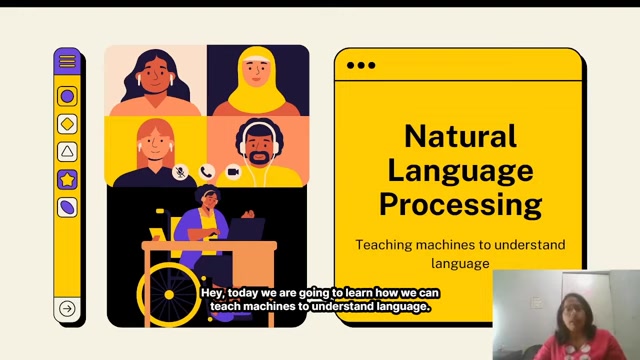
. It's about bridging the communication gap between humans and machines, allowing us to interact with technology using the language we naturally use every day, whether spoken or written.
NLP algorithms are designed to analyze and understand the structure and meaning of language, including grammar, semantics, and context. This understanding allows machines to perform a variety of tasks, from simple tasks like responding to voice commands to complex tasks like analyzing sentiment in customer reviews.
The field of NLP is continuously evolving, driven by advancements in machine learning and deep learning. These advancements have led to more sophisticated NLP models that can handle the nuances and complexities of human language with increasing accuracy.
Key Concepts in NLP:
- Understanding Language: Deciphering the meaning and intent behind text or speech.
- Generating Language: Producing coherent and contextually appropriate text.
- Contextual Awareness: Recognizing and utilizing the surrounding information to interpret language accurately.
- Adaptive Learning: Continuously improving performance based on new data and experiences.
Examples of NLP in Everyday Life
NLP is quietly working behind the scenes in many of the technologies we use daily
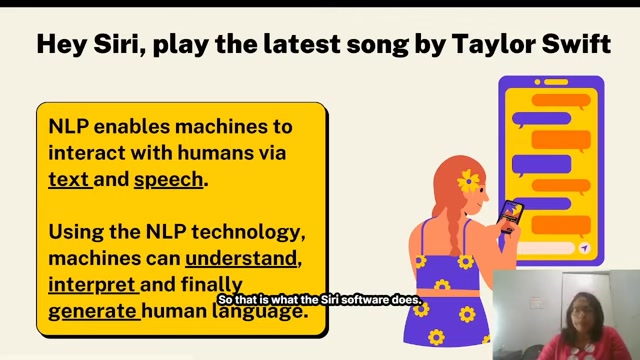
. Here are a few examples:
- Virtual Assistants: Siri, Alexa, and Google Assistant use NLP to understand and respond to your voice commands. From setting alarms to playing Music, these assistants rely on NLP to interpret your requests accurately.
- Chatbots: Many websites employ chatbots to provide instant customer support. These bots use NLP to understand your questions and provide relevant answers or direct you to the appropriate resources.
- Language Translation: Google Translate and other translation tools use NLP to convert text from one language to another. These tools analyze the structure and meaning of the source language and generate equivalent text in the target language.
- Email Filtering: Spam filters use NLP to identify and filter out unwanted emails. By analyzing the content and structure of emails, these filters can detect patterns associated with spam and prevent them from reaching your inbox.
- Search Engines: Google, Bing, and other search engines use NLP to understand the intent behind your search queries. This allows them to provide more relevant and accurate search results, even if your query contains typos or is phrased in an unusual way.
These examples demonstrate the versatility and widespread adoption of NLP in modern technology. As NLP continues to advance, we can expect to see even more innovative applications emerge.
The Core Benefits of NLP
Implementing NLP offers numerous benefits across various industries and applications. Here are some of the key advantages:
- Improved Communication: NLP streamlines communication between humans and machines, making technology more accessible and user-friendly.
- Enhanced Efficiency: NLP automates tasks such as Customer Service, data analysis, and content generation, freeing up human employees to focus on more strategic activities.
- Data-Driven Insights: NLP enables organizations to extract valuable insights from large volumes of unstructured text data, helping them make better informed decisions.
- Personalized Experiences: NLP allows businesses to tailor their products and services to meet the unique needs and preferences of individual customers.
- Increased Accuracy: Modern NLP models can analyze language with increasing accuracy, minimizing errors and improving the reliability of automated systems.
By leveraging these benefits, organizations can drive innovation, improve customer satisfaction, and gain a competitive edge in today's digital landscape.
Breaking Down the NLP Process: A Stage-by-Stage Guide
Stage 1: Text Preprocessing
The first step in NLP is to prepare the raw text data for analysis
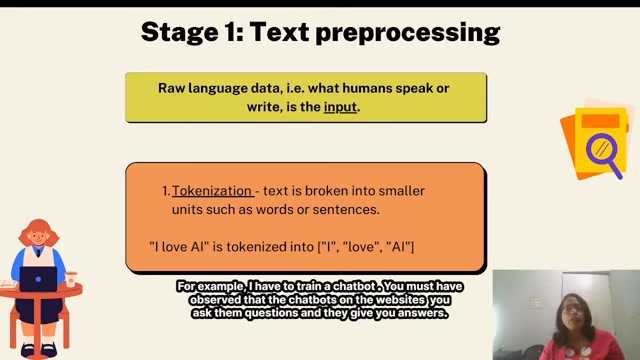
. This involves several preprocessing techniques designed to clean and standardize the text. The raw data, which can be what humans speak or write, is the initial input. This stage is critical for improving the accuracy and efficiency of subsequent NLP tasks.
- Tokenization: Breaking down the text into smaller units, such as words or sentences . For example, the sentence "I love AI" is tokenized into ["I", "love", "AI"].
- Stop WORD Removal: Eliminating common words like "is", "the", and "and" that don't contribute much to the overall meaning . Removing these stop words reduces noise and improves processing speed.
- Stemming and Lemmatization: Reducing words to their root form. Stemming is a heuristic process that chops off the ends of words, while lemmatization uses a vocabulary and morphological analysis to obtain the base or dictionary form of the words . For example, "running", "ran", and "runs" are all reduced to "run".
The decision to break the input down depends on its use . If we have a large document, it will be broken down into smaller sentences, if we have sentences, they will be broken down into words. Let's examine a very small sentence, for instance, 'I love AI'.
For example, if the system is meant to answer questions, each word is tokenized so the model can understand what is being asked and how to answer it . Depending on the scope of the project, the text would be broken down into words or sentences.
Stage 2: Text Representation
Once the text has been preprocessed, it needs to be converted into a format that machines can understand. This stage involves representing the text as numerical data, which can then be fed into machine learning models
.
-
Bag of Words (BoW): Represents text as a collection of word occurrences, ignoring the order. This method creates a vocabulary of all the unique words in the dataset and then represents each text as a vector indicating the frequency of each word in the vocabulary .
- Example:
- Sentence: AI is fun.
- Representation: {"AI": 1, "is": 1, "fun": 1}
Bag of words is a popular and simplistic tool for analysis. However, bag of words cannot tell you how important a word is .
- Example:
- TF-IDF (Term Frequency-Inverse Document Frequency): Weighs the importance of words based on how frequently they appear in a document compared to a collection of documents. Words that occur frequently in one document but are rare elsewhere are assigned higher weights, making the representation more insightful. For that model to work, I need a term frequency inverse document frequency model .
This approach helps to identify the most relevant words in a document, which can be useful for tasks like text classification and information retrieval.
Stage 3: Text Understanding
In this stage, the model attempts to extract meaningful information from the represented text . This involves identifying key entities, relationships, and sentiment.
- Named Entity Recognition (NER): Identifies specific entities within the text, such as names, dates, and locations. For example, in the sentence "Mahatma Gandhi was born in Gujarat," NER would identify "Mahatma Gandhi" as a person and "Gujarat" as a location . The words that we have, it will try to identify.
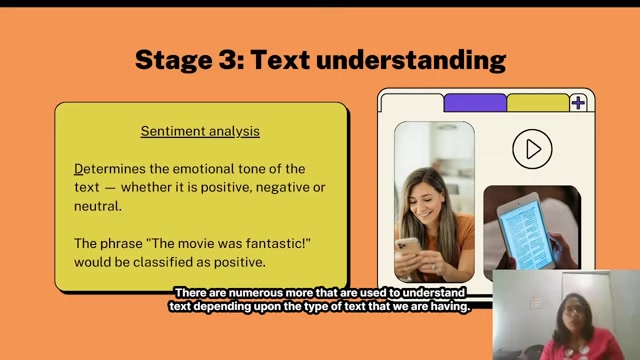
- Sentiment Analysis: Determines the emotional tone of the text, whether it is positive, negative, or neutral. For example, the phrase "The movie was fantastic!" would be classified as positive .
By extracting these elements, the model gains a deeper understanding of the text and its intended meaning.
Stage 4: Generating Responses/Output
The final stage involves using the processed data to generate a response or output . This could be anything from answering a question to translating text to providing a summary. The processed data is passed to machine learning models such as:
- Artificial neural networks
- K-nearest neighbour
- Deep learning models
These models predict outcomes or generate responses based on large training datasets . For instance:
- Input: "What will today's weather be like?"
- Output: "Today's weather will be sunny with a high of 30 degrees Celsius."







Most people like






























Report
Please select a reason for reporting
- 13 Reasons to Switch from Snapchat to Text Messaging
- 7 Powerful Speech to Text Apps to Boost Productivity
- 10 Best Speech to Text Tools for Effortless Transcription
- 13 Free Tools to Easily Transcribe Audio to Text
- 15 Surprising Ways Google's Speech-to-Text Boosts Productivity
- 7 Best Free Online Audio to Text Transcription Tools
- 9 Tips to Transcribe Speech to Text Faster and Better
- 13 Best Speech to Text Software for Windows 10 in 2023
- 7 Tips for Choosing the Best Transcriber for Audio to Text
- 11 Reasons Why Dragon Speech-to-Text Apps are Game-Changers
- 6 Secrets to Enhance Your Speech to Text Transcription
- 6 Brilliant Ways to Boost Productivity with Talk-to-Text on Your MacBook
- 6 Ways Transcription Software Converts Audio to Text
- 8 Tips to Transcribe Speech to Text Like a Pro
- 6 Reasons IBM Watson Speech to Text is a Game-Changer
- 14 Powerful Ways Talk-to-Text Improves Your Workflow
- 12 Top Windows Speech-to-Text Software for Efficient Transcription
- 12 Game-Changing Benefits of Apple's Speech to Text Technology
- 9 Powerful Use Cases for AWS Speech to Text Technology
- 10 Easy Steps to Transcribe YouTube Videos to Text
- transcription audio en texte
- online audio transcription
- free audio file transcription
- free ai audio transcription
- audio transcription service
- audio transcription online free
- audio transcription free online
- audio to transcription software
- audio and transcript
- ai audio transcription free
- voice recording to text converter
- translate voice recording to text
- record voice to text
- audio recording to text converter
- voice recording and transcription
- chatgpt voice to text
- gmail voice to text
- speech to text reader
- speech to text ai free
- speech to talk
- Create Engaging Animated Explainer Videos with a Free AI Tool
- Stop Multi-Subscribing: Benchmark Top AI Visual Models in One Canvas
- Best Seedance 2.5 API Provider: Every Price on the Market, Checked at Source
- AI OnlyFans: How to Generate $30,000/Month (Legally)
- Transform Your Script into an Engaging Video with AI Video Maker!
- AI Marketing Automation: A Comprehensive Guide for Small Businesses
- Midjourney Alternative for Anime Art Creators: Why PixAI May Be Better for Character Workflows
- 10 Things Most People Get Wrong About AI Image Search
- AI Girlfriend Apps: Top Choices Redefining Relationships 2025
- How to Reduce Quoting Errors in Salesforce with AI-Assisted Quote Creation
- AI Resume Builders: EnhanceCV, ResumeNerd AI, & Teal Compared
- ResumeAI: Crafting ATS-Optimized Resumes with AI
- AI in Resume Writing: A New Era for Job Seekers
- AI Resume Tools: Streamline Your Job Search and Land Your Dream Role
- AI Resume Optimization: The Right Way to Land Interviews
- Crafting a Killer Resume with AI: A Step-by-Step Guide
- Crafting a Winning Resume: AI Tools and Expert Tips
- AI Job Search: Level Up Your Career with AI Automation
- Empower Your Career Journey: Dynamic Resumes with AI
- AI Resume Builder: Create Professional Resumes Effortlessly

Copyright ©2026 toolify