































Table of Contents
- Key Points
- What Are Time Crystals?
- Time Crystals and Their Potential Applications
- Understanding the Use of Time Crystals
- The Economics of Time Crystals: Pricing and Accessibility
- Weighing the Potentials: Pros and Cons of Time Crystals
- Time Crystal Core Features: Redefining Quantum Potentials
- Time Crystals: Real-World Use Cases and Applications
- Frequently Asked Questions About Time Crystals
- Related Questions


What Are Time Crystals?
Defining Time Crystals
Time crystals are a revolutionary concept in physics. While traditional crystals exhibit a repeating structure in space, time crystals possess a structure that repeats in time. This means that the atoms within a time crystal are constantly oscillating in a predictable, repeating pattern, even in their lowest energy state.
This spontaneous, perpetual motion distinguishes them from other forms of matter. Imagine a clock that never stops ticking without needing any external energy source – that's essentially what a time crystal embodies.
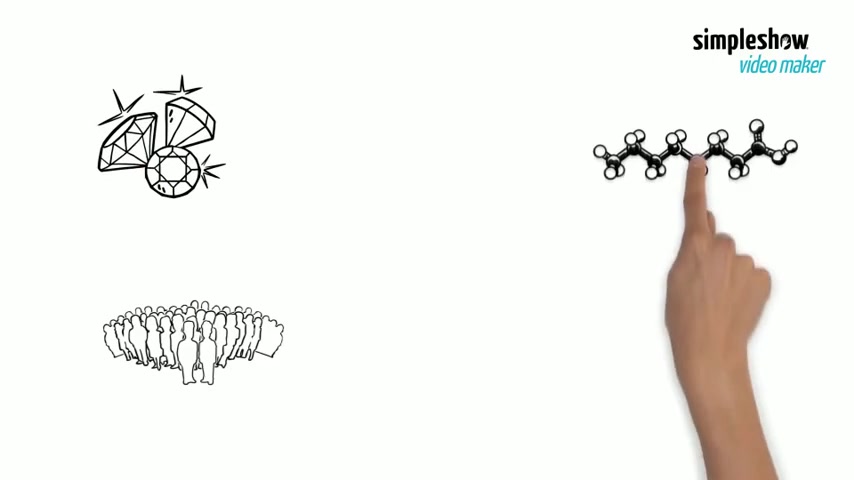
To better understand the concept, it's important to differentiate time crystals from traditional crystals, such as diamonds or quartz crystals. Regular crystals have atoms arranged in a repeating spatial pattern, while time crystals add the dimension of time to this pattern. This new phase of matter could potentially revolutionize areas like quantum computing and precision timekeeping.
The initial theoretical framework for time crystals was proposed by Nobel laureate Frank Wilczek in 2012. His concept challenged the conventional understanding of equilibrium and opened up new avenues for research into non-equilibrium systems. Researchers at institutions such as Princeton, UC Santa Barbara, and Google have since contributed significantly to both the theoretical and experimental aspects of time crystals.
Key properties of time crystals include their inherent stability and resistance to external disturbances. They can maintain their oscillating pattern even when subjected to heat, entropy, or vibrations. This makes them ideal for applications requiring high precision and reliability. This resistance to entropy is a crucial aspect of time crystals, suggesting immense potential for energy-efficient quantum technologies.
Ultimately, the creation and exploration of time crystals represent a groundbreaking advancement in our understanding of matter and its behavior. They challenge fundamental laws of physics and offer exciting possibilities for future technological innovation. Research into time crystals could pave the way for more efficient and stable quantum computers, more accurate timekeeping devices, and a host of other yet-to-be-discovered applications. This exploration into non-equilibrium matter could hold the key to some of the most challenging problems in modern physics and technology.
The Science Behind Time Crystals
The science behind time crystals is deeply rooted in quantum mechanics and non-equilibrium physics. Unlike systems in thermal equilibrium, where energy is minimized and no spontaneous motion occurs, time crystals exist in a state of constant, self-sustaining oscillation. This unique behavior arises from a delicate balance of quantum interactions and symmetries within the material.
Quantum mechanics plays a crucial role in the formation and stability of time crystals. The atoms within the crystal are governed by the laws of quantum mechanics, which dictate their behavior at the subatomic level. These quantum interactions lead to the emergence of a collective, coherent state where the atoms oscillate in a synchronized manner.
One of the defining features of time crystals is their breaking of time-translation symmetry. In conventional systems, the laws of physics remain the same regardless of when an observation is made. However, time crystals spontaneously break this symmetry by exhibiting periodic behavior. This means that the system's state changes predictably over time, repeating itself at regular intervals.
Another important aspect is the non-equilibrium nature of time crystals. They are driven systems, meaning they require an external driving force to maintain their oscillations. This driving force can be in the form of a periodic pulse or continuous irradiation. However, unlike other driven systems, time crystals do not simply absorb energy and heat up. Instead, they dissipate energy in a controlled manner, allowing them to maintain their stable, oscillating state.
The interplay of these quantum mechanical effects and time-translation symmetry breaking makes time crystals a unique and complex phase of matter. Their discovery challenges our fundamental understanding of physics and opens doors to new possibilities for technological innovation. Current research is focused on synthesizing and characterizing these crystals in different materials and exploring their potential applications in various fields.
In summary, the formation of time crystals involves a subtle interplay of quantum effects, symmetry breaking, and driving forces. They represent a significant departure from traditional equilibrium systems and could have transformative impacts on technology, particularly in quantum computing and high-precision measurement.
Time Crystals and Their Potential Applications
Quantum Computing
One of the most promising applications for time crystals lies in quantum computing.
Quantum computers leverage the principles of quantum mechanics to perform calculations that are impossible for classical computers. However, building and maintaining quantum computers is an extremely challenging task due to the delicate nature of quantum states.
Time crystals could provide a more stable and robust platform for building quantum computers. Their inherent stability and resistance to external disturbances make them ideal for storing and manipulating quantum information. The oscillating nature of time crystals could also be used to implement quantum gates, the basic building blocks of quantum algorithms.
In traditional quantum computing, qubits (quantum bits) are prone to decoherence, meaning they lose their quantum properties over time, leading to errors in calculations. Time crystals, with their inherent stability, could potentially reduce decoherence and improve the accuracy and reliability of quantum computations. This could lead to the development of more powerful and practical quantum computers.
Recent research has explored the use of time crystals to create topological qubits, which are particularly resistant to noise and errors. These topological qubits could offer a significant advantage over conventional qubits, potentially paving the way for fault-tolerant quantum computers. The development of time crystal-based quantum computing could revolutionize fields like medicine, materials science, and artificial intelligence.
In summary, time crystals represent a potentially groundbreaking avenue for advancing quantum computing. Their inherent stability and unique properties could help overcome some of the major challenges in building practical quantum computers. Further research and development in this area could transform the future of computation and have far-reaching impacts on society.
Atomic Clocks and Precision Timekeeping
Beyond quantum computing, time crystals also hold significant promise for improving atomic clocks and precision timekeeping. Atomic clocks are the most accurate timekeeping devices currently available, and they are used in a wide range of applications, including GPS navigation, telecommunications, and scientific research.
The accuracy of atomic clocks is limited by the stability of the atoms they use as their time reference. External disturbances, such as temperature fluctuations and vibrations, can affect the atoms' behavior and lead to errors in timekeeping. Time crystals, with their resistance to these disturbances, could potentially improve the stability and accuracy of atomic clocks.
The oscillating nature of time crystals could also be used to create new types of atomic clocks that are more precise and energy-efficient. By using the crystal's inherent oscillations as a time reference, it may be possible to develop clocks that are less sensitive to environmental factors and require less power to operate. This could lead to the development of smaller, more portable atomic clocks that can be used in a wider range of applications.
Currently, atomic clocks rely on complex systems to maintain the stability of the atomic time reference. Time crystals, with their self-sustaining oscillations, could simplify these systems and reduce the size, cost, and complexity of atomic clocks. This could make them more accessible to a wider range of users, including researchers, engineers, and even consumers.
In conclusion, time crystals offer a promising pathway for enhancing atomic clocks and pushing the boundaries of precision timekeeping. Their stability, resistance to disturbances, and potential for creating new types of time references could revolutionize time-sensitive technologies across various sectors.
Understanding the Use of Time Crystals
How Time Crystals Repeat in Time
Time crystals repeat in time through a fascinating mechanism related to how they are “tapped”.
Think of it like shaking Jell-O repeatedly: these periodic actions maintain the crystal's movement. According to UC Berkeley's Norman Yao, this unique response to external stimuli is the essence of what makes a time crystal behave as it does.
- Periodic Tapping: Time crystals need to be consistently influenced by an external source. This isn't just a random interaction but a precisely timed tapping to keep the internal atoms oscillating.
- Unique Response: When stimulated, a time crystal doesn’t react in an expected way. Unlike standard materials that might heat up or change predictably, time crystals display unusual, patterned responses due to their unique quantum characteristics.
- Phase of Matter: Yao mentions that these properties place time crystals in a new phase of matter. Their distinct behavior separates them from conventional solids, liquids, or gases, indicating phenomena that were previously uncharted.








Most people like
































Report
Please select a reason for reporting
- 13 Reasons to Switch from Snapchat to Text Messaging
- 7 Powerful Speech to Text Apps to Boost Productivity
- 10 Best Speech to Text Tools for Effortless Transcription
- 13 Free Tools to Easily Transcribe Audio to Text
- 15 Surprising Ways Google's Speech-to-Text Boosts Productivity
- 7 Best Free Online Audio to Text Transcription Tools
- 9 Tips to Transcribe Speech to Text Faster and Better
- 13 Best Speech to Text Software for Windows 10 in 2023
- 7 Tips for Choosing the Best Transcriber for Audio to Text
- 11 Reasons Why Dragon Speech-to-Text Apps are Game-Changers
- 6 Secrets to Enhance Your Speech to Text Transcription
- 6 Brilliant Ways to Boost Productivity with Talk-to-Text on Your MacBook
- 6 Ways Transcription Software Converts Audio to Text
- 8 Tips to Transcribe Speech to Text Like a Pro
- 6 Reasons IBM Watson Speech to Text is a Game-Changer
- 14 Powerful Ways Talk-to-Text Improves Your Workflow
- 12 Top Windows Speech-to-Text Software for Efficient Transcription
- 12 Game-Changing Benefits of Apple's Speech to Text Technology
- 9 Powerful Use Cases for AWS Speech to Text Technology
- 10 Easy Steps to Transcribe YouTube Videos to Text
- transcription audio en texte
- online audio transcription
- free audio file transcription
- free ai audio transcription
- audio transcription service
- audio transcription online free
- audio transcription free online
- audio to transcription software
- audio and transcript
- ai audio transcription free
- voice recording to text converter
- translate voice recording to text
- record voice to text
- audio recording to text converter
- voice recording and transcription
- chatgpt voice to text
- gmail voice to text
- speech to text reader
- speech to text ai free
- speech to talk
- How to Use AI Tools to Find Internal Linking Opportunities Across a Business Website
- Discover Your Perfect Haircut with AI Hairstyle Apps
- Free Reputation Calculator Tools: How They're Adapting to Score AI Visibility, Not Just Rankings
- Design Professional Flyers for Free on Your Phone
- Best Free Flyer Maker Apps for Android: Design Like a Pro
- How to Know If Your Business Is Ready for an AI Customer Service Agent
- Revolutionizing Storytelling: From Novels to Screenplays with AI
- Create Engaging Animated Explainer Videos with a Free AI Tool
- Stop Multi-Subscribing: Benchmark Top AI Visual Models in One Canvas
- Best Seedance 2.5 API Provider: Every Price on the Market, Checked at Source
- Top AI Social Media Management Tools: Automate Your Content Strategy
- Free AI Text to Video Generator: Create Stunning Videos from Text
- Discover 17 ChatGPT Alternatives: A Comprehensive Comparison
- Character.AI vs. Janitor AI: Which AI Chat Platform Reigns Supreme?
- Top Virtual Assistant Companies in 2026: Reviews, Pricing, and Plans Compared
- Unveiling FaceCheck.ID: Revolutionizing Reverse Image Searches with AI
- 11 Best AI Dialers in 2026: Features, Pricing, Pros and Cons
- How I Direct Consistent AI Clips: A Hands-On Guide to Multi-Model Generation
- A Realistic Review of the Photo Generator Image Tool
- Playwright MCP Server: Automated Web Testing with Agent Mode

Copyright ©2026 toolify