































Table of Contents
- Key Points
- Introduction to Excel AI
- Step-by-Step Guide to Using AI in Excel
- Simple Steps on how to Use Excel AI effectively
- The Pros and Cons of Using AI in Excel
- Frequently Asked Questions
- Related Questions



Introduction to Excel AI
What is Excel AI?
Excel AI refers to the integration of artificial intelligence tools and techniques within Microsoft Excel to enhance its functionality. This allows users to perform complex tasks more efficiently, automate repetitive processes, and gain deeper insights from their data. Excel AI is not about replacing human expertise, but rather augmenting it with the power of AI to achieve more in less time. With Excel AI, users can overcome challenges like creating complex formulas, coding VBA scripts, and handling large datasets.

This results in increased productivity and better decision-making capabilities. Key components of Excel AI include tools for formula generation, data analysis, automation of VBA tasks, and intelligent data manipulation. Even without prior Excel or coding knowledge, individuals can now use AI to perform tasks that previously required extensive expertise. This democratization of data analysis is transforming how businesses and individuals approach their data-related challenges, making Excel AI a crucial tool for success in the modern world. By embracing Excel AI, professionals can unlock new potentials and stay ahead in the ever-evolving landscape of data analytics. The implementation of AI in Excel is a Game-changer, bridging the gap between complexity and accessibility for a broader audience.
Why Learn Excel AI?
Learning Excel AI is essential for several reasons. Firstly, it dramatically increases your productivity by automating time-consuming tasks and simplifying complex analyses. Instead of spending hours manually creating formulas or coding VBA scripts, AI can generate these in seconds. Secondly, Excel AI enhances your decision-making capabilities. By providing deeper insights from your data, AI helps you identify trends, patterns, and anomalies that might otherwise go unnoticed. Thirdly, mastering Excel AI improves your career prospects. In today's job market, professionals with AI skills are highly sought after, and being proficient in Excel AI can give you a competitive edge. Even with little to no prior knowledge of Excel or coding, you can quickly become proficient with AI Tools, making data analysis more accessible.
By learning Excel AI, you're equipping yourself with the skills to stay relevant and successful in a rapidly changing business environment. As more organizations adopt AI solutions, the demand for individuals who can effectively use these tools will only continue to grow. Gaining expertise in Excel AI can lead to higher salaries, more opportunities, and increased job security. The ability to automate tasks, generate insights, and make data-driven decisions makes you a valuable asset to any team or organization. Overall, learning Excel AI is a strategic investment in your professional development.
Who Should Learn Excel AI?
Excel AI is a skill set that can benefit a wide range of individuals, regardless of their current expertise level. Data analysts can leverage AI to streamline their workflows, perform more in-depth analyses, and gain more accurate insights. Business professionals can use Excel AI to make data-driven decisions, identify market trends, and optimize their business strategies. Accountants and finance professionals can use AI to automate financial reporting, improve accuracy, and detect anomalies. Students can learn Excel AI to enhance their analytical skills and prepare for future career opportunities. Project managers can use AI to track project progress, manage resources, and predict potential risks. Entrepreneurs can leverage Excel AI to analyze market data, understand customer behavior, and make informed decisions. Individuals with no prior Excel or coding experience can use AI tools to access the power of Excel without extensive training. This makes Excel AI a valuable skill for anyone looking to improve their data analysis capabilities, regardless of their background. In essence, Excel AI is for anyone who wants to work smarter, not harder, with data.
Step-by-Step Guide to Using AI in Excel
Summing Values with AI Assistance
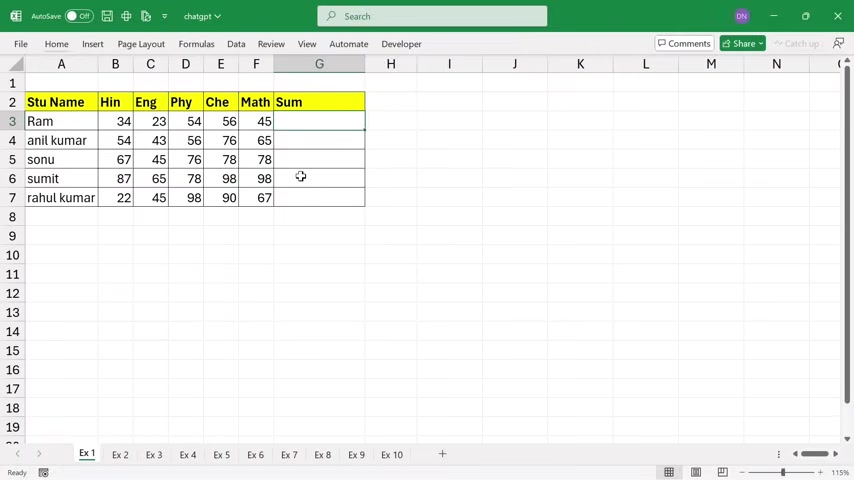
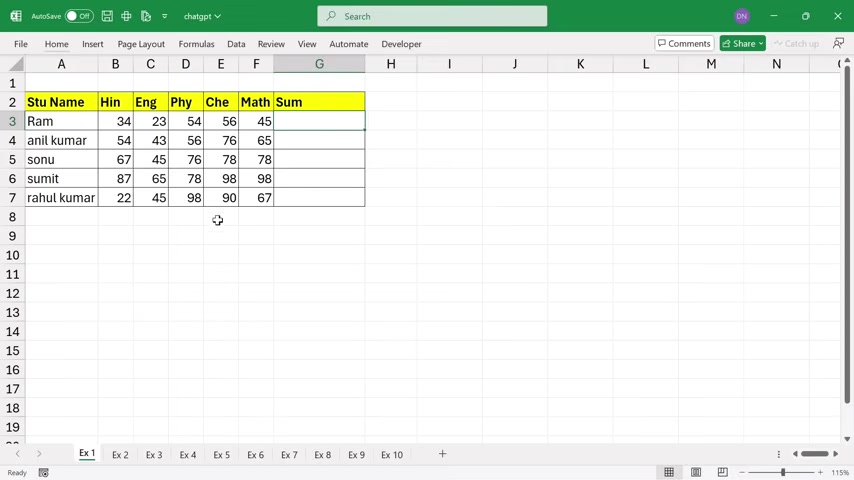
One of the most basic yet common tasks in Excel is summing values. With AI, you don't need to remember the complex SUM formula. Instead, you can use AI to generate it for you.

Step 1: Accessing ChatGPT
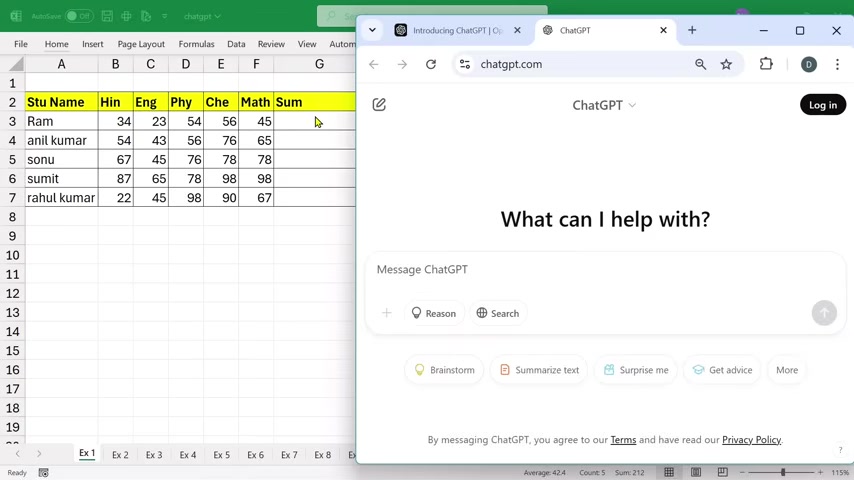
Start by opening your web browser and navigating to the ChatGPT website (provided in the video description). ChatGPT is the AI Tool we'll be using for this example.
Step 2: Defining the Task
In the ChatGPT interface, describe the task you want to accomplish. Be as specific as possible. In this case, type:
'Excel sheet me B3 se F3 cells me values hain, total karna hai formula batao' This instructs ChatGPT to provide the formula to sum values from cell B3 to F3 in an Excel sheet.
Step 3: Copying the Formula
ChatGPT will generate the Excel formula, which is =SUM(B3:F3). Copy this formula by clicking the 'Copy' button next to it.
Step 4: Applying the Formula in Excel
In your Excel sheet, navigate to the cell where you want the sum to appear. Double-click the cell and paste the copied formula. Press Enter to calculate the sum.
By following these simple steps, you can quickly sum values in Excel using AI, even if you have no prior knowledge of the SUM formula. This method saves time and reduces the risk of manual errors.
Determining Pass/Fail Status with AI
Another common task in Excel is to determine the pass/fail status based on certain criteria. AI can help generate the formula for this as well.

Step 1: Defining the Criteria
Describe the criteria for pass/fail status in ChatGPT. In this case, type:
'Create a formula to show pass if all cells from b3 to f3 have values greater than or equal to 40 otherwise show fail'
This instructs ChatGPT to provide a formula that checks if all values in the range B3 to F3 are greater than or equal to 40. If not, it should display 'Fail'; otherwise, 'Pass'.
Step 2: Copying the Formula
ChatGPT will generate the appropriate Excel formula. Copy this formula by clicking the 'Copy' button.
Step 3: Applying the Formula in Excel
In your Excel sheet, navigate to the cell where you want the pass/fail status to appear. Double-click the cell and paste the copied formula. Press Enter to see the result.
Note: The formula will return TRUE or FALSE. You might want to use conditional formatting to display "Pass" or "Fail" instead. If this method is not working, you may use alternative way to type in ChatGPT. By using AI, you can quickly generate complex formulas for determining pass/fail status, saving time and effort.
Cleaning Data Using AI
Cleaning data is an essential step in data analysis. AI can help automate this process by generating formulas to clean data quickly.
Step 1: Describing the Data Cleaning Task
In ChatGPT, describe the data cleaning task. Be specific about what you want to achieve. In this case, type:
'Create a formula to remove extra spaces from cell b3 and convert into uppercase.'
This instructs ChatGPT to provide a formula that removes extra spaces from cell B3 and converts the text to uppercase.
Step 2: Copying the Cleaning Formula
ChatGPT will generate the appropriate Excel formula. Copy this formula.
Step 3: Applying the Formula in Excel
In your Excel sheet, navigate to the cell where you want the cleaned data to appear. Double-click the cell and paste the copied formula. Press Enter to see the cleaned data.
By using AI, you can quickly generate formulas to clean data, saving time and effort in manual data cleaning.
Create Dynamic Data with AI
Manually creating data for practice purposes can be time-consuming. AI can assist by generating datasets based on your requirements.
Step 1: Describing the Data Creation Task
In ChatGPT, describe the type of data you need. For example, type:
'excel table format me 20 records ka data banao jisme emp id, emp name, gender, department and salary columns honi chahiye'
This instructs ChatGPT to create a table with 20 records, including columns for employee ID, employee name, gender, department, and salary.
Step 2: Copying the Data
ChatGPT will generate a table with sample data. Select all the records and copy them.
Step 3: Pasting the Data in Excel
In your Excel sheet, navigate to the cell where you want the table to begin. Paste the copied data by pressing Ctrl+V.
By using AI, you can quickly generate sample datasets, saving time in creating practice data.
Simple Steps on how to Use Excel AI effectively
Crafting Effective Prompts
The key to using AI effectively in Excel is crafting clear and specific prompts. A well-defined Prompt will yield more accurate and relevant results. Here are some tips for creating effective prompts:
- Be specific about the task you want to accomplish.
- Use clear and concise language.
- Provide relevant details about your data and the desired outcome.
- Specify the formula you need.
By following these guidelines, you can improve the accuracy and relevance of AI-generated results, making your Excel tasks more efficient.
Understanding the AI output
It's crucial to understand the formula provided by AI to ensure it aligns with your needs. Review the generated formula, ensuring it accurately reflects the desired calculations or data manipulations. Understand the AI's Explanations.
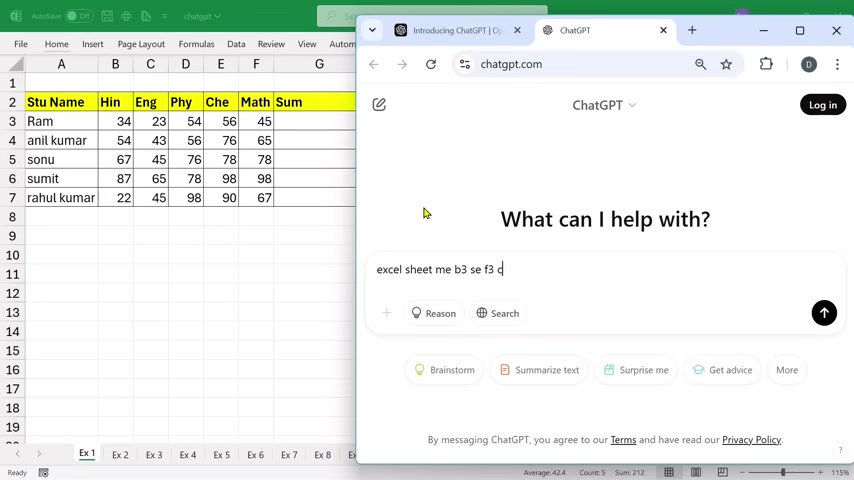
Pay attention to the additional details or explanations provided by the AI to help you understand how to use the generated output effectively. Always double-check AI-generated content for accuracy and relevance to avoid potential errors in your analysis. If there are any issues or errors, refine your prompts to achieve better results.
Testing and Validating Results
AI is a powerful tool, but it's not infallible. To ensure accuracy, always test and validate the results generated by AI. Test your data results and validate the accuracy by performing manual checks or comparing them with existing data to ensure reliability. Experiment with various prompts, refining them based on the results to improve accuracy. By testing, validating, and experimenting with prompts, you can make sure that AI-generated content consistently meets your needs and standards.





Most people like


































Report
Please select a reason for reporting
- 13 Reasons to Switch from Snapchat to Text Messaging
- 7 Powerful Speech to Text Apps to Boost Productivity
- 10 Best Speech to Text Tools for Effortless Transcription
- 13 Free Tools to Easily Transcribe Audio to Text
- 15 Surprising Ways Google's Speech-to-Text Boosts Productivity
- 7 Best Free Online Audio to Text Transcription Tools
- 9 Tips to Transcribe Speech to Text Faster and Better
- 13 Best Speech to Text Software for Windows 10 in 2023
- 7 Tips for Choosing the Best Transcriber for Audio to Text
- 11 Reasons Why Dragon Speech-to-Text Apps are Game-Changers
- 6 Secrets to Enhance Your Speech to Text Transcription
- 6 Brilliant Ways to Boost Productivity with Talk-to-Text on Your MacBook
- 6 Ways Transcription Software Converts Audio to Text
- 8 Tips to Transcribe Speech to Text Like a Pro
- 6 Reasons IBM Watson Speech to Text is a Game-Changer
- 14 Powerful Ways Talk-to-Text Improves Your Workflow
- 12 Top Windows Speech-to-Text Software for Efficient Transcription
- 12 Game-Changing Benefits of Apple's Speech to Text Technology
- 9 Powerful Use Cases for AWS Speech to Text Technology
- 10 Easy Steps to Transcribe YouTube Videos to Text
- transcription audio en texte
- online audio transcription
- free audio file transcription
- free ai audio transcription
- audio transcription service
- audio transcription online free
- audio transcription free online
- audio to transcription software
- audio and transcript
- ai audio transcription free
- voice recording to text converter
- translate voice recording to text
- record voice to text
- audio recording to text converter
- voice recording and transcription
- chatgpt voice to text
- gmail voice to text
- speech to text reader
- speech to text ai free
- speech to talk
- How SEO and Marketing Dashboards Empower Agencies to Drive Results
- How to Use AI Tools to Find Internal Linking Opportunities Across a Business Website
- Discover Your Perfect Haircut with AI Hairstyle Apps
- Free Reputation Calculator Tools: How They're Adapting to Score AI Visibility, Not Just Rankings
- Design Professional Flyers for Free on Your Phone
- Best Free Flyer Maker Apps for Android: Design Like a Pro
- How to Know If Your Business Is Ready for an AI Customer Service Agent
- Revolutionizing Storytelling: From Novels to Screenplays with AI
- Create Engaging Animated Explainer Videos with a Free AI Tool
- Stop Multi-Subscribing: Benchmark Top AI Visual Models in One Canvas
- Top 5 Cold Email Software: Maximize Your Outreach in 2025
- Magic School AI: Revolutionizing Quiz & Assessment Generation
- Create Your Own Email Bot and Automate Your Email Tasks
- Beyond Pure Prompts: Optimizing Production with 'Text With Reference' Generation
- Stop Using Boring TTS: My Honest Deep Dive Into VideoAI and the Hunt for the Perfect Custom Voices
- AI & Elections: Defending Democracy Against Misinformation
- Navigating Political Discourse: AI, Deepfakes, and Reality Checks
- Detecting Political Bias in News Articles: A Powerful AI Algorithm
- AI Bias Unveiled: Political Leanings in ChatGPT & Beyond
- Revolutionize Learning: Discover Quizzes AI for Engaging Interactive Quizzes

Copyright ©2026 toolify