























Vector Databases Explained: Understanding Semantic Search Tech

Updated on Oct 25,2025








Table of Contents
- Key Points
- Understanding Vector Databases
- Transforming Data into Vectors: Embedding Models
- Getting Started with Vector Databases
- Advantages and Disadvantages of Vector Databases
- Core Features of Effective Vector Databases
- How Vector Databases are being used
- Frequently Asked Questions
- Related Questions


Understanding Vector Databases
What is a Vector Database?
A vector database is a specialized type of database designed to store and manage data as high-dimensional vectors. Unlike traditional databases that rely on structured tables and predefined schemas, vector databases focus on capturing the semantic meaning of data.
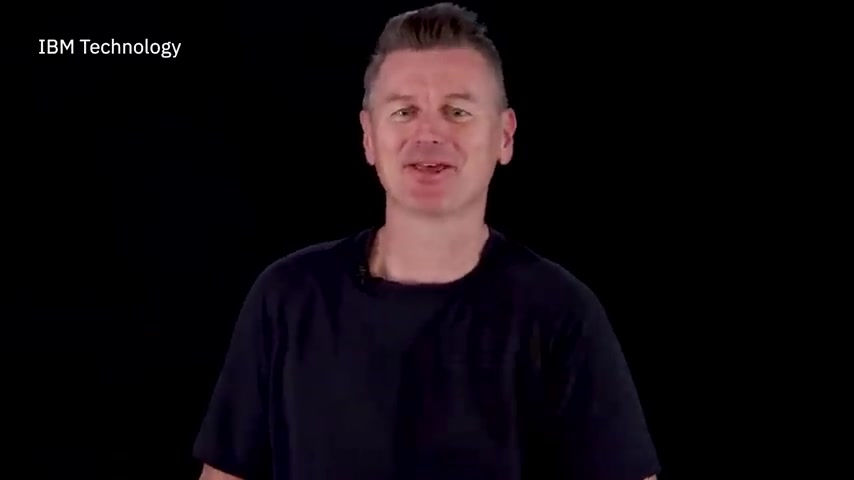
This is achieved by representing data points as vectors in a multi-dimensional space, where the proximity of vectors indicates the similarity of their underlying data. This allows us to leverage powerful algorithms to understand unstructured data, in ways that relational databases simply cannot.
Imagine storing a picture of a sunset over a mountain vista. In a relational database, you might store the image file itself, along with some metadata like the file format, creation date, and manually added tags like 'sunset' or 'mountains'. However, this approach misses the overall semantic context of the image. How would you query for images with similar color palettes or landscapes containing mountains? Relational databases struggle with such nuanced queries.
Vector databases address this challenge by transforming data into numerical vector embeddings. These embeddings capture the essence of the data, allowing for efficient similarity searches. If two images have similar color palettes or depict related scenes, their vector embeddings will be closer together in the vector space.
This ability to perform semantic search opens up a wealth of possibilities for AI applications, enabling them to understand and interact with data in a more intuitive and human-like manner.
The Semantic Gap: A Challenge for Traditional Databases
Traditional databases, particularly relational databases, often struggle to bridge the semantic gap between how computers store data and how humans understand it.

These databases excel at handling structured data with well-defined relationships, but they fall short when it comes to unstructured data like images, text, and audio.
Consider the following SQL query:
SELECT *
WHERE color = 'orange';
This query can efficiently retrieve images tagged with 'orange'. However, it cannot identify images with a dominant orange color palette without explicit tagging. It misses the nuanced, multi-dimensional nature of unstructured data. How do you find images with the color orange if they haven't been tagged as orange, but feature the color? It is a challenge.
This limitation stems from the way relational databases store data: structured fields that are ideal for exact matches but lack the ability to capture semantic meaning. The tags, metadata, and binary data are all stored seperately, and lack any real inter-connection.
Vector databases bridge this gap by representing data as mathematical vectors, capturing the semantic essence of the information. This allows for similarity searches based on meaning rather than exact matches, enabling AI applications to understand and interact with data in a more meaningful way. This helps to bridge the disconnect, and allows for true understanding, that relational databases simply could not provide.
Transforming Data into Vectors: Embedding Models
The Role of Embedding Models
To utilize the power of vector databases, unstructured data needs to be transformed into vector representations. This is achieved through embedding models, which are trained on massive datasets to learn the semantic relationships between data points. Embedding models take different data types and Translate them into meaningful vectors.

Each data type utilizes a specified embedding model to achieve its final vector form.
These models map data into a high-dimensional vector space where the distance between vectors reflects the semantic similarity of the corresponding data points. Here are a few examples:
- Images: Models like CLIP are used to transform images into vector embeddings, capturing visual features and semantic content.
- Text: Models like GloVe translate text into vector embeddings, capturing the meaning and context of words and phrases.
- Audio: Models like Wav2Vec2 convert audio signals into vector embeddings, capturing acoustic features and semantic information.
| Data Type | Embedding Model Example | Description |
|---|---|---|
| Images | CLIP | Captures visual features and semantic content of images, enabling similarity searches based on visual appearance and meaning. |
| Text | GloVe | Translates text into vector embeddings, capturing the meaning and context of words and phrases, allowing for semantic text comparisons. |
| Audio | Wav2Vec2 | Converts audio signals into vector embeddings, capturing acoustic features and semantic information, enabling audio similarity searches. |
The effectiveness of a vector database hinges on the quality of the embedding model used. A well-trained model will produce vector embeddings that accurately reflect the semantic relationships within the data, enabling more precise and meaningful similarity searches.
So, whether you have image files, text documents, or audio recordings, these objects are transformed into vector embeddings. Essentially, an array of numbers.
For instance, imagine representing our mountain picture as a vector embedding with three dimensions: significant elevation changes (0.91), few urban elements (0.15), and strong warm colors (0.83). This vector encapsulates key semantic features of the image. Now, let's compare this to a picture of a sunset on the beach. Its vector embedding might have dimensions: minimal elevation changes (0.12), few urban elements (0.08), and strong warm colors (0.89). Notice the similarity in the third dimension, reflecting the shared characteristic of warm colors in sunsets.
Semantic Understanding in Action
Once data is transformed into vector embeddings, vector databases leverage powerful algorithms to perform similarity searches. This is where Approximate Nearest Neighbor (ANN) algorithms come into play.

These algorithms efficiently find the nearest neighbors of a query vector in the high-dimensional space, enabling fast and accurate retrieval of semantically similar data.
Here's how it works:
- A query vector is created based on the search criteria.
- The ANN algorithm searches the vector database for vectors that are closest to the query vector.
- The results are ranked based on their similarity score, with closer vectors ranking higher.
The ability to perform similarity searches opens up exciting possibilities for various applications:
- Image Retrieval: Find images with similar content or color palettes.
- Text Search: Discover documents that are semantically related to a query, even if they don't contain the exact keywords.
- Recommendation Systems: Recommend products or content based on user preferences and item similarities.
Getting Started with Vector Databases
Choosing a Vector Database
Selecting the right vector database depends on your specific needs and requirements. Here are some popular options:
- Pinecone: A fully managed vector database designed for high-performance similarity search.
- Weaviate: An open-source vector Search Engine with a GraphQL interface.
- Milvus: An open-source vector database built for AI applications.
Creating Vector Indexing for Better Speed
To further enhance search speed, vector databases utilize vector indexing techniques.
These techniques optimize the way vectors are organized and searched, enabling faster retrieval of relevant data. Two common indexing methods are:
- Hierarchical Navigable Small World (HNSW): Creates multi-layered graphs connecting similar vectors, allowing for efficient navigation of the vector space.
- Inverted File Index (IVF): Divides the vector space into clusters and only searches the most relevant clusters for a given query.






Most people like





























Report
Please select a reason for reporting
- 13 Reasons to Switch from Snapchat to Text Messaging
- 7 Powerful Speech to Text Apps to Boost Productivity
- 10 Best Speech to Text Tools for Effortless Transcription
- 13 Free Tools to Easily Transcribe Audio to Text
- 15 Surprising Ways Google's Speech-to-Text Boosts Productivity
- 7 Best Free Online Audio to Text Transcription Tools
- 9 Tips to Transcribe Speech to Text Faster and Better
- 13 Best Speech to Text Software for Windows 10 in 2023
- 7 Tips for Choosing the Best Transcriber for Audio to Text
- 11 Reasons Why Dragon Speech-to-Text Apps are Game-Changers
- 6 Secrets to Enhance Your Speech to Text Transcription
- 6 Brilliant Ways to Boost Productivity with Talk-to-Text on Your MacBook
- 6 Ways Transcription Software Converts Audio to Text
- 8 Tips to Transcribe Speech to Text Like a Pro
- 6 Reasons IBM Watson Speech to Text is a Game-Changer
- 14 Powerful Ways Talk-to-Text Improves Your Workflow
- 12 Top Windows Speech-to-Text Software for Efficient Transcription
- 12 Game-Changing Benefits of Apple's Speech to Text Technology
- 9 Powerful Use Cases for AWS Speech to Text Technology
- 10 Easy Steps to Transcribe YouTube Videos to Text
- transcription audio en texte
- online audio transcription
- free audio file transcription
- free ai audio transcription
- audio transcription service
- audio transcription online free
- audio transcription free online
- audio to transcription software
- audio and transcript
- ai audio transcription free
- voice recording to text converter
- translate voice recording to text
- record voice to text
- audio recording to text converter
- voice recording and transcription
- chatgpt voice to text
- gmail voice to text
- speech to text reader
- speech to text ai free
- speech to talk
- Design Professional Flyers for Free on Your Phone
- Best Free Flyer Maker Apps for Android: Design Like a Pro
- How to Know If Your Business Is Ready for an AI Customer Service Agent
- Revolutionizing Storytelling: From Novels to Screenplays with AI
- Create Engaging Animated Explainer Videos with a Free AI Tool
- Stop Multi-Subscribing: Benchmark Top AI Visual Models in One Canvas
- Best Seedance 2.5 API Provider: Every Price on the Market, Checked at Source
- AI OnlyFans: How to Generate $30,000/Month (Legally)
- Transform Your Script into an Engaging Video with AI Video Maker!
- AI Marketing Automation: A Comprehensive Guide for Small Businesses
- Design Professional Flyers for Free on Your Phone
- Best Free Flyer Maker Apps for Android: Design Like a Pro
- Unleash Creativity: AI Coloring Pages with ColoringBook.ai
- Generate Stunning AI Photos with Google Gemini: A Guide
- Boost Your Etsy Sales with Stunning Digital Invitations!
- Revolutionize Your Etsy Listing with AI Text Generator
- Create Coloring Pages with AI: A Bing AI Tutorial
- Photo Lab App: Transform Your Photos with Stunning AI Effects
- Effortless Design: Rewriting Text with Microsoft Designer's AI
- Create & Sell Kids' Coloring Books with AI - KDP Guide

Copyright ©2026 toolify