































Table of Contents
- Key Points
- The Rise of AI in Wireless Communications
- Wireless AI Model Lifecycle Management (MLM)
- Enhancing Wireless Systems with Efficient Model Switching
- Considerations and Costs
- Pros and Cons of Wireless AI
- Exploring the Standalone 5G Millimeter Wave Over-the-Air Testbed
- On-Device Millimeter Wave Beam Prediction
- Frequently Asked Questions
- Related Questions


The Rise of AI in Wireless Communications
The Transformative Potential of AI
The integration of Artificial Intelligence (AI) into wireless communication systems is ushering in a new era of technological innovation. AI's capacity to learn, adapt, and optimize complex systems holds immense potential for transforming how wireless networks are designed, deployed, and operated. In the realm of wireless communications, AI offers opportunities to achieve unparalleled levels of performance, impacting both network infrastructure and user devices.

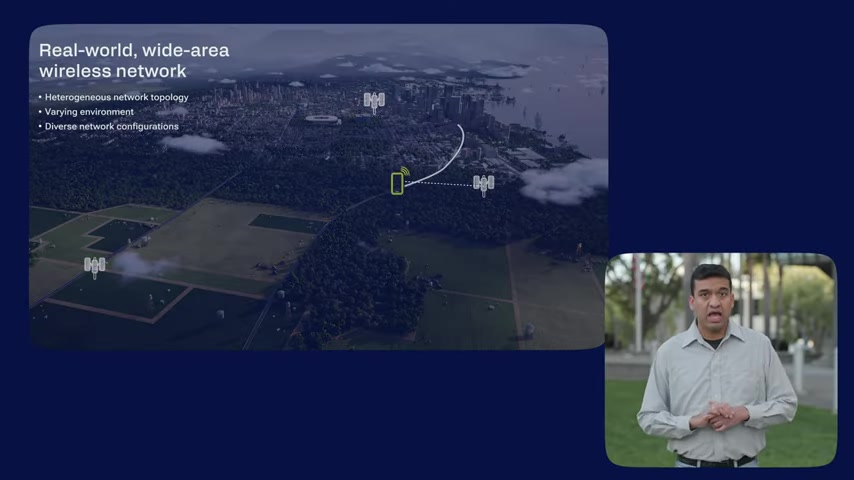
AI algorithms can analyze vast amounts of data to make intelligent decisions in real-time, enabling wireless systems to adapt dynamically to changing environmental conditions and user demands. This adaptability can lead to significant improvements in network efficiency, reliability, and overall user experience. The deployment of AI in wireless networks is not without its challenges, but the potential benefits are vast and continue to drive research and development efforts in the field. It is important to note the key point is that we need to deploy multiple AI models that are localized to the specific network environment.
Furthermore, the increasing complexity of modern wireless networks, characterized by heterogeneous deployments and varying environmental factors, necessitates the use of sophisticated management techniques. AI-driven solutions provide the means to navigate this complexity, offering automated network optimization and resource allocation strategies that can significantly enhance performance. To meet the demands of next-generation wireless systems, integrating AI is not merely an option but a necessity.
It is crucial to approach the integration of AI in wireless communications with a comprehensive understanding of both the technical challenges and the ethical considerations involved. As AI becomes more prevalent in these systems, ensuring transparency, accountability, and fairness in algorithmic decision-making becomes paramount. With careful planning and execution, AI can unlock unprecedented capabilities in wireless communications, paving the way for a more connected, efficient, and intelligent future.
Practical Challenges in Applying AI to Wireless Systems
Applying Artificial Intelligence (AI) in real-world wireless systems presents a series of complex and multifaceted challenges. While the potential benefits of AI integration are substantial, the successful deployment of AI in wireless networks requires careful consideration of numerous practical limitations. Here are some key challenges:
- Data Availability and Quality: AI algorithms, particularly deep learning models, rely on large amounts of high-quality data for training. In wireless communications, acquiring sufficient and representative data can be difficult due to the dynamic and variable nature of wireless environments.
- Computational Resources: Implementing AI models, especially complex neural networks, requires significant computational resources. Wireless devices often have limited processing power and energy capacity, which can constrain the deployment of computationally intensive AI algorithms.
- Real-Time Processing Requirements: Many wireless applications demand real-time decision-making. AI algorithms must be able to process data and generate responses within strict latency constraints to ensure seamless operation of wireless services.
- Model Generalization and Robustness: AI models trained in one environment may not generalize well to other environments due to differences in channel conditions, network configurations, and user behavior. Ensuring the robustness and adaptability of AI models across diverse scenarios is crucial.
- Integration Complexity: Integrating AI algorithms into existing wireless systems can be complex and require modifications to both hardware and software architectures. Interoperability issues and the need for standardized interfaces add to the integration challenges.
- Security and Privacy: AI models are vulnerable to adversarial attacks, which can compromise their performance and security. Protecting AI algorithms and the data they process from malicious actors is essential.
- Regulatory and Ethical Considerations: The use of AI in wireless communications raises ethical concerns related to data privacy, algorithmic bias, and transparency. Compliance with regulatory requirements and adherence to ethical guidelines are necessary for responsible AI deployment.
Addressing these challenges requires a multidisciplinary approach, involving expertise in AI, wireless communications, signal processing, and network engineering. Innovations in model compression, edge computing, and federated learning offer promising avenues for overcoming some of these limitations. Furthermore, establishing robust testing and validation methodologies is crucial for ensuring the reliability and trustworthiness of AI-enabled wireless systems. By tackling these practical challenges head-on, the full potential of AI in wireless communications can be realized, leading to significant advancements in network performance and user experiences.
Wireless AI Model Lifecycle Management (MLM)
Efficient Management of Wireless AI Models
Efficient management of AI models is crucial, particularly in dynamic and heterogeneous environments. AI model lifecycle management (MLM) involves strategies for model switching, on-device adaptation, and continuous monitoring to ensure optimal performance.
Key Components of Wireless AI Model Lifecycle Management (MLM) include:
- Model Creation and Training: Developing AI models tailored to specific wireless communication tasks, such as channel prediction, resource allocation, or interference management. This involves selecting appropriate algorithms, gathering representative data, and training the models to achieve desired levels of accuracy and robustness.
- Model Deployment: Deploying AI models to various network elements, including base stations, mobile devices, and edge servers. This requires optimizing the models for efficient execution on resource-constrained devices and ensuring compatibility with existing network infrastructure.
- Model Monitoring and Evaluation: Continuously monitoring the performance of deployed AI models to detect any degradation in accuracy or efficiency. This involves collecting real-time data on model inputs, outputs, and key performance indicators (KPIs), and using this data to assess the models' ongoing effectiveness.
- Model Adaptation and Retraining: Adapting or retraining AI models in response to changing network conditions, user behavior, or emerging threats. This may involve fine-tuning the models using new data, updating the model architecture, or migrating to entirely new models.
- Model Switching and Selection: Implementing strategies for dynamically switching between different AI models based on the current context and performance requirements. This allows the network to optimize its behavior by selecting the most appropriate model for each situation.
- Model Versioning and Governance: Maintaining a clear record of all AI models deployed in the network, including their version numbers, training data, and performance metrics. This ensures traceability and accountability, and supports compliance with regulatory requirements.
- Model Security and Protection: Protecting AI models from adversarial attacks and unauthorized access. This involves implementing security measures to safeguard the models' integrity, confidentiality, and availability.
Effective MLM is essential for maintaining the performance and reliability of AI-enabled wireless systems. By continuously monitoring, adapting, and optimizing AI models throughout their lifecycle, network operators can ensure that these systems deliver optimal results and contribute to enhanced user experiences. Model versioning and governance are also critical for compliance.
Exploring the Standalone 5G Millimeter Wave Over-the-Air Testbed
Key Capabilities and Testing Scenarios
The standalone 5G millimeter wave over-the-air testbed in San Diego, California, supports diverse testing scenarios. This testbed allows researchers and engineers to evaluate wireless AI solutions in realistic conditions, covering open spaces and dense urban-like environments. It offers a comprehensive platform to emulate large heterogeneous wireless networks, facilitating the development and validation of advanced wireless technologies. Here are the scenarios that the testbed will cover:
- On-device millimeter wave beam prediction
- Environmental scattering analysis
- Building and foliage blocking assessments
- Beamforming pattern evaluations

It also provides a crucial environment that will provide a standalone 5G millimeter wave over-the-air testbed with large heterogeneous wireless networks.
This level of testing is invaluable for refining wireless AI models and ensuring their practical utility in diverse real-world scenarios.
On-Device Millimeter Wave Beam Prediction
Optimizing Data Transmission with AI
The wireless AI use case focuses on on-device millimeter wave beam prediction to optimize data transmission.

AI running on the device accurately predicts and selects the optimal millimeter wave beam. This minimizes network overhead and reduces device energy consumption, showcasing AI's ability to enhance efficiency in wireless systems.
Key components of this use case are:
- AI-driven beam selection
- Network overhead reduction
- Energy consumption minimization
These components collectively highlight the practical benefits of integrating AI into wireless communications.





Most people like
































Report
Please select a reason for reporting
- 13 Reasons to Switch from Snapchat to Text Messaging
- 7 Powerful Speech to Text Apps to Boost Productivity
- 10 Best Speech to Text Tools for Effortless Transcription
- 13 Free Tools to Easily Transcribe Audio to Text
- 15 Surprising Ways Google's Speech-to-Text Boosts Productivity
- 7 Best Free Online Audio to Text Transcription Tools
- 9 Tips to Transcribe Speech to Text Faster and Better
- 13 Best Speech to Text Software for Windows 10 in 2023
- 7 Tips for Choosing the Best Transcriber for Audio to Text
- 11 Reasons Why Dragon Speech-to-Text Apps are Game-Changers
- 6 Secrets to Enhance Your Speech to Text Transcription
- 6 Brilliant Ways to Boost Productivity with Talk-to-Text on Your MacBook
- 6 Ways Transcription Software Converts Audio to Text
- 8 Tips to Transcribe Speech to Text Like a Pro
- 6 Reasons IBM Watson Speech to Text is a Game-Changer
- 14 Powerful Ways Talk-to-Text Improves Your Workflow
- 12 Top Windows Speech-to-Text Software for Efficient Transcription
- 12 Game-Changing Benefits of Apple's Speech to Text Technology
- 9 Powerful Use Cases for AWS Speech to Text Technology
- 10 Easy Steps to Transcribe YouTube Videos to Text
- transcription audio en texte
- online audio transcription
- free audio file transcription
- free ai audio transcription
- audio transcription service
- audio transcription online free
- audio transcription free online
- audio to transcription software
- audio and transcript
- ai audio transcription free
- voice recording to text converter
- translate voice recording to text
- record voice to text
- audio recording to text converter
- voice recording and transcription
- chatgpt voice to text
- gmail voice to text
- speech to text reader
- speech to text ai free
- speech to talk
- How to Use AI Tools to Find Internal Linking Opportunities Across a Business Website
- Discover Your Perfect Haircut with AI Hairstyle Apps
- Free Reputation Calculator Tools: How They're Adapting to Score AI Visibility, Not Just Rankings
- Design Professional Flyers for Free on Your Phone
- Best Free Flyer Maker Apps for Android: Design Like a Pro
- How to Know If Your Business Is Ready for an AI Customer Service Agent
- Revolutionizing Storytelling: From Novels to Screenplays with AI
- Create Engaging Animated Explainer Videos with a Free AI Tool
- Stop Multi-Subscribing: Benchmark Top AI Visual Models in One Canvas
- Best Seedance 2.5 API Provider: Every Price on the Market, Checked at Source
- Top AI Social Media Management Tools: Automate Your Content Strategy
- Free AI Text to Video Generator: Create Stunning Videos from Text
- Discover 17 ChatGPT Alternatives: A Comprehensive Comparison
- Character.AI vs. Janitor AI: Which AI Chat Platform Reigns Supreme?
- Top Virtual Assistant Companies in 2026: Reviews, Pricing, and Plans Compared
- Unveiling FaceCheck.ID: Revolutionizing Reverse Image Searches with AI
- 11 Best AI Dialers in 2026: Features, Pricing, Pros and Cons
- How I Direct Consistent AI Clips: A Hands-On Guide to Multi-Model Generation
- A Realistic Review of the Photo Generator Image Tool
- Playwright MCP Server: Automated Web Testing with Agent Mode

Copyright ©2026 toolify