































Table of Contents
- Key Points
- Foundational AI Concepts for Python Developers
- Popular Python AI Libraries and Frameworks
- Getting Started with Machine Learning Algorithms: A Step-by-Step Guide
- AI for Python Development: Opportunities and Challenges
- Frequently Asked Questions (FAQ)
- Related Questions


Foundational AI Concepts for Python Developers
Understanding Machine Learning Algorithms
Machine learning algorithms are the backbone of AI, enabling computers to learn from data without explicit programming. These algorithms identify patterns and relationships within large datasets, allowing them to make predictions or decisions based on the data. This learning process is known as training.
During training, an algorithm adjusts its parameters to minimize errors, enhancing its predictive accuracy. Once trained, the algorithm can apply its learned knowledge to new, unseen data.
In essence, your program learns without explicit programming. It processes new information to make educated predictions and decisions.
Several machine learning algorithms are fundamental for Python developers:
- Linear Regression: Used for predicting continuous values based on the relationship between variables.
- Decision Trees: Used for classification and regression tasks by creating a tree-like structure of decisions.
- Random Forests: An ensemble learning method that combines multiple decision trees for improved accuracy and robustness.
- K-Means: Used for clustering data points into distinct groups based on similarity.
- K-Nearest Neighbors (KNN): Used for classification and regression, assigning data points to the class most common among its nearest neighbors.
- Support Vector Machines (SVMs): Used for classification and regression, particularly effective in high-dimensional spaces.
These algorithms form the core of AI and provide a strong foundation for Python developers venturing into the field of artificial intelligence. Mastering these fundamentals is crucial before moving on to more complex concepts.
Essential Python Modules for Machine Learning
To implement machine learning algorithms in Python, several modules are indispensable. These modules offer a wide range of functionalities that simplify the development process and provide powerful tools for data analysis and modeling.
-
Scikit-learn: This module provides simple and efficient tools for predictive data analysis. It includes classification, regression, clustering, dimensionality reduction, model selection, and preprocessing functionalities.
-
NumPy: The fundamental package for scientific computing with Python, NumPy supports powerful N-dimensional arrays, numerical computing tools, and interoperability with other libraries.
-
Pandas: This module offers data structures and data analysis tools, making it easier to work with structured data, including data cleaning, transformation, and analysis.
-
Matplotlib: This library provides tools for creating static, animated, and interactive visualizations in Python, enabling developers to explore data visually.
-
Seaborn: Built on top of Matplotlib, Seaborn offers a high-level interface for creating attractive and informative statistical data visualizations.
These modules streamline the implementation of machine learning models and ensure efficient data handling and visualization, crucial for any Python AI developer.
Deep Dive into Neural Networks
Neural networks are a specialized type of machine learning algorithm inspired by the structure and function of the human brain. They consist of interconnected layers of nodes, or neurons, that transmit information through connections, each with an associated weight. During training, these weights are adjusted to minimize errors, optimizing the network's performance.
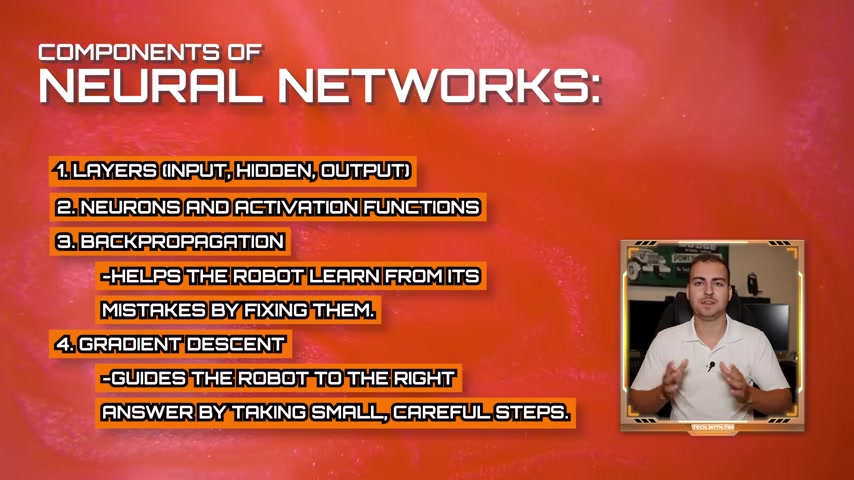
Key components of neural networks include:
- Layers: Input, hidden, and output layers that process data through interconnected neurons.
- Neurons and Activation Functions: Neurons perform computations on inputs, and activation functions introduce non-linearity to the network.
- Backpropagation: An algorithm used to adjust the weights in the network based on the error between predicted and actual outputs.
- Gradient Descent: An optimization algorithm used to find the minimum of a function, guiding the network towards the right answer.
Neural networks can automatically extract and learn more complex features from raw data compared to traditional machine learning algorithms. To work with neural networks, consider using these modules:
- PyTorch: An open-source machine learning framework that provides flexibility and tools for building and training neural networks.
- TensorFlow: Another open-source machine learning framework widely used for building and deploying neural networks.
- Keras: A high-level API for building and training neural networks, providing a user-friendly interface for TensorFlow and other backends.
Understanding neural networks is essential for tackling complex AI tasks, especially in areas like Image Recognition and natural language processing.
Leveraging Computer Vision with Python
Computer vision is a field of AI that focuses on enabling computers to "see" and interpret images and videos. Python provides robust tools for performing image and video analysis, object detection, and facial recognition.
The key aspects of computer vision include:
- Image and Video Analysis: Processing and understanding visual data.
- Object Detection and Tracking: Identifying and tracking objects within images and videos.
- Facial Recognition: Recognizing and authenticating faces in images and videos.
- Image Segmentation: Partitioning an image into multiple segments or regions.
To implement computer vision tasks in Python, the OpenCV (Open Source Computer Vision Library) module is invaluable. OpenCV provides a comprehensive set of tools and algorithms for image processing, video capture, and real-time computer vision. For example, it can be used to analyze real-time data from athletic events, such as tracking the position of athletes and Sports equipment.
For Python developers, OpenCV offers a powerful foundation for building sophisticated computer vision applications.
Harnessing the Power of Large Language Models (LLMs)
Large Language Models (LLMs) are a type of AI designed to understand and generate human language in a broad sense. Trained on vast amounts of textual data, LLMs can perform various tasks, including answering questions, generating essays, and writing code.
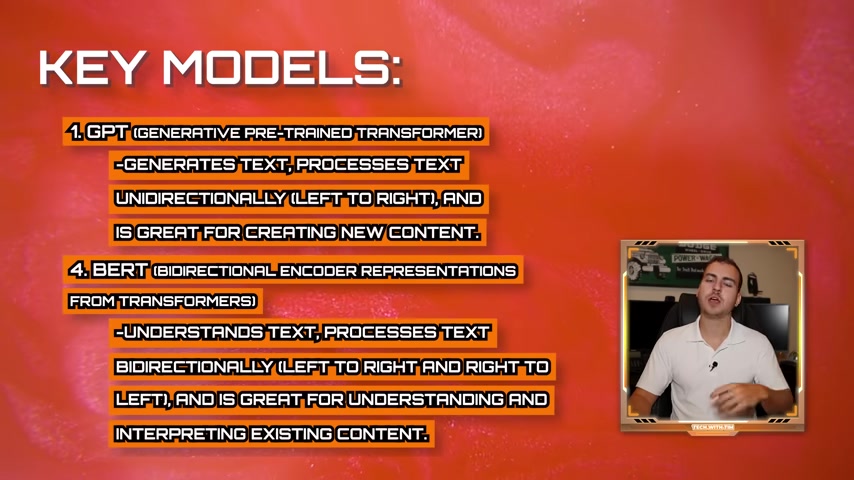
Key models to be aware of include:
- GPT (Generative Pre-trained Transformer): Generates text, processes text unidirectionally (left to right), and is great for creating new content. GPT models excel at generating new, original content, making them ideal for Creative Writing and content creation.
- BERT (Bidirectional Encoder Representations from Transformers): Understands text and processes it bidirectionally (left to right and right to left), excelling in understanding and interpreting existing content. BERT models shine when you need to analyze existing text, answer questions, or gain a deeper understanding of context.
To leverage LLMs in Python, it is suggested to use Hugging Face, a platform that offers pre-built transformers and allows for fine-tuning of models. When used in this context, LLMs are invaluable for applications requiring advanced natural language processing capabilities.
Enhancing LLMs with Retrieval Augmented Generation (RAG)
To enhance the capabilities of Large Language Models (LLMs), a technique called Retrieval Augmented Generation (RAG) can be used. The integration of RAG with LLMs allows your language processing tools to access and work with real-time information to enhance the output you're working on.
RAG enhances LLMs by providing access to real-time, context-specific data. Instead of relying solely on the data they were trained on, LLMs can retrieve information from external databases or knowledge sources to provide more accurate and relevant responses.
Implementing RAG in Python often involves tools like LangChain, Ollama, and LlamaIndex. These tools streamline the process of connecting LLMs to external data sources, enabling the generation of context-aware and up-to-date responses. Retrieval Augmented Generation greatly increases the performance and relevance of data output.
Building Autonomous AI Agents
AI agents take autonomy to the next level. An AI agent is different from a basic bot in that it is more powerful and efficient for a number of reasons. AI agents don't just have the ability to read data from a database; these agents can interact with their environment and use a suite of tools to accomplish a certain goal.
The three key components of AI agents include:
- Environment Interaction: Interacting with the environment to gather data and perform actions.
- Self-Determined Task Execution: Determining tasks autonomously and executing them.
- Data Collection: Gathering and processing relevant information to improve performance.
An AI agent could send emails, create calendar events, delete files, or a number of other tasks. Python developers can leverage the basic frameworks of their AI application to access a new dimension of possibility with self-directed AI agents. As AI technology improves, so will your options when creating an agent.
Python developers can construct AI agents by employing frameworks such as LangChain and LlamaIndex. These frameworks facilitate the integration of diverse tools and enable agents to interact with their surroundings effectively. Using the right tools can enhance the performance of AI agents.







Most people like






























Report
Please select a reason for reporting
- 13 Reasons to Switch from Snapchat to Text Messaging
- 7 Powerful Speech to Text Apps to Boost Productivity
- 10 Best Speech to Text Tools for Effortless Transcription
- 13 Free Tools to Easily Transcribe Audio to Text
- 15 Surprising Ways Google's Speech-to-Text Boosts Productivity
- 7 Best Free Online Audio to Text Transcription Tools
- 9 Tips to Transcribe Speech to Text Faster and Better
- 13 Best Speech to Text Software for Windows 10 in 2023
- 7 Tips for Choosing the Best Transcriber for Audio to Text
- 11 Reasons Why Dragon Speech-to-Text Apps are Game-Changers
- 6 Secrets to Enhance Your Speech to Text Transcription
- 6 Brilliant Ways to Boost Productivity with Talk-to-Text on Your MacBook
- 6 Ways Transcription Software Converts Audio to Text
- 8 Tips to Transcribe Speech to Text Like a Pro
- 6 Reasons IBM Watson Speech to Text is a Game-Changer
- 14 Powerful Ways Talk-to-Text Improves Your Workflow
- 12 Top Windows Speech-to-Text Software for Efficient Transcription
- 12 Game-Changing Benefits of Apple's Speech to Text Technology
- 9 Powerful Use Cases for AWS Speech to Text Technology
- 10 Easy Steps to Transcribe YouTube Videos to Text
- transcription audio en texte
- online audio transcription
- free audio file transcription
- free ai audio transcription
- audio transcription service
- audio transcription online free
- audio transcription free online
- audio to transcription software
- audio and transcript
- ai audio transcription free
- voice recording to text converter
- translate voice recording to text
- record voice to text
- audio recording to text converter
- voice recording and transcription
- chatgpt voice to text
- gmail voice to text
- speech to text reader
- speech to text ai free
- speech to talk
- How to Use AI Tools to Find Internal Linking Opportunities Across a Business Website
- Discover Your Perfect Haircut with AI Hairstyle Apps
- Free Reputation Calculator Tools: How They're Adapting to Score AI Visibility, Not Just Rankings
- Design Professional Flyers for Free on Your Phone
- Best Free Flyer Maker Apps for Android: Design Like a Pro
- How to Know If Your Business Is Ready for an AI Customer Service Agent
- Revolutionizing Storytelling: From Novels to Screenplays with AI
- Create Engaging Animated Explainer Videos with a Free AI Tool
- Stop Multi-Subscribing: Benchmark Top AI Visual Models in One Canvas
- Best Seedance 2.5 API Provider: Every Price on the Market, Checked at Source
- Top AI Social Media Management Tools: Automate Your Content Strategy
- Free AI Text to Video Generator: Create Stunning Videos from Text
- Discover 17 ChatGPT Alternatives: A Comprehensive Comparison
- Character.AI vs. Janitor AI: Which AI Chat Platform Reigns Supreme?
- Top Virtual Assistant Companies in 2026: Reviews, Pricing, and Plans Compared
- Unveiling FaceCheck.ID: Revolutionizing Reverse Image Searches with AI
- 11 Best AI Dialers in 2026: Features, Pricing, Pros and Cons
- How I Direct Consistent AI Clips: A Hands-On Guide to Multi-Model Generation
- A Realistic Review of the Photo Generator Image Tool
- Playwright MCP Server: Automated Web Testing with Agent Mode

Copyright ©2026 toolify