































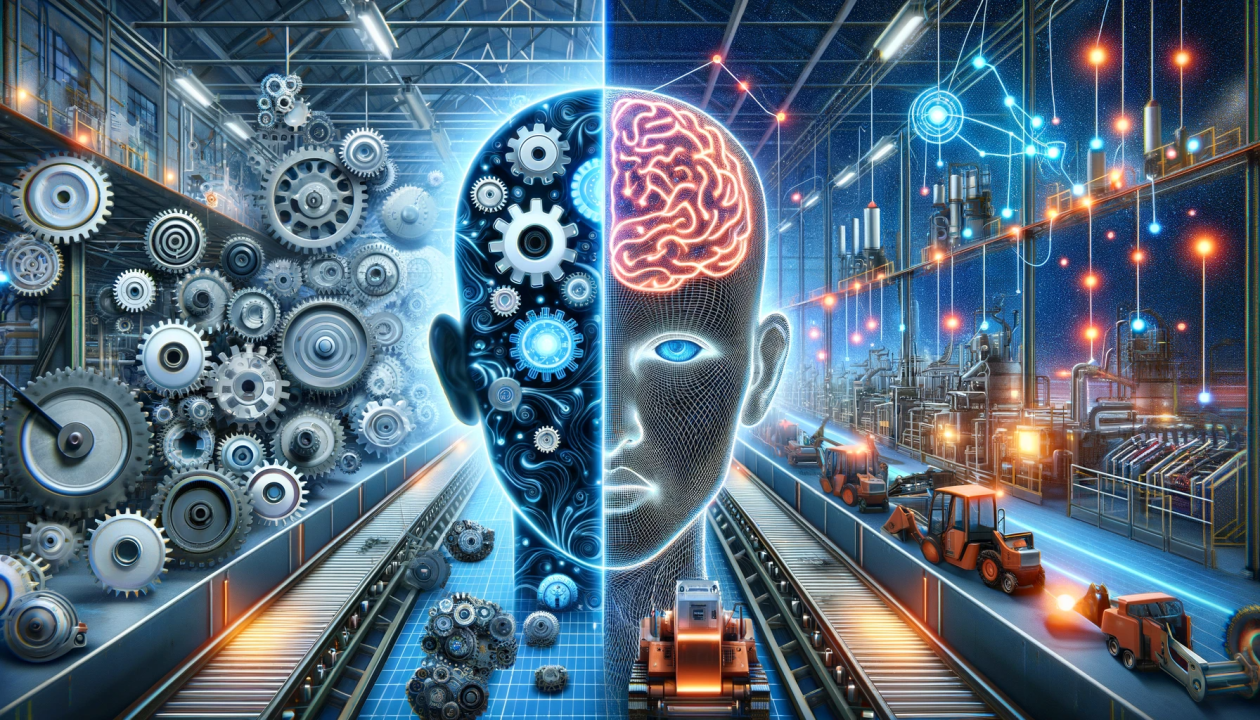


The difference between ai and automation is a topic that even experienced technology and business professionals often misunderstand, yet these two concepts are crucial drivers of modern digital transformation. They are not merely distinct concepts but represent fundamentally different methodologies for enhancing process speed and accuracy. While both aim to reduce human effort, automation focuses on consistency, whereas Artificial Intelligence (AI) provides smarter responses to changing conditions.
This article clarifies the main distinctions between AI and automation, explains their optimal application areas, and offers practical examples of how businesses implement them in real-world scenarios.
What Exactly Differentiates Automation from AI?
The fundamental distinction between AI and automation lies in their operational approach: automation strictly follows rules and executes tasks exactly as instructed, while AI learns, reasons, and adapts based on the data it processes. Automation handles routine, predictable, and repeatable tasks that can be pre-set and left to run. Conversely, AI is designed to address complex problems that necessitate learning, reasoning, flexibility, and simulating human cognitive functions such as comprehension, problem-solving, and decision-making.
Automation systems excel at executing predefined rules with perfect consistency and handling structured data efficiently. An automated system, for instance, might reliably send out a standard thank-you email following a purchase. AI systems, however, utilize machine learning algorithms to process vast amounts of data, recognize patterns that humans might miss, and make decisions that mimic human intelligence. An AI system could analyze past purchases, recommend related products, or even predict the timing of a customer’s next visit.
In essence, the core differentiator is flexibility. Automation performs the same tasks repeatedly with consistency, but AI systems continuously improve over time through reasoning and learning.
The Role of Automation Infrastructure
Automation infrastructure provides the necessary foundation for businesses to achieve large-scale process optimization. This robust foundation encompasses the systems, software, and governance frameworks that guarantee automated processes are secure and reliable. For example, a global logistics company relies heavily on sound infrastructure to seamlessly synchronize inventory across multiple warehouses worldwide and prevent workflow disruptions.
Companies often leverage software engineering to establish this infrastructure. These robust systems are essential because they allow automation to scale effectively and integrate smoothly within the organization. Although automation infrastructure significantly boosts consistency and efficiency, it remains fundamentally constrained by predefined rules. AI transcends these limitations by introducing adaptability and reasoning capabilities that extend far beyond instructions coded in advance.
Decision-Making: Rules vs. Reasoning
A crucial point of divergence is decision-making capability. Automation is rule-based and strictly adheres to its programming, making it incapable of adaptation unless explicitly reprogrammed. AI, on the other hand, simulates human reasoning, allowing it to select actions based on complex and varied data inputs. Traditional automation performs actions based on simple conditional logic (if X, then do Y). AI systems, however, can simultaneously evaluate multiple variables, weigh different factors, and make contextual decisions that consider broader implications beyond simple rule matching.
For instance, a bank may use rule-based automation to automatically block any transaction exceeding a predefined monetary threshold. An AI system employed for fraud detection, however, can analyze transaction patterns, user history, and external data to identify fraud with much higher accuracy, demonstrating the superior decision-making power of AI.
Evolution: Static Scripts vs. Continuous Learning
AI maintains an evolutionary trajectory because it continuously learns from new data, whereas traditional automation remains static, dependent solely on fixed rules. AI models become progressively better at prediction as they assimilate new information, mirroring the human ability to learn from experience. Automation scripts, conversely, execute the same logic unless a human intervenes to rewrite the code.
Consider a billing system: an automated system consistently processes invoices using the identical, programmed logic. An AI billing assistant, however, could learn optimal payment methods, detect payment anomalies, or predict potential cash flow shortages by analyzing patterns in the data. These adaptive capabilities demonstrate how AI responds to changing business requirements, while automation remains focused on consistent execution through rules.

Synergy: Where AI and Automation Converge
The most powerful approach is recognizing that AI and automation are complementary technologies, often merging into hybrid solutions that enhance overall performance. Automation delivers speed and reliability, while AI contributes analytical power and adaptability. This convergence is known as Intelligent Automation.
Intelligent Automation blends the cognitive capabilities of AI (such as machine learning and natural language processing) with the execution efficiency of automation (like Robotic Process Automation, or RPA). The outcome is a system that not only performs tasks consistently but also learns, adapts, and makes contextual decisions previously exclusive to humans. This shift allows organizations to achieve efficiency gains ranging from 30% to 80%.
AI Outperforms Automation in Customer Service
In customer service, AI demonstrates clear advantages over traditional automation due to its capacity to interpret subtle cues like emotions, tone, and historical context to personalize interactions. Traditional automation simply cannot achieve this level of context awareness.
For instance, leading AI customer service software developed by companies like text.com analyzes customer messages instantaneously, categorizes requests based on intent, and generates responses with near-human fluency. While automation is capable of sending out predefined template replies, AI interprets the customer's deeper intent, significantly boosting satisfaction rates.
In a hybrid customer support environment, automated chatbots efficiently handle common, simple queries. Simultaneously, AI-driven systems analyze customer sentiment, prioritize complex cases requiring nuanced handling, and route these priority issues directly to human agents. This collaboration results in faster, more personalized customer experiences. AI automation systems can analyze customer inquiries and provide solutions for common problems, handling up to 75% of customer contacts automatically, thereby improving issue response times significantly.
The Evolution to Intelligent Automation
The convergence of AI and automation represents a profound transformation in business operations. Traditional automation, which started centuries ago with simple devices like water wheels, evolved through the Industrial Revolution into mechanized manufacturing. Digital automation emerged in the mid-20th century, focused on well-defined, structured processes requiring extensive programming. RPA gained prominence in the 1990s by mimicking human interactions with software but was still limited to structured data and predefined rules.
The breakthrough came with advances in machine learning and computational power in the 2000s, enabling systems to perform pattern recognition and predictive analytics. Deep learning and neural networks further revolutionized AI in the 2010s, allowing systems to accurately process unstructured data (like images and natural language) and understand context, sentiment, and intent in human communication.
Intelligent automation formalizes this convergence, integrating AI’s cognitive abilities with automation’s execution efficiency. Technologies like Natural Language Processing (NLP) allow systems to understand human communication, Machine Learning (ML) identifies patterns for optimization, and RPA executes the tasks reliably. This comprehensive approach, sometimes termed Hyperautomation, utilizes multiple technologies (AI, RPA, process mining) to create full automation ecosystems.
How AI Enhances Automation Capabilities
AI fundamentally transforms traditional automation systems by introducing dynamic, cognitive abilities:
- Pattern Recognition: ML algorithms analyze vast datasets to detect trends, anomalies, and correlations invisible to human observation. This capability allows automated systems to anticipate problems, optimize resource allocation, and adapt their behavior based on historical and real-time data.
- Natural Language Processing (NLP): NLP eliminates the rigidity of structured data interfaces. AI-enabled automation can now understand conversational language, interpret document content, and respond to human queries naturally.
- Predictive Analytics: AI enables systems to move from reactive handling to proactive strategies. By analyzing data, AI forecasts future needs, anticipates potential failures (like equipment malfunctions), and recommends preventive maintenance actions, often before they occur.
- Computer Vision: This capability brings visual intelligence to workflows, allowing systems to interpret images and videos with high accuracy. Applications include detecting microscopic defects in manufacturing quality control or analyzing medical images with accuracy exceeding human radiologists.
- Real-Time Adaptation: This is perhaps the most significant enhancement. Traditional systems operate within fixed parameters, but AI-powered automation dynamically modifies its behavior based on changing circumstances, continuously learning and optimizing performance without requiring human reprogramming. This is achieved in a context-aware manner, allowing the system to adapt its responses based on real-time data and the specific environment.
Integrating Machine Learning in Automation Workflows
Different types of Machine Learning (ML) address varied business needs within automation:
- Supervised Learning: Systems learn from labeled examples to apply knowledge to new situations. Examples include email classification to filter spam or fraud detection systems that flag suspicious activities by learning from past fraudulent transactions. Customer service automation also uses supervised learning, learning from successful resolution examples to handle similar inquiries automatically.
- Unsupervised Learning: This method discovers hidden patterns in data without the need for pre-labeled examples. It is used in customer segmentation algorithms to identify distinct buying groups or in equipment monitoring systems to identify unusual operational patterns that signal developing problems. Supply chain optimization often uses unsupervised learning to uncover inefficiencies across complex logistics networks.
- Reinforcement Learning (RL): RL allows systems to learn optimal strategies through trial and error, receiving feedback to maximize desired outcomes. Autonomous vehicle systems learn safe driving by receiving positive reinforcement, and manufacturing optimization uses RL to adjust production parameters (like temperature or timing) for peak efficiency and quality while minimizing defects.
- Deep Learning: Utilizing neural networks, deep learning tackles complex automation challenges by processing multiple types of unstructured data simultaneously. This powers image recognition, sophisticated speech processing, and autonomous systems that integrate visual feeds, sensor data, and map information for safe navigation.

Key Benefits of Combining AI with Automation
The integration of AI and automation yields substantial business advantages:
- Operational Efficiency: Improvements typically range from 30-50%. This is achieved by eliminating manual interventions, reducing processing times, and optimizing resource allocation through intelligent decision-making. For example, one automotive manufacturer achieved a 40% improvement in assembly line efficiency through predictive maintenance systems.
- Cost Reduction: Organizations often see a 20-60% reduction in operational costs within the first year. These savings come from reduced human error, faster transaction processing, and highly efficient resource allocation. A major insurance company reduced claims processing costs by 45% by automating 80% of routine claims.
- Accuracy Improvements: Error rates typically decline by 80-95% compared to manual processes. AI algorithms do not suffer from fatigue or inconsistent application of rules. Financial services organizations achieve accuracy rates exceeding 99.5% in compliance monitoring by reviewing thousands of transactions per second.
- Scalability: AI automation systems can process vast numbers of transactions simultaneously, scaling up or down based on demand without requiring proportional increases in staffing or infrastructure.
- Enhanced Decision-Making: AI provides real-time data processing and predictive modeling. Retail organizations use real-time analytics to dynamically adjust pricing based on competitor actions and demand patterns. Healthcare uses predictive analytics to identify patients at high risk for readmission, enabling proactive interventions.
- Personalization: AI enables the mass customization of products and services. E-commerce platforms use ML algorithms to analyze customer history and preferences, generating personalized product recommendations and tailoring marketing messages at scale, increasing engagement and conversion rates.
Workforce Transformation and Human Augmentation
The introduction of AI automation generally leads to workforce transformation rather than wholesale replacement. AI takes over repetitive, mundane tasks, freeing employees to focus on strategic, creative, and interpersonal work that requires uniquely human capabilities. This is known as human augmentation.
AI-driven automation often serves as an extension of the human workforce, enhancing efficiency. For example, a consulting firm implemented AI for research and data analysis, allowing consultants to dedicate 60% more time to client strategy and relationship building.
This shift necessitates upskilling opportunities, as workers transition to higher-value activities requiring judgment and emotional intelligence. Organizations must invest in training programs that prepare employees for effective collaboration with AI systems. Human-AI collaboration models position the technology as an intelligent assistant, maintaining human oversight for final decisions while leveraging AI for analysis and insights. This combination of human expertise and machine power generally yields superior outcomes. Furthermore, the development, maintenance, and oversight of intelligent automation systems create new jobs in roles like AI trainers and automation specialists.
Industry Applications and Use Cases
AI and automation adoption varies across industries, driven by specific operational requirements and competitive pressures.
Healthcare: Transforming Patient Care
Healthcare leverages AI automation to address critical issues such as physician shortages, rising costs, and the need for personalized care.
- Diagnostic Automation: Systems analyze medical images (MRI, X-rays) with high accuracy (over 95%), reducing analysis time significantly. One hospital system reduced MRI analysis time from 2 hours to 15 minutes while improving accuracy by 12%.
- Administrative Automation: RPA handles routine data entry, insurance verification, and patient scheduling. AI automation can extract information from patient interactions to populate electronic health records automatically, saving nursing staff significant time on documentation.
- Drug Discovery: AI accelerates R&D by screening millions of potential drug candidates in days, predicting interactions, and identifying promising compounds, drastically reducing development timelines.
Manufacturing: Smart Factory Revolution
Smart manufacturing uses AI automation for process optimization, quality control, and reducing operational costs.
- Predictive Maintenance: IoT sensors and ML algorithms monitor equipment health and predict failures. One industrial manufacturer reduced unplanned downtime by 35% and maintenance costs by 25% by implementing AI-powered diagnostics.
- Quality Control: Computer vision systems inspect products at speeds impossible for humans, detecting microscopic defects and ensuring higher accuracy rates.
- Supply Chain Optimization: AI predicts demand fluctuations, optimizes inventory levels, and coordinates logistics across complex distribution networks by analyzing market trends and customer behavior.
Financial Services: Risk Management and Compliance
Financial institutions prioritize risk management, fraud prevention, and regulatory adherence.
- Fraud Detection: AI performs real-time fraud detection, processing thousands of transactions per second to instantly flag anomalies that might indicate fraudulent behavior while minimizing false positives.
- Credit Scoring: AI uses alternative data sources (like online behavior) alongside traditional credit data to create more accurate risk profiles and expand credit access.
- Regulatory Compliance: Automated systems monitor transactions and generate required reports, ensuring adherence to complex financial regulations across multiple jurisdictions, often exceeding 99.5% accuracy.
- Loan Processing and Onboarding: AI reduces loan approval times from days to minutes and streamlines customer onboarding by verifying identity and documentation automatically.
Retail and E-commerce: Personalized Experiences
AI maximizes revenue and customer engagement through personalization and optimization.
- Recommendation Engines: Deep learning algorithms analyze behavior and purchase history to suggest products, enabling highly targeted suggestions.
- Dynamic Pricing: Automation adjusts product costs in real-time based on competitor pricing, demand, and inventory levels to maximize revenue.
- Visual Search: Computer vision allows customers to search for products using images rather than text, identifying similar styles and features in inventory.
- Inventory Management: AI predicts demand patterns and optimizes stock levels across locations, preventing stockouts while reducing carrying costs.
Implementation Strategy for AI-Powered Automation
Successful implementation of AI automation requires structured planning, strategic investment, and organizational readiness.
Assessment and Planning Phase
The process starts with a comprehensive audit to identify automation opportunities, focusing on high-impact, low-risk initiatives. A critical early step is evaluating data quality and availability, as AI systems rely on clean, structured information, and poor data quality is a leading cause of project failure.
Organizations must also assess technology infrastructure for integration requirements, as legacy systems can complicate deployment. Furthermore, an organizational readiness assessment evaluates staff skills, cultural factors, and change management capacity, which are crucial for adoption success. The planning phase must result in a clear business case with realistic ROI projections and risk mitigation strategies.
Technology Selection and Architecture Design
Organizations must decide whether to build custom solutions or buy commercial platforms. Custom development offers flexibility but requires significant expertise, while commercial low-code/no-code platforms offer faster deployment. Technology platforms must be evaluated for security, compliance, scalability, and, increasingly, explainability requirements, meaning stakeholders can understand how the AI reached its decisions.
System architecture planning must ensure robust security and compliance, often leveraging cloud computing for scalability, though this raises security concerns for highly sensitive data. Effective data management strategies are planned to ensure continuous data quality, storage efficiency, and governance. Finally, integration planning addresses how the new AI systems will connect with existing applications, databases, and workflows via APIs and synchronization protocols.
Pilot Implementation and Optimization
Pilot projects are selected for high visibility and measurable impact, minimizing implementation risk and building organizational confidence. Rigorous testing protocols are established to ensure systems meet business requirements, including testing edge cases and exception handling. Monitoring and feedback systems track performance continuously, providing data for optimization and scaling decisions.
User training and feedback collection are essential during the pilot phase, identifying usability issues and workflow optimization opportunities that inform the full rollout. Comprehensive documentation of lessons learned ensures best practices are captured for future phases.
Full-scale deployment involves a phased rollout to minimize disruption. Comprehensive training programs must address technical skills and change management concerns, preparing all affected staff for collaboration with AI systems. Crucially, ongoing monitoring and maintenance procedures are required to track business metrics and system performance, supporting continuous improvement and ensuring the systems adapt to evolving business needs.
Future Trends: Agentic AI and Beyond
The next evolution in intelligent automation is Agentic AI, which involves autonomous systems capable of planning, executing, and optimizing complex workflows with minimal human oversight. Unlike current AI that requires human guidance for strategic decisions, agentic AI systems can define goals, develop implementation strategies, and adapt approaches independently based on real-time data and changing conditions. Gartner predicts that 30% of enterprises will increase automation using intelligent automation by 2026, with agentic AI being a major driver.
These advanced agents utilize Large Language Models (LLMs) and foundation models for complex reasoning, natural language understanding, and decision-making. Future developments include:
- Multi-Agent Systems: Different AI agents collaborate on complex problems that span organizational boundaries, coordinating workflows and negotiating resource allocation.
- Self-Improving Systems: Systems may eventually be able to modify their own algorithms and architectures to continuously enhance performance.
- Autonomous Decision-Making: Systems will evaluate trade-offs and make strategic choices for routine operations, considering multiple objectives like cost, quality, and speed simultaneously.
- Emerging Technologies Integration: AI automation is increasingly integrating with the Internet of Things (IoT) for real-time physical control, Edge Computing to reduce latency, and Blockchain technology to provide secure and auditable records for automated decisions.
Overcoming Challenges in AI Automation Implementation
Despite the massive potential, AI automation projects face significant technical, organizational, and regulatory challenges.
Technical and Infrastructure Challenges
As noted, data quality and availability are paramount; ML algorithms are only as effective as their training data, and data preparation often consumes 60-80% of project effort. Legacy system integration poses challenges when interfacing with older applications that lack modern exchange capabilities. Cybersecurity concerns intensify, requiring robust security frameworks to protect sensitive data and guard against AI-specific threats like data poisoning. Furthermore, organizations must invest heavily in performance optimization and disaster recovery planning to ensure continued system reliability.
Organizational and Human Factors
Organizational hurdles often prove more difficult than technical ones. Strategies for change management must proactively address employee resistance and fear of job displacement by focusing on how AI augments roles. This requires investment in upskilling programs to prepare the workforce for human-AI collaboration.
Clear governance frameworks are necessary to define roles, responsibilities, and decision-making authority, ensuring accountability and appropriate human oversight for critical automated actions. Cultural adaptation is also essential, pushing the organization to embrace continuous learning and data-driven decision-making.
Regulatory and Ethical Compliance
The regulatory landscape for AI is rapidly evolving (e.g., the EU AI Act). Organizations must ensure compliance, which often requires focusing on:
- Bias Detection and Mitigation: AI systems must be continually monitored and adjusted to ensure they produce fair and equitable outcomes and avoid discriminatory patterns.
- Transparency and Explainability: For applications involving high risk or regulatory oversight, organizations must be able to explain how the AI reached its decisions.
- Human Oversight: Mechanisms must be in place to maintain human control over critical decisions, balancing efficiency with accountability.
- Audit Trails: Comprehensive documentation is needed to provide records of AI decisions, model updates, and human interventions to meet governance and compliance requirements.
Making the Right Choice: Automation vs. AI
When deciding between automation and AI, companies must first clarify their goals. If the objective is simply to reduce repetitive tasks and ensure process consistency, traditional automation is the best fit. If the goal involves generating strategic insights, making predictions, or making sense of unstructured data, AI is the necessary technology.
Key factors to consider include:
- Process Flexibility: Highly variable processes favor AI; standardized processes favor automation.
- Data Availability: AI requires vast amounts of data to function effectively.
- Compliance Needs: Automation can assist significantly with standardized reporting for compliance.
- User Experience: If a personalized touch is required, AI is the better option.
The optimal strategy typically involves finding a balance, ensuring the efficiency and reliability of automation are leveraged alongside the intelligence and adaptability of AI. Relying too heavily on automation leads to rigidity, while over-reliance on AI can lead to unpredictability and flawed decisions if not properly monitored. Human oversight remains necessary to ensure trust and guide the system when unexpected scenarios arise.
Frequently Asked Questions
1. Is AI considered a part of automation?
Not exactly. AI can integrate within an automation framework but functions independently through data-driven reasoning rather than fixed scripts. While automation works perfectly well without AI, AI can enhance automation's flexibility by adding decision-making capabilities.
2. Which is more expensive to implement?
AI systems often incur higher costs due to the extensive data preparation required and the continuous need for model training. Automation setup costs, conversely, are typically more predictable. However, the cost of entry for small businesses has decreased significantly with cloud-based, low-code/no-code platforms.
3. Will AI eventually replace automation?
It is unlikely. Automation is uniquely suited for efficient, routine execution, whereas AI focuses on cognitive, adaptive tasks. The future lies in combining both technologies to create adaptive, intelligent systems.
4. How can small businesses get started?
Small businesses can start with cloud-based, low-code/no-code platforms that require minimal expertise and are subscription-based. They should focus on high-impact, low-complexity use cases, such as automated email campaigns or basic customer service chatbots, to demonstrate immediate value before scaling up.
The trajectory of technological advancement shows that AI and automation are becoming increasingly intertwined. Leaders who understand the fundamental distinctions between these technologies are best positioned to make strategic investments and build systems capable of serving large populations effectively.





Most people like


































Report
Please select a reason for reporting
- 13 Reasons to Switch from Snapchat to Text Messaging
- 7 Powerful Speech to Text Apps to Boost Productivity
- 10 Best Speech to Text Tools for Effortless Transcription
- 13 Free Tools to Easily Transcribe Audio to Text
- 15 Surprising Ways Google's Speech-to-Text Boosts Productivity
- 7 Best Free Online Audio to Text Transcription Tools
- 9 Tips to Transcribe Speech to Text Faster and Better
- 13 Best Speech to Text Software for Windows 10 in 2023
- 7 Tips for Choosing the Best Transcriber for Audio to Text
- 11 Reasons Why Dragon Speech-to-Text Apps are Game-Changers
- 6 Secrets to Enhance Your Speech to Text Transcription
- 6 Brilliant Ways to Boost Productivity with Talk-to-Text on Your MacBook
- 6 Ways Transcription Software Converts Audio to Text
- 8 Tips to Transcribe Speech to Text Like a Pro
- 6 Reasons IBM Watson Speech to Text is a Game-Changer
- 14 Powerful Ways Talk-to-Text Improves Your Workflow
- 12 Top Windows Speech-to-Text Software for Efficient Transcription
- 12 Game-Changing Benefits of Apple's Speech to Text Technology
- 9 Powerful Use Cases for AWS Speech to Text Technology
- 10 Easy Steps to Transcribe YouTube Videos to Text
- transcription audio en texte
- online audio transcription
- free audio file transcription
- free ai audio transcription
- audio transcription service
- audio transcription online free
- audio transcription free online
- audio to transcription software
- audio and transcript
- ai audio transcription free
- voice recording to text converter
- translate voice recording to text
- record voice to text
- audio recording to text converter
- voice recording and transcription
- chatgpt voice to text
- gmail voice to text
- speech to text reader
- speech to text ai free
- speech to talk
- How to Use AI Tools to Find Internal Linking Opportunities Across a Business Website
- Discover Your Perfect Haircut with AI Hairstyle Apps
- Free Reputation Calculator Tools: How They're Adapting to Score AI Visibility, Not Just Rankings
- Design Professional Flyers for Free on Your Phone
- Best Free Flyer Maker Apps for Android: Design Like a Pro
- How to Know If Your Business Is Ready for an AI Customer Service Agent
- Revolutionizing Storytelling: From Novels to Screenplays with AI
- Create Engaging Animated Explainer Videos with a Free AI Tool
- Stop Multi-Subscribing: Benchmark Top AI Visual Models in One Canvas
- Best Seedance 2.5 API Provider: Every Price on the Market, Checked at Source
- Top AI Social Media Management Tools: Automate Your Content Strategy
- Free AI Text to Video Generator: Create Stunning Videos from Text
- Discover 17 ChatGPT Alternatives: A Comprehensive Comparison
- Character.AI vs. Janitor AI: Which AI Chat Platform Reigns Supreme?
- Top Virtual Assistant Companies in 2026: Reviews, Pricing, and Plans Compared
- Unveiling FaceCheck.ID: Revolutionizing Reverse Image Searches with AI
- 11 Best AI Dialers in 2026: Features, Pricing, Pros and Cons
- How I Direct Consistent AI Clips: A Hands-On Guide to Multi-Model Generation
- A Realistic Review of the Photo Generator Image Tool
- Playwright MCP Server: Automated Web Testing with Agent Mode

Copyright ©2026 toolify