































Table of Contents
- Key Points
- The Pitfalls of Overly Complex Knowledge Management
- Embracing a Simpler Approach to Knowledge Management
- Streamlining Your Note-Taking: Practical Tips
- Free Resources and Minimalist Tools
- Simplified Knowledge Management: Weighing the Benefits and Drawbacks
- Essential Strategies for Simple Knowledge Management
- Real-World Applications of Simplified Note-Taking
- Frequently Asked Questions
- Related Questions


The Pitfalls of Overly Complex Knowledge Management
The Problem We Created: Information Overload
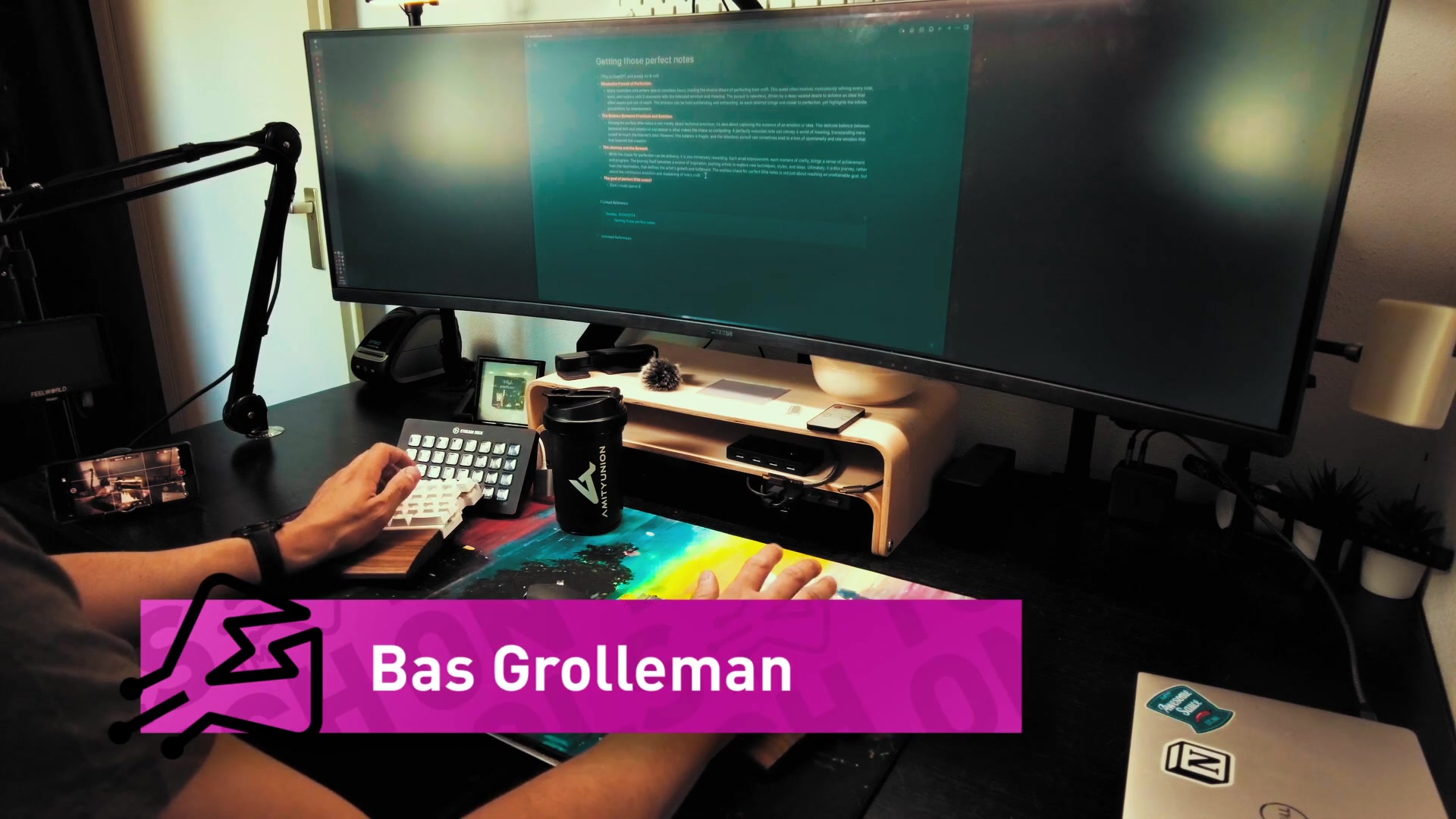
The modern information landscape is a double-edged sword. We have access to more information than ever before, but this abundance can easily lead to overwhelm. To cope, we often turn to personal Knowledge Management (PKM) systems, promising to tame the chaos and make us more productive. But are these systems truly helping, or are they contributing to the problem? The core issue is that we become so focused on capturing and organizing that we lose sight of the goal: understanding and applying the information.
PKM tools are helpful, the risk of hyperfocus on maintaining intricate digital system, which can leads to the time we should be spending understanding, reflecting, or creatively leveraging the information. We've essentially created a digital hamster wheel, constantly chasing after perfect organization instead of knowledge mastery. It's a solution to the problem we've created ourselves. This constant need for having well organized data that just takes hours of maintain each day, taking focus away from our satisfaction and real life questions.
The Illusion of Control and the Crumbling Notes
The allure of PKM is the promise of having everything at your fingertips, perfectly organized and readily accessible. This creates an illusion of control, but when faced with real-world challenges, those perfectly crafted notes often crumble. We find ourselves scrambling to find the answers we thought we had, only to discover that our carefully constructed systems don't Translate well to the complexities of real-world problems.

The problem we face is that these perfect notes that we create actually can't address our actual real world needs. This leads to a state of scrambling for an answer from perfect notes that simply can't help you.
The Time Sink and the Wasteful Nature of Note-Taking

Another significant drawback is the sheer amount of time invested in maintaining these systems. Hours each day are devoted to creating perfect little notes, meticulously tagging and linking them, all in the pursuit of some elusive sense of order. But how much of that effort actually translates into actionable knowledge? There's an old quote that says, "Half the money I spend on Advertising is wasted; the trouble is I don't know which half." This sentiment rings true for note-taking as well. Half the notes you make are likely wasted, but you don't know which half. This means we're spending valuable time and energy on tasks that may not be contributing to our goals.
Embracing a Simpler Approach to Knowledge Management
Stop Lying to Yourself and Embrace Simplicity
It's time to stop lying to ourselves about the effectiveness of overly complex PKM systems. Embrace a simpler way to manage information, one that prioritizes understanding and application over meticulous organization. There's a quote that says "Half the Notes you make are Wasted". We need to embrace this simple truth to be less caught up with what we write down, rather we just need to care more about the output. Focus on the results that you are working for when you go about taking notes.
The Diverge and Converge Concept

The concept of diverge and converge offers a helpful framework for understanding the note-taking process. Divergence involves gathering information from various sources, while convergence focuses on synthesizing and applying that information. The problem is that we often get stuck in the divergence phase, endlessly collecting information without ever taking the time to truly understand it. This leads to a vast desert of knowledge with occasional rocks of insight, but we're too busy exploring the desert to notice the mountain in the distance.
While it's important to gather enough information during the diverge phase, we often end up collecting everything, creating a vast desert of knowledge with occasional rocks of insight. But because we are so busy exploring that desert, we don't have the time to look up and see the mountain in the distance, and well, basically, walk in that general direction to get to some actual results.
It's a workflow, not an app

While tools and systems can be helpful, they're not a substitute for a clear understanding of your goals and the information you need to achieve them. Stop making systems, tools, and automation that makes things harder for you and simplify the process to get better outputs. What matters is the workflow, and eliminating unessacry information. It's always important to ask the question of " What am I doing this for?".
Streamlining Your Note-Taking: Practical Tips
Filtering Information Ruthlessly
Learn to filter information ruthlessly, focusing on what truly adds value and what you'll need in the future. Ask yourself: Is this information truly valuable? Will I need it in the future? Is it genuinely interesting, or am I just writing for the sake of writing? Stop to capture everything in your notes but filter the information for your needs.

Ask yourself some questions to help you when it comes to filter your infromation:
- What value does it add?
- Do you need it in the future?
- Is it interesting?
There is another thing that needs to be accounted for which is chaos! Don't stress with having a perfect system of notes but know in yourself to accept it.
Embrace Imperfection and Accept the Chaos
Let go of the need for perfect organization and embrace the chaos. Don't spend countless hours trying to create a pristine, polished set of notes. The need for perfect order creates more work for an output that is marginal. Rather embrace a more relaxed approach. Embrace the fact that your brain is messy and your notes will be messy as a result of it.

If we have an issue where the world forgets about us, then you should be okay as well forgetting that things get done by skipping a few notes and you'll be great at it.
The One-Hour Reading, Two-Hour Note-Taking Conundrum: Re-evaluating the Approach
If you find yourself spending two hours organizing notes for every hour spent reading, it's time to re-evaluate your approach. This ratio is unsustainable and suggests you're prioritizing organization over understanding. Focus on limiting the amount of information you write and organize.

As the presenter says, there is something to account for as well. If you were to spend 1 Hour Reading a book, do you really have to spend 2 hours to sort thought and orgainze your notes?
Less is More: Limit Your Input and Free Up Time
By limiting your input, you free up time for more important things: thinking, reflecting, relaxing, and simply being human. Limit you input to free up time to think and relfect. Limiting your imput means you don't need so much knowledge and with less knowledge, there won't be a need for a complex systems of personal knowledge system.
Free Resources and Minimalist Tools
Simple and Free Tools
To achieve a simplified knowledge management approach, it's not essential to invest in premium tools. Many people use basic note-taking apps like Notepad or Notes and find they perfectly suit their needs. These simple tools are often sufficient when the primary focus is on note-taking rather than sophisticated organization or linking features.
Logseq
Logseq is an open-source, local-first Knowledge Base that emphasizes privacy and linking between thoughts. It's completely free and focuses on long-term thinking. With this, the information about yourself will remain intact to link to other topics. But a bad thing to mention is that the process of writing your information still has to be done. The presenter also mentions he uses it as well.

As with logseq, the presenter emphasizes to just add the notes that come to the journal which helps the presenter's work flow.










Most people like


























Report
Please select a reason for reporting
- 13 Reasons to Switch from Snapchat to Text Messaging
- 7 Powerful Speech to Text Apps to Boost Productivity
- 10 Best Speech to Text Tools for Effortless Transcription
- 13 Free Tools to Easily Transcribe Audio to Text
- 15 Surprising Ways Google's Speech-to-Text Boosts Productivity
- 7 Best Free Online Audio to Text Transcription Tools
- 9 Tips to Transcribe Speech to Text Faster and Better
- 13 Best Speech to Text Software for Windows 10 in 2023
- 7 Tips for Choosing the Best Transcriber for Audio to Text
- 11 Reasons Why Dragon Speech-to-Text Apps are Game-Changers
- 6 Secrets to Enhance Your Speech to Text Transcription
- 6 Brilliant Ways to Boost Productivity with Talk-to-Text on Your MacBook
- 6 Ways Transcription Software Converts Audio to Text
- 8 Tips to Transcribe Speech to Text Like a Pro
- 6 Reasons IBM Watson Speech to Text is a Game-Changer
- 14 Powerful Ways Talk-to-Text Improves Your Workflow
- 12 Top Windows Speech-to-Text Software for Efficient Transcription
- 12 Game-Changing Benefits of Apple's Speech to Text Technology
- 9 Powerful Use Cases for AWS Speech to Text Technology
- 10 Easy Steps to Transcribe YouTube Videos to Text
- transcription audio en texte
- online audio transcription
- free audio file transcription
- free ai audio transcription
- audio transcription service
- audio transcription online free
- audio transcription free online
- audio to transcription software
- audio and transcript
- ai audio transcription free
- voice recording to text converter
- translate voice recording to text
- record voice to text
- audio recording to text converter
- voice recording and transcription
- chatgpt voice to text
- gmail voice to text
- speech to text reader
- speech to text ai free
- speech to talk
- Revolutionizing Storytelling: From Novels to Screenplays with AI
- Create Engaging Animated Explainer Videos with a Free AI Tool
- Stop Multi-Subscribing: Benchmark Top AI Visual Models in One Canvas
- Best Seedance 2.5 API Provider: Every Price on the Market, Checked at Source
- AI OnlyFans: How to Generate $30,000/Month (Legally)
- Transform Your Script into an Engaging Video with AI Video Maker!
- AI Marketing Automation: A Comprehensive Guide for Small Businesses
- Midjourney Alternative for Anime Art Creators: Why PixAI May Be Better for Character Workflows
- 10 Things Most People Get Wrong About AI Image Search
- AI Girlfriend Apps: Top Choices Redefining Relationships 2025
- AI Video Generation: Extend AI Videos for Free
- Master Loom: Create and Share Professional Videos with AI
- Create Captivating AI News Videos: Step-by-Step Guide
- Create Your Own AI News Channel with AI-Powered News Video Generator and AI Lip Sync
- Unleash the Power of Heygen AI: Create Unlimited Videos for Free!
- Kapwing Smart Cut: AI Video Editing for Creators & Marketers
- Upscale Video Quality with UniFab Upscaler AI: A Complete Guide
- Automate Cutting Long Videos with AI for Engaging Clips
- Master the Hacks for Realistic AI Videos with Stable Diffusion Controlnet and EBsynth
- Revideo.io: The Future of Reverse Video Search Technology

Copyright ©2026 toolify