






Table of Contents
- Key Points
- Comparing Generative AI Platforms for Data Summarization
- Practical Demonstration: Summarizing Data in Action
- Assessing the AI Competitors: A Comparative Analysis
- FAQ
- Related Questions


Comparing Generative AI Platforms for Data Summarization
An Overview of the Generative AI Landscape
Generative AI is rapidly transforming various industries by providing tools for automating tasks, enhancing creativity, and extracting insights from data. One crucial application is data summarization, where AI algorithms condense large volumes of text or data into concise and Meaningful summaries. This capability can be applied to various scenarios, from analyzing lengthy email Threads to distilling key findings from research Papers. This blog explores the effectiveness of various popular options for Data Summarization.
The generative AI landscape now includes numerous powerful options. This section focuses on a head-to-head comparison of:
- Microsoft COPILOT:

A Microsoft product, Copilot is designed to integrate seamlessly with Microsoft's ecosystem.
- OpenAI ChatGPT 3.5: The free version of OpenAI's popular chatbot, offering a versatile tool for text-based tasks.
- OpenAI ChatGPT 4: A paid subscription model of OpenAI, ChatGPT 4 is designed to provide more advanced and precise results.
- Google Gemini: A free AI model from Google, designed to compete with ChatGPT in the conversational AI space.
Setting the Stage: The Data Summarization Challenge
To provide a fair and practical comparison, each AI platform will be tasked with summarizing the same four-page document. This document could represent various real-world scenarios: a lengthy email thread, a complex research paper, or a detailed report. The goal is to assess each platform's ability to extract key information and Present it in a concise and understandable manner. The user has access to all the Mentioned websites, and will perform a live comparison to test out the efficiency of each for data summarization.
The 'Summary' Command:
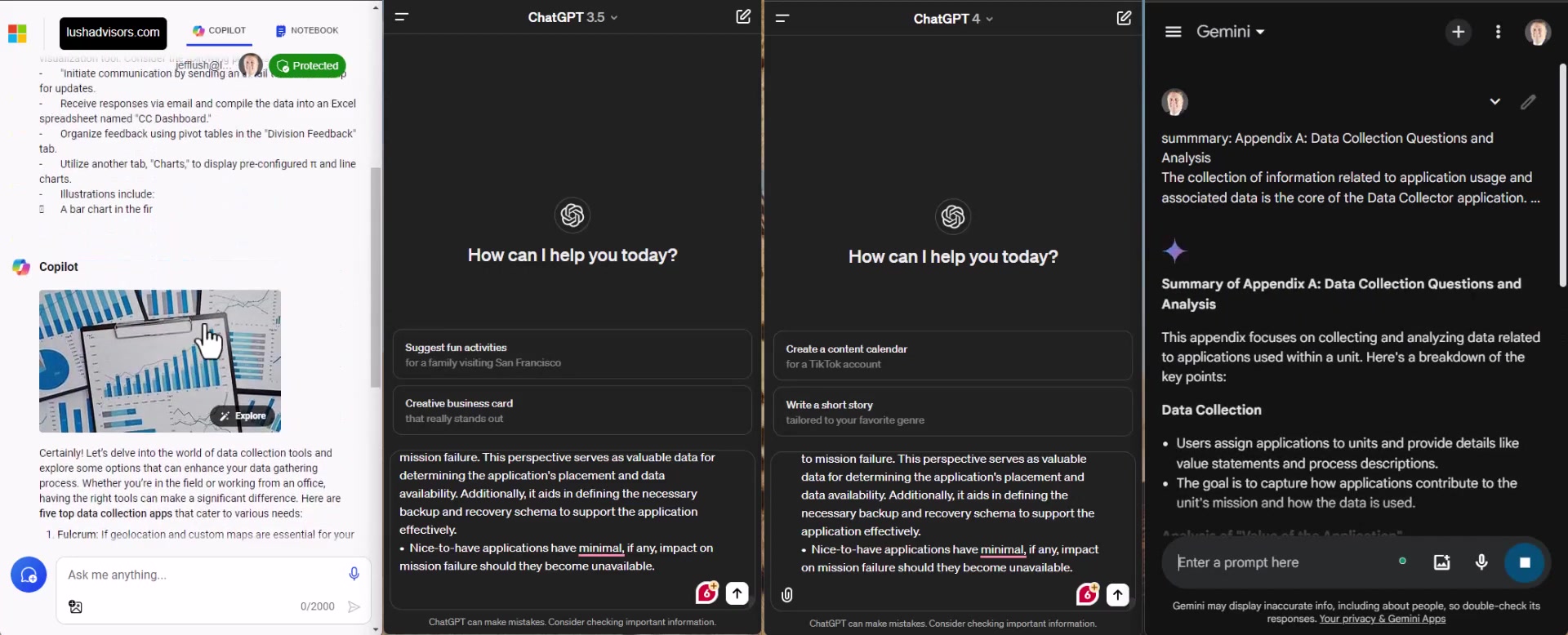
In this test, the summary command will be used as the primary instruction for all AI Tools. This approach will help evaluate how these tools naturally interpret and fulfill a basic summarization request. The blog dives deep into how each AI is capable of interpreting and completing tasks.
Copilot: A Unique Integration and Initial Impressions
Copilot brings Microsoft's AI ambitions directly into its existing ecosystem. Its tight integration with Microsoft products could be a selling point. The video will look at how well Copilot handles summarization and what makes it different.
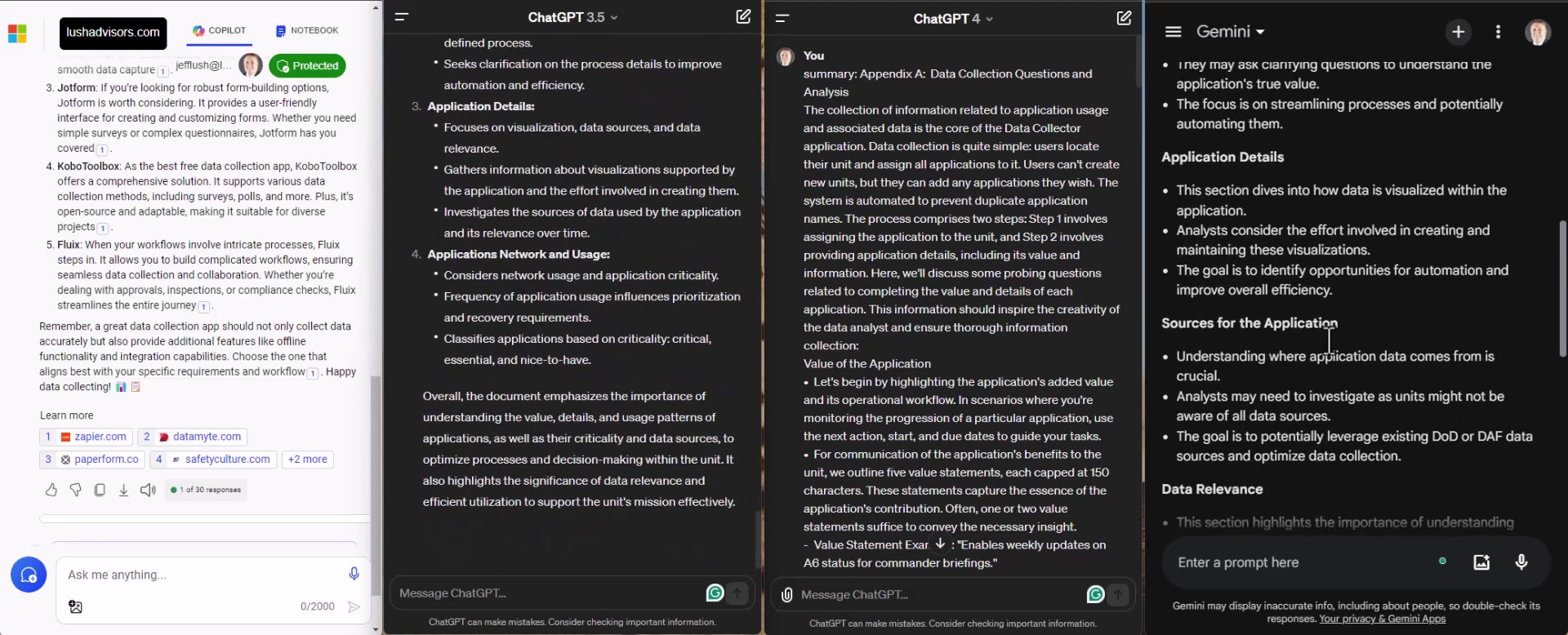
Unfortunatley, after the test had been performed it seemed Copilot did not make the cut for a good data summarization.
ChatGPT 3.5 and ChatGPT 4: A Side-by-Side Look
ChatGPT 3.5 is often the starting point for many users exploring generative AI. It’s free, accessible, and has proven itself capable. ChatGPT 4, however, promises enhanced performance at a cost of $20 per month.
ChatGPT 3.5 Results:
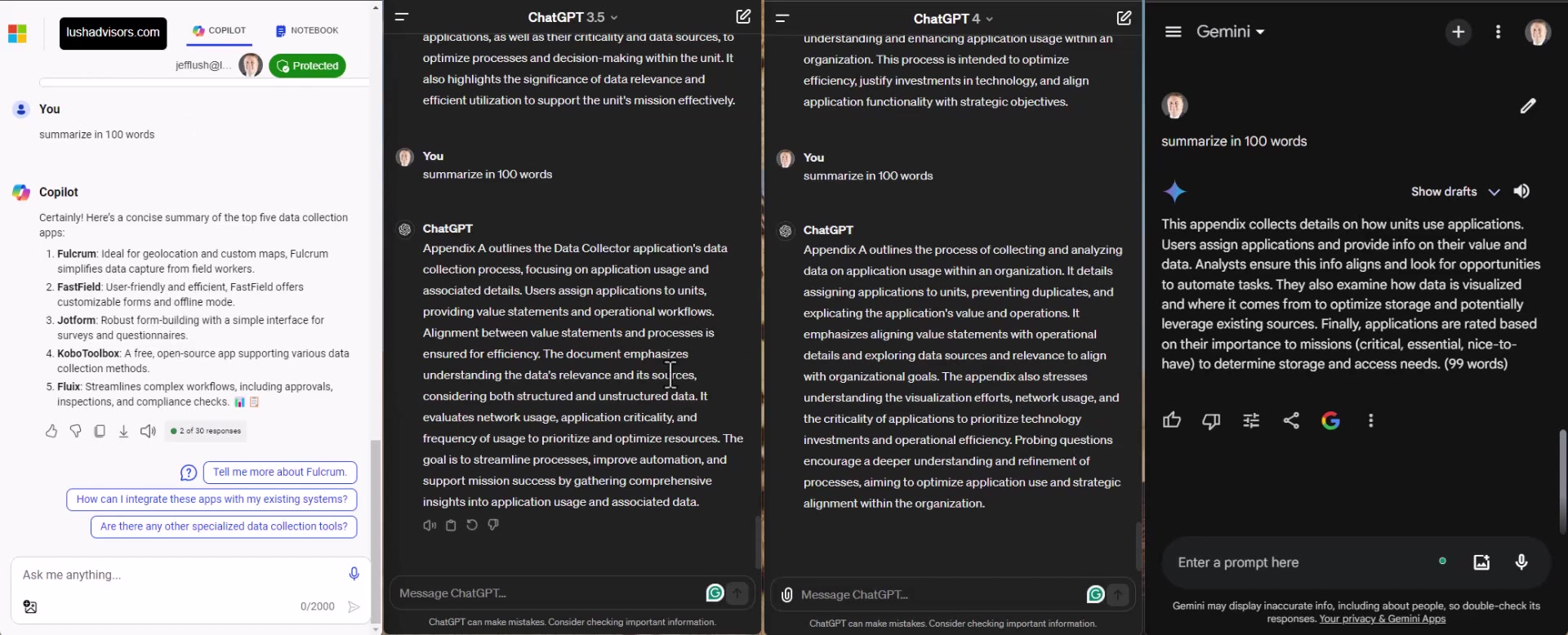
After the input data was entered, the ChatGPT 3.5 provided much of the same information that Gemini did.
ChatGPT 4 Results: ChatGPT 4 provided great results. The content was properly generated, however many would consider it to not be much better than ChatGPT 3.5. Whether it makes sense to pay for ChatGPT 4 may be down to personal preference.
Gemini: Google's Contender in the AI Arena
Gemini represents Google's attempt to take on ChatGPT. As a free tool, it holds considerable appeal, and the aim of this blog is to put it to the test. The blog discusses the strengths and weaknesses of each tool, what it is capable of, and it's ultimate utility.
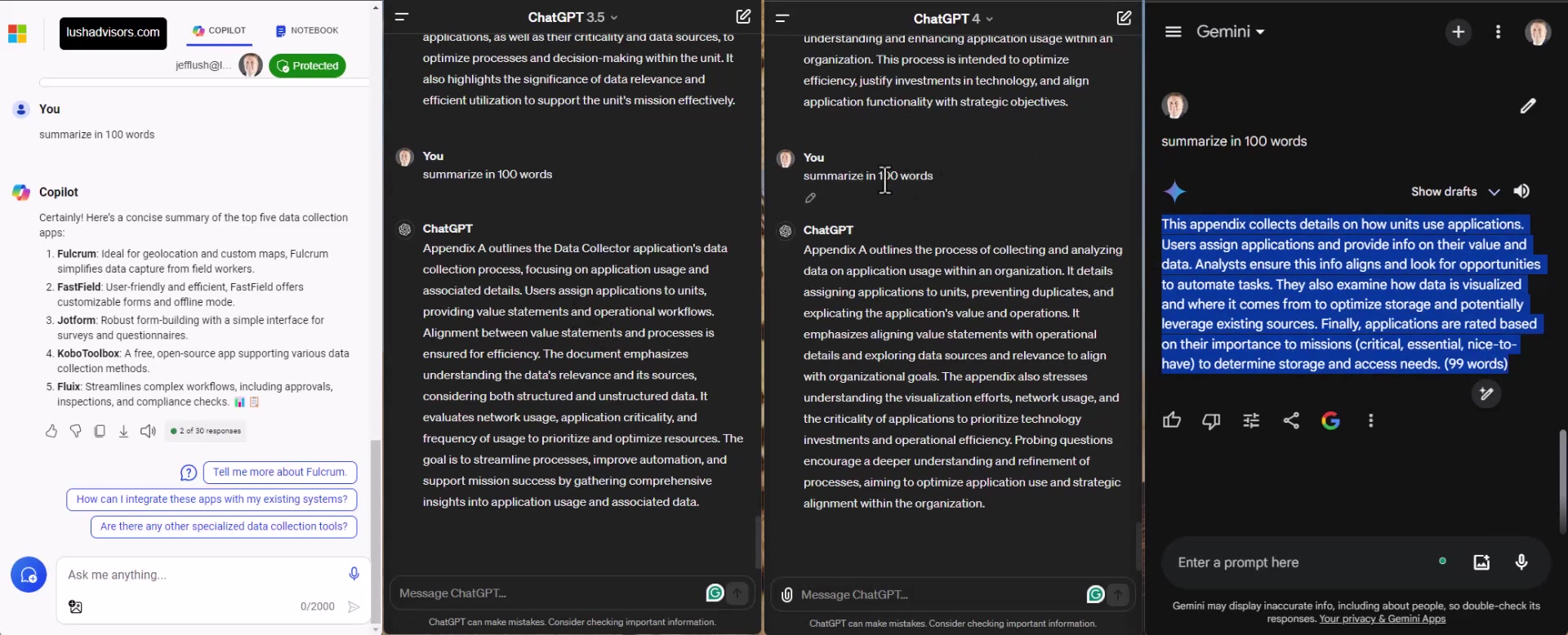
Gemini performed very well, and its ability to create a strong structure for a summary helped it stand out compared to it's competitors.
Practical Demonstration: Summarizing Data in Action
Initiating the Summarization Process
To initiate the data summarization process, a four-page document is selected. This document, as noted before, represents many real-world scenarios: a lengthy email thread, a complex research paper, or a detailed report. The first step is to copy all of the selected information to your clipboard.
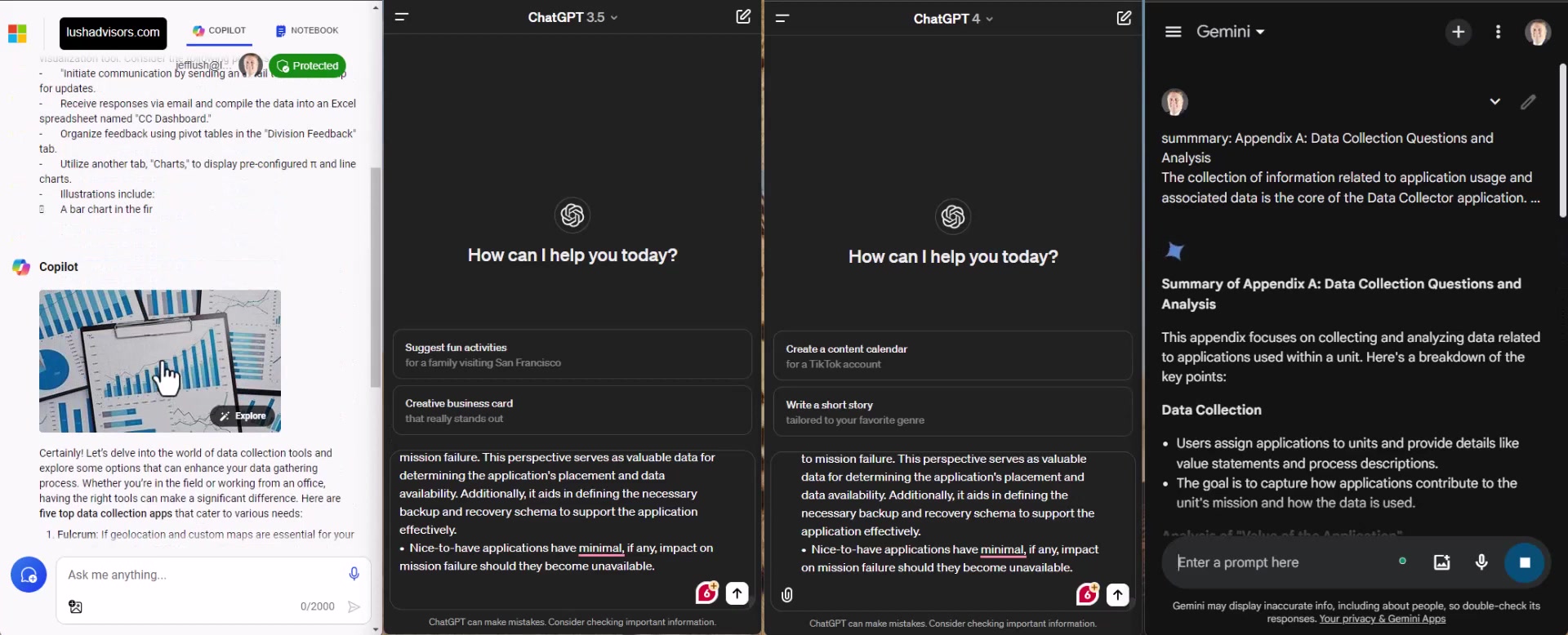
Then, each website requests that you tell it what to do. You can use the phrase Summary followed by the copied content.
This allows the generative AI to better understand what is expected, allowing for a better result.
Commanding Attention: Fine-Tuning the Summary with Specific Instructions
To take the summarization process further and test the AI's ability to follow specific instructions, an additional constraint will be added. The Prompt is adjusted to request that the summary be limited to 100 words, thus testing the efficiency and conciseness of the AI.
The prompt is adjusted again. This time, there is a request that the AI creates a YouTube title for a video, and a description of the video.
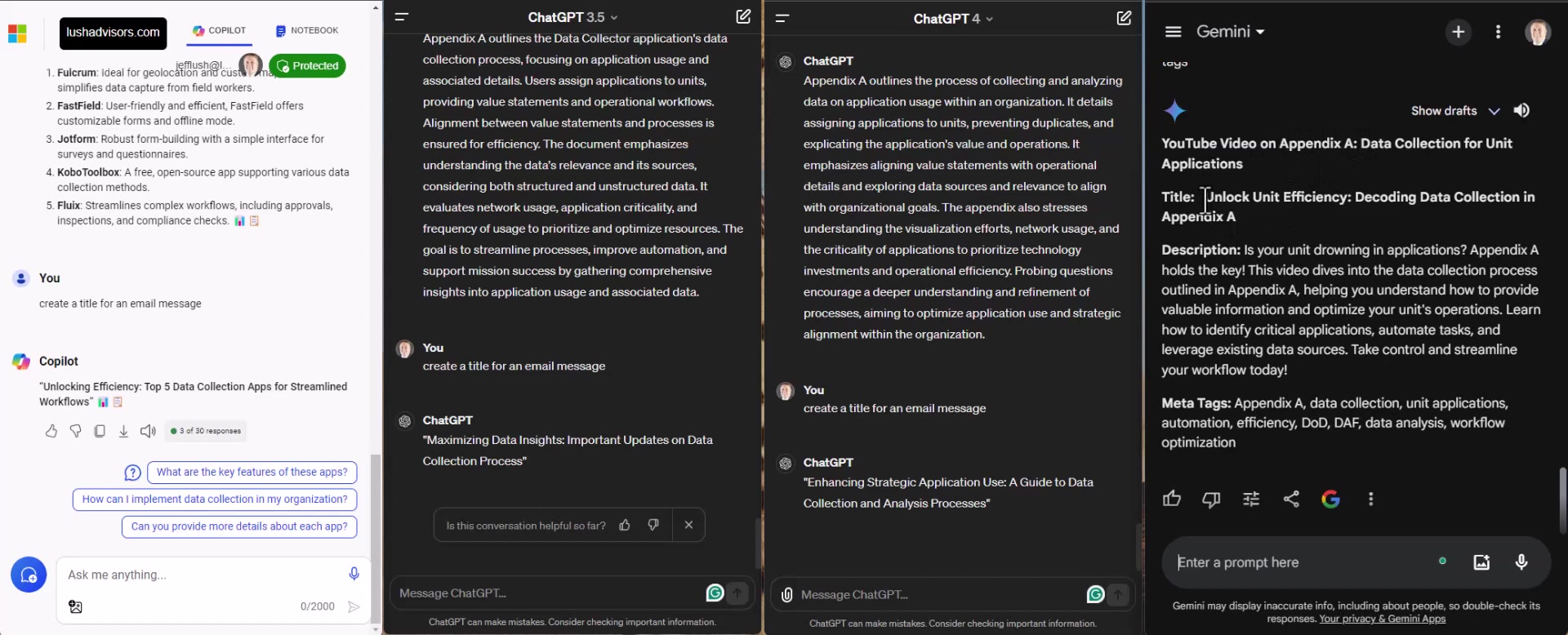
This will test the website's ability to create a creative result rather than a direct cut and dry summary.
It is discovered through testing, the website is capable of removing specific prompts that are present. For example, the WORD “Unit” was in the title and it was asked to be removed, and the AI was able to fulfill the prompt.


Most people like




































Report
Please select a reason for reporting
- 13 Reasons to Switch from Snapchat to Text Messaging
- 7 Powerful Speech to Text Apps to Boost Productivity
- 10 Best Speech to Text Tools for Effortless Transcription
- 13 Free Tools to Easily Transcribe Audio to Text
- 15 Surprising Ways Google's Speech-to-Text Boosts Productivity
- 7 Best Free Online Audio to Text Transcription Tools
- 9 Tips to Transcribe Speech to Text Faster and Better
- 13 Best Speech to Text Software for Windows 10 in 2023
- 7 Tips for Choosing the Best Transcriber for Audio to Text
- 11 Reasons Why Dragon Speech-to-Text Apps are Game-Changers
- 6 Secrets to Enhance Your Speech to Text Transcription
- 6 Brilliant Ways to Boost Productivity with Talk-to-Text on Your MacBook
- 6 Ways Transcription Software Converts Audio to Text
- 8 Tips to Transcribe Speech to Text Like a Pro
- 6 Reasons IBM Watson Speech to Text is a Game-Changer
- 14 Powerful Ways Talk-to-Text Improves Your Workflow
- 12 Top Windows Speech-to-Text Software for Efficient Transcription
- 12 Game-Changing Benefits of Apple's Speech to Text Technology
- 9 Powerful Use Cases for AWS Speech to Text Technology
- 10 Easy Steps to Transcribe YouTube Videos to Text
- transcription audio en texte
- online audio transcription
- free audio file transcription
- free ai audio transcription
- audio transcription service
- audio transcription online free
- audio transcription free online
- audio to transcription software
- audio and transcript
- ai audio transcription free
- voice recording to text converter
- translate voice recording to text
- record voice to text
- audio recording to text converter
- voice recording and transcription
- chatgpt voice to text
- gmail voice to text
- speech to text reader
- speech to text ai free
- speech to talk
- Meshy AI: How to Create 3D Models from Text and Images
- How SEO and Marketing Dashboards Empower Agencies to Drive Results
- How to Use AI Tools to Find Internal Linking Opportunities Across a Business Website
- Discover Your Perfect Haircut with AI Hairstyle Apps
- Free Reputation Calculator Tools: How They're Adapting to Score AI Visibility, Not Just Rankings
- Design Professional Flyers for Free on Your Phone
- Best Free Flyer Maker Apps for Android: Design Like a Pro
- How to Know If Your Business Is Ready for an AI Customer Service Agent
- Revolutionizing Storytelling: From Novels to Screenplays with AI
- Create Engaging Animated Explainer Videos with a Free AI Tool
- Automate Lead Generation: A Comprehensive Guide with AI Agents
- Revideo.io: The Future of Reverse Video Search Technology
- Revolutionizing Email Marketing Agency with AI
- Breaking the Character Drift Dilemma: A Practical Test of Smart Shot
- Meshy AI: How to Create 3D Models from Text and Images
- ASOMobile Helps Teams Benchmark App Store Screenshots Against Competitors
- How to Match LMS Software With Your Organization's Training Plan
- How to Convert BTC to HNT
- Unleashing the Power of AI: Cognizant's Roadmap for Transformation
- Frame to Video Review: A Practical Look at Turning Two Still Frames Into Motion

Copyright ©2026 toolify