































Table of Contents
- Key Points
- Understanding Language Models for Code
- Charting the Landscape of Code-Specific Language Models
- Frequently Asked Questions (FAQ)
- Delving Deeper: Related Questions Explored


Understanding Language Models for Code
The Promise of Automatic Code Generation
The core idea behind automatic code generation is to augment the abilities of developers, freeing them from repetitive tasks and enabling them to concentrate on higher-level strategic thinking
. This automation aims to boost productivity across a multitude of coding-related tasks. Automatic code generation can manifest in various ways, including generating code from natural language descriptions, providing intelligent code completion suggestions, and automating routine coding patterns.
One of the primary goals of automatic code generation is to reduce the learning curve for new programming languages and frameworks. By automating code creation, developers can quickly prototype and experiment with new technologies, reducing the time and effort required to master them. This can lead to more innovation and faster project turnaround times. The concept helps to make software more efficient to make and quicker to get new ideas off the ground, that can improve businesses quickly and efficiently. Code generation can reduce learning overhead and speed-up prototype development.
Key benefits of embracing automatic code generation:
- Increased Productivity: Automating routine coding tasks allows developers to focus on complex problem-solving and innovative solutions.
- Reduced Learning Overhead: Automating code generation reduces the amount of specialized knowledge that developers have to know, and allows quicker development of new code.
- Faster Prototyping: Quickly generate code snippets and complete prototypes to validate ideas and iterate faster.
Limitations of Classic Single-Task Language Models
While neural language models have exhibited impressive capabilities in natural language processing, their initial applications to code generation were hampered by certain limitations
. Traditional language models are frequently trained as narrow specialists. These classical models require a big amount of training data to even function.
Such models, often trained on labeled datasets, lack the robustness and flexibility required for complex coding tasks. Because they need such a big base of training data, these models are expensive to create, and can only focus on limited topics. Moreover, they struggle to adapt to even minor variations in data or task specifications. Collecting and labeling large training datasets is an effort-intensive and costly endeavor.
Key Challenges associated with classic language models:
- Narrow Expertise: Models are proficient in only specific tasks, limiting their broad applicability.
- High Data Dependency: Thousands of labeled examples are necessary for effective training.
- Limited Robustness: They are vulnerable to slight data or task changes.
The Rise of Pre-trained Multi-Task Language Models
To overcome the shortcomings of classical language models, the field has shifted towards pre-trained multi-task models
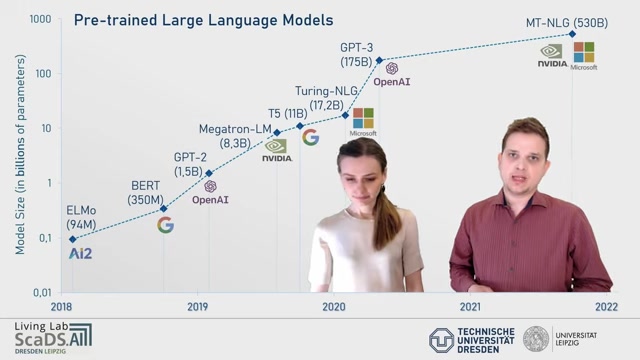
. This approach leverages massive quantities of freely available, unlabeled data to pre-train language models in an unsupervised manner. The pre-trained models can then be adapted to a plethora of tasks with little to no modification.
This paradigm shift has yielded substantial benefits:
- Improved Robustness: Models exhibit greater adaptability and resilience to data variations.
- Reduced Data Requirements: Fewer labeled examples are needed for fine-tuning.
- Enhanced Flexibility: Models can be applied to a broader array of programming-related tasks.
Benefits of Pre-trained Multi-Task Language Models:
- Adaptability to the variance of data.
- The need for smaller data sets to properly train the model.
- The increase to the tasks that programming is related to.
The Transformer Revolution
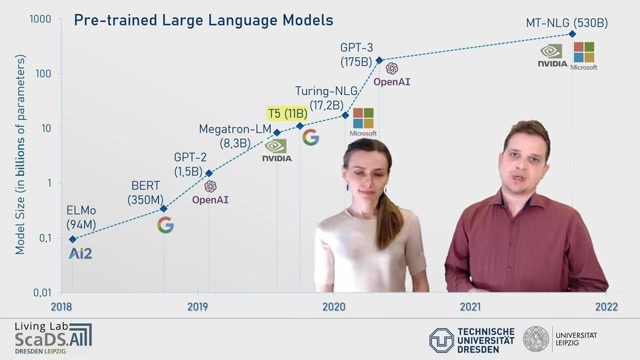
The performance and capabilities of language models have been profoundly influenced by the Transformer architecture. Transformer-based models, including BERT, T5, and GPT-3, have demonstrated superior performance in both natural language processing and code generation. These models are particularly adept at learning contextual relationships and dependencies within code, enabling more accurate and coherent code generation
.
These architectures provide a strong foundation for code generation tasks:
- BERT: Known for its bidirectional processing, enabling deep contextual understanding.
- T5: Models all text processing tasks within a text-to-text framework.
- GPT-3: Utilizes an extremely large number of parameters for advanced code generation capabilities.
Charting the Landscape of Code-Specific Language Models
Code-Specific Language Models
The application of language models to code-related tasks has resulted in a diverse ecosystem of specialized models, each tailored to specific coding needs
. While neural language models were initially applied to code related tasks and were rather small, they grew in size to become Large Language Models. Each specialized model contains unique data and information that will help developers reach whatever goals they may have.
Key code-specific language models:
| Model | Description |
|---|---|
| CodeGPT | Designed for code-specific tasks using the GPT architecture. |
| CodeBERT | Utilizes the BERT architecture to understand code context. |
| CodeT5 | Adapts the T5 model for code generation and translation. |
| CuBERT | A variant of BERT specifically pre-trained on a large corpus of code. |
| TabNine | A commercial code completion tool that uses deep learning. |
| PyMT5 | Specifically designed for Python-related tasks. |
| PLBART | A BART-based model for programming language understanding and generation. |
| CodeParrot | Generates Python code from natural language descriptions. |
| GPT-Neo | An open-source replication of the GPT-3 architecture. |
| PolyCoder | Designed for generating code in multiple programming languages. |
| GPT-J | Another high-performing, open-source GPT variant. |
| Codex | A powerful code generation model from OpenAI, powering GitHub Copilot. |
| GPT-NeoX | Large-scale, open-source language model for research. |
| AlphaCode | Developed by Google DeepMind, excelling in competitive programming tasks. |
| Austin '21 | An advanced model focusing on semantic understanding of code. |
As illustrated in the video at timestamp , there has been a significant trend of increasingly large pre-trained language models, with companies such as Ai2, Google, OpenAi, NVidia, and Microsoft publishing their code.





Most people like


































Report
Please select a reason for reporting
- 13 Reasons to Switch from Snapchat to Text Messaging
- 7 Powerful Speech to Text Apps to Boost Productivity
- 10 Best Speech to Text Tools for Effortless Transcription
- 13 Free Tools to Easily Transcribe Audio to Text
- 15 Surprising Ways Google's Speech-to-Text Boosts Productivity
- 7 Best Free Online Audio to Text Transcription Tools
- 9 Tips to Transcribe Speech to Text Faster and Better
- 13 Best Speech to Text Software for Windows 10 in 2023
- 7 Tips for Choosing the Best Transcriber for Audio to Text
- 11 Reasons Why Dragon Speech-to-Text Apps are Game-Changers
- 6 Secrets to Enhance Your Speech to Text Transcription
- 6 Brilliant Ways to Boost Productivity with Talk-to-Text on Your MacBook
- 6 Ways Transcription Software Converts Audio to Text
- 8 Tips to Transcribe Speech to Text Like a Pro
- 6 Reasons IBM Watson Speech to Text is a Game-Changer
- 14 Powerful Ways Talk-to-Text Improves Your Workflow
- 12 Top Windows Speech-to-Text Software for Efficient Transcription
- 12 Game-Changing Benefits of Apple's Speech to Text Technology
- 9 Powerful Use Cases for AWS Speech to Text Technology
- 10 Easy Steps to Transcribe YouTube Videos to Text
- transcription audio en texte
- online audio transcription
- free audio file transcription
- free ai audio transcription
- audio transcription service
- audio transcription online free
- audio transcription free online
- audio to transcription software
- audio and transcript
- ai audio transcription free
- voice recording to text converter
- translate voice recording to text
- record voice to text
- audio recording to text converter
- voice recording and transcription
- chatgpt voice to text
- gmail voice to text
- speech to text reader
- speech to text ai free
- speech to talk
- How to Use AI Tools to Find Internal Linking Opportunities Across a Business Website
- Discover Your Perfect Haircut with AI Hairstyle Apps
- Free Reputation Calculator Tools: How They're Adapting to Score AI Visibility, Not Just Rankings
- Design Professional Flyers for Free on Your Phone
- Best Free Flyer Maker Apps for Android: Design Like a Pro
- How to Know If Your Business Is Ready for an AI Customer Service Agent
- Revolutionizing Storytelling: From Novels to Screenplays with AI
- Create Engaging Animated Explainer Videos with a Free AI Tool
- Stop Multi-Subscribing: Benchmark Top AI Visual Models in One Canvas
- Best Seedance 2.5 API Provider: Every Price on the Market, Checked at Source
- Top AI Social Media Management Tools: Automate Your Content Strategy
- Free AI Text to Video Generator: Create Stunning Videos from Text
- Discover 17 ChatGPT Alternatives: A Comprehensive Comparison
- Character.AI vs. Janitor AI: Which AI Chat Platform Reigns Supreme?
- Top Virtual Assistant Companies in 2026: Reviews, Pricing, and Plans Compared
- Unveiling FaceCheck.ID: Revolutionizing Reverse Image Searches with AI
- 11 Best AI Dialers in 2026: Features, Pricing, Pros and Cons
- How I Direct Consistent AI Clips: A Hands-On Guide to Multi-Model Generation
- A Realistic Review of the Photo Generator Image Tool
- Playwright MCP Server: Automated Web Testing with Agent Mode

Copyright ©2026 toolify