































Table of Contents
- Key Points
- Understanding the 'Sereja and Stairs' Problem
- Effective Strategies for Tackling the Challenge
- Step-by-Step Solution Implementation
- Advantages and Disadvantages of the Counting Array Approach
- Frequently Asked Questions (FAQ)
- Related Questions


Understanding the 'Sereja and Stairs' Problem
What is a Stair Sequence?
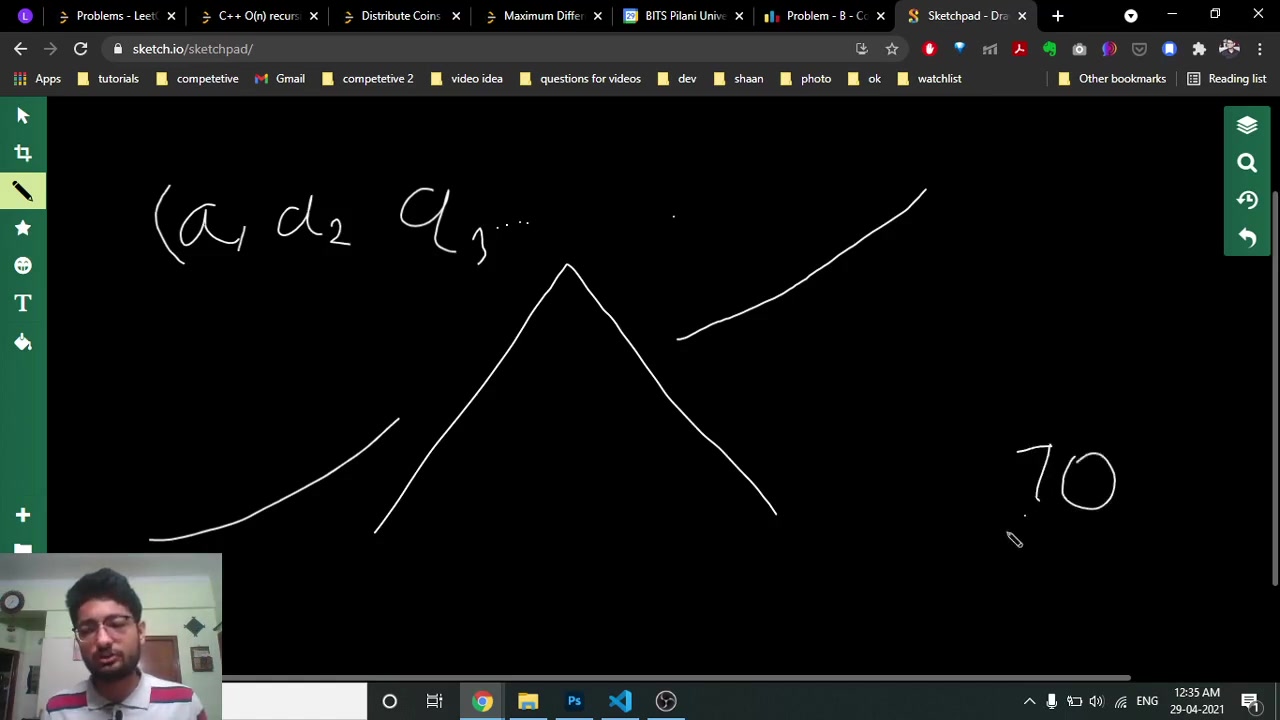
The 'Sereja and Stairs' problem revolves around manipulating integer sequences to form a 'stair sequence'. A stair sequence is defined as a sequence of numbers that first strictly increases and then strictly decreases
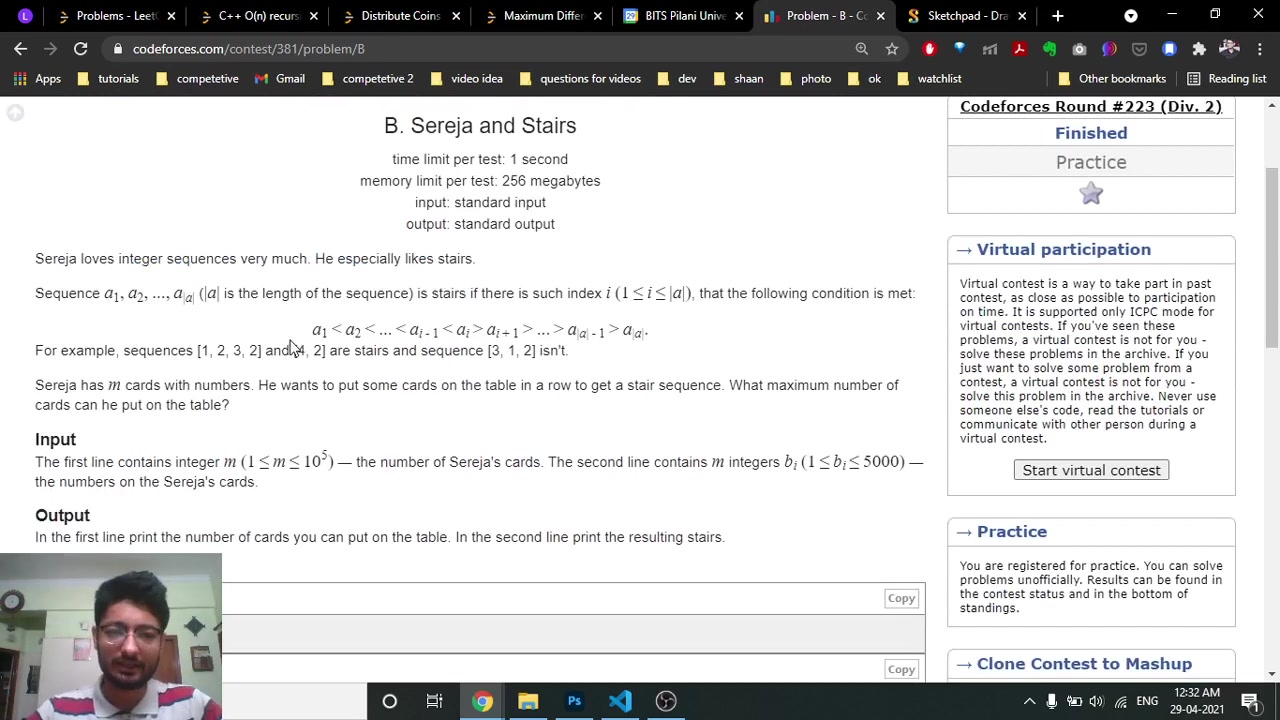
. In other words, if you have a sequence (a_1, a_2, ..., a_n), it should satisfy the condition (a_1 < a_2 < ... < ai > a{i+1} > ... > a_n) for some index (i). The challenge is to select numbers from a given set to form the longest possible stair sequence.
Key Characteristics:
- The sequence must be strictly increasing initially. No two consecutive numbers can be equal during the increasing phase.
- After reaching the peak (the largest number), the sequence must strictly decrease. No two consecutive numbers can be equal during the decreasing phase either.
For instance, the sequence 1, 2, 3, 2, 1 is a valid stair sequence, while 1, 2, 2, 1 is not, due to the repetition of 2 in the increasing portion. A valid solution strategy necessitates understanding this core property.
Problem Statement Breakdown
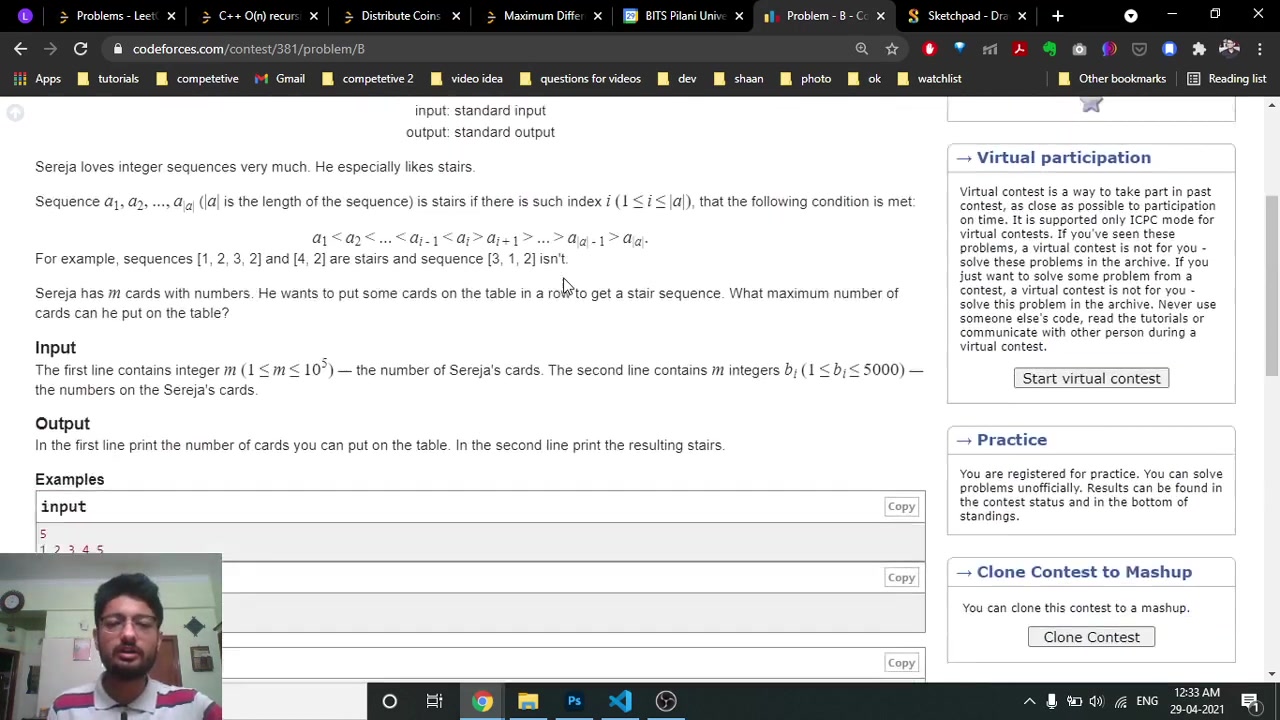
The problem gives you (m) cards with numbers, and the goal is to select a subset of these cards to create a stair sequence that has the maximum possible length. The constraints imposed are that each number can be used at most once, and the sequence must strictly increase and then strictly decrease.
The Input:
The input consists of two lines:
- The first line contains an integer (m) ((1 ≤ m ≤ 10^5)), representing the number of cards Sereja has.
- The second line contains (m) integers (b_i) ((1 ≤ b_i ≤ 5000)), which are the numbers on Sereja’s cards.
The Output:
You need to output two lines:
- The first line should contain an integer representing the maximum number of cards that can be put on the table to form a stair sequence.
- The second line should print the resulting stair sequence.
Example:
Input:
5
1 2 3 4 5
Output:
5
5 4 3 2 1
Input:
6
1 1 2 2 3 3
Output:
5
1 2 3 2 1
Effective Strategies for Tackling the Challenge
The Core Observation: Distinct Numbers
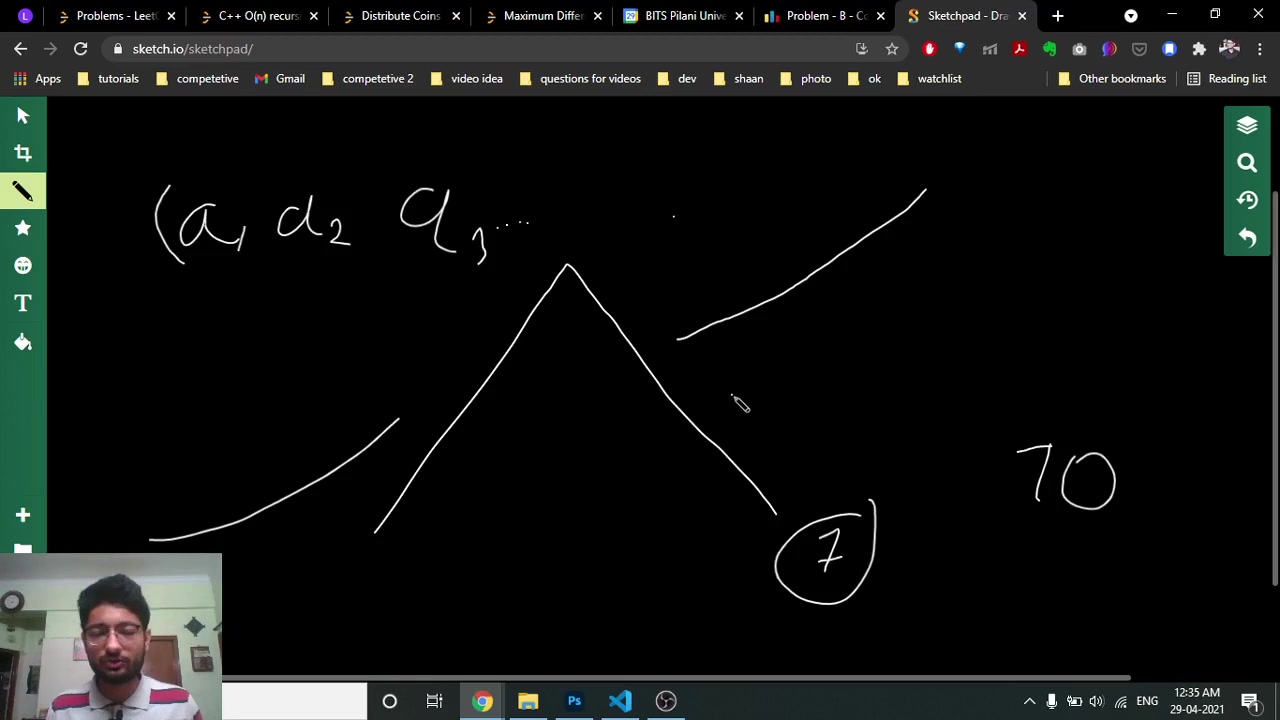
A critical observation for solving this problem is recognizing that each number can only be used once in the stair sequence. This means if a number appears multiple times in the input, you can only use one instance of it in your final sequence
. Thus, identifying and counting distinct numbers becomes essential. For instance, if you're given the input 1 2 2 3 3 3, you should only consider 1, 2, 3 as potential candidates for the stair sequence, respecting their unique presence.
To handle this effectively, consider using a data structure that facilitates counting the frequency of each number. A simple array or a hash map could serve this purpose well. The goal is to ensure that you have a clear understanding of how many distinct numbers are available for sequence construction.
Leveraging the Constraint: B is up to 5000
The constraint that each number (b_i) is between 1 and 5000 is highly significant as it allows you to efficiently use a counting array. This array, indexed from 1 to 5000, records the frequency of each number in the input. The constraint enables a simple and effective way to keep track of the numbers we can use .
For example, if the input is 1 2 3 4 5, you can create an array where the element at index i stores the count of number i. In this case, the array would be [1, 1, 1, 1, 1], indicating that each number appears once.
Constructing the Stair Sequence
Once you have the distinct numbers, constructing the stair sequence involves several steps:
- Increasing Part: Start with the smallest distinct number and incrementally add numbers to the sequence, ensuring each addition maintains the strictly increasing property. This is about assembling the 'steps' going upwards.
- Peak Selection: After assembling the increasing part, the largest number in the increasing sequence becomes the peak. This is the highest point of the stair.
- Decreasing Part: From the peak, construct the decreasing part of the sequence by adding numbers in strictly decreasing order. Ensure each addition maintains the strictly decreasing property.
When moving from one step to the next, it's important to prevent it from repeating. Remember, a valid stair sequence must not have numbers where the adjacent numbers are exactly the same. If you don’t prevent the stair sequence from containing repeated numbers, then the stair sequence will not be the maximum length
.
Step-by-Step Solution Implementation
Step 1: Read Input and Count Frequencies
First, read the input and store the frequencies of each number using a counting array. This step ensures you know the distinct numbers and their availability for sequence construction.
#include <iostream>
#include <vector>
#include <algorithm>

using namespace std;

int main() {
    int m;
    cin >> m;

    vector<int> count(5001, 0); // Counting array
    for (int i = 0; i < m; ++i) {
        int num;
        cin >> num;
        count[num]++;
    }

    // Remaining steps will follow
    return 0;
}
Step 2: Build the Increasing Sequence
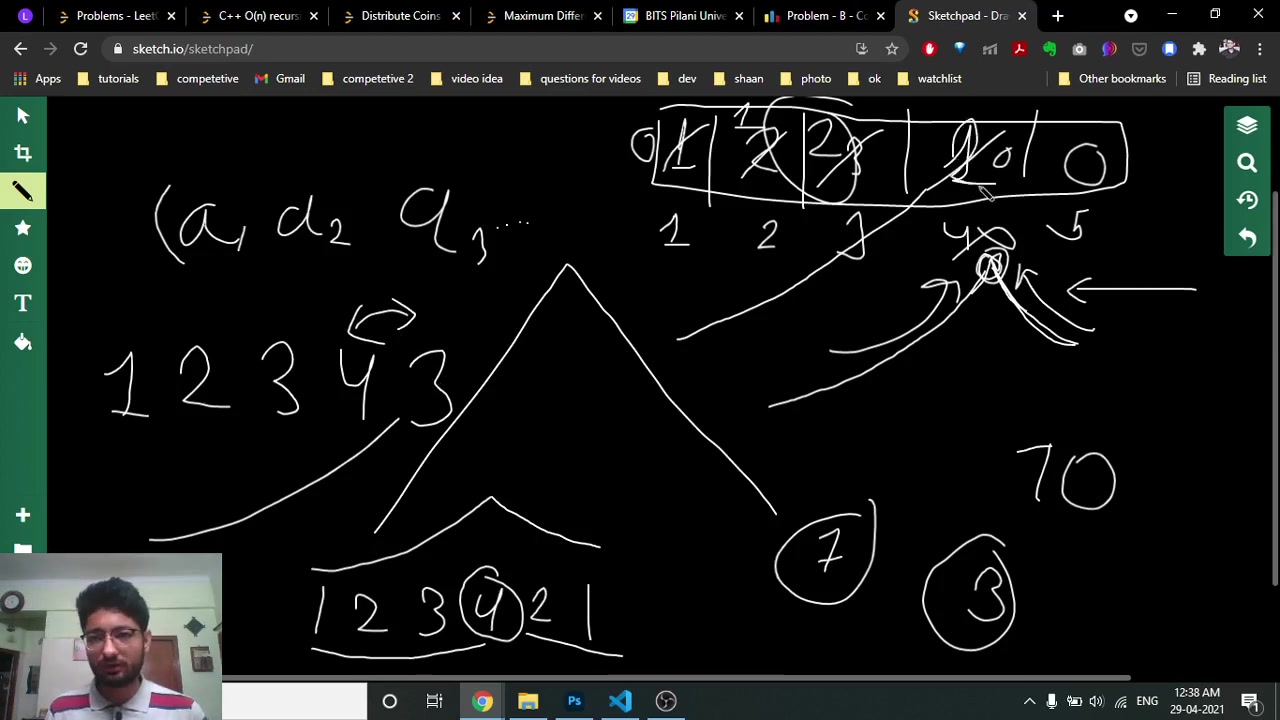
Next, iterate through the counting array to construct the increasing part of the stair sequence. Only add numbers that have a count greater than zero and haven't been added yet
.
    vector<int> increasing;
    for (int i = 1; i <= 5000; ++i) {
        if (count[i] > 0) {
            increasing.push_back(i);
            count[i]--; // Reduce the count
        }
    }
Step 3: Build the Decreasing Sequence
From the peak, construct the decreasing part of the sequence by iterating backward through the counting array, avoiding repetition of the peak element.
    vector<int> decreasing;
    if (!increasing.empty()) {
        int peak = increasing.back();
        for (int i = 5000; i >= 1; --i) {
            if (count[i] > 0 && i != peak) {
                decreasing.push_back(i);
                count[i]--; // Reduce the count
            }
        }
    }
Step 4: Combine and Output
Combine the increasing and decreasing sequences, and output the result, adhering to the problem's output format.
    vector<int> stairSequence = increasing;
    stairSequence.insert(stairSequence.end(), decreasing.begin(), decreasing.end());

    cout << stairSequence.size() << endl;
    for (int i = 0; i < stairSequence.size(); ++i) {
        cout << stairSequence[i] << (i == stairSequence.size() - 1 ? "" : " ");
    }
    cout << endl;








Most people like


































Report
Please select a reason for reporting
- 13 Reasons to Switch from Snapchat to Text Messaging
- 7 Powerful Speech to Text Apps to Boost Productivity
- 10 Best Speech to Text Tools for Effortless Transcription
- 13 Free Tools to Easily Transcribe Audio to Text
- 15 Surprising Ways Google's Speech-to-Text Boosts Productivity
- 7 Best Free Online Audio to Text Transcription Tools
- 9 Tips to Transcribe Speech to Text Faster and Better
- 13 Best Speech to Text Software for Windows 10 in 2023
- 7 Tips for Choosing the Best Transcriber for Audio to Text
- 11 Reasons Why Dragon Speech-to-Text Apps are Game-Changers
- 6 Secrets to Enhance Your Speech to Text Transcription
- 6 Brilliant Ways to Boost Productivity with Talk-to-Text on Your MacBook
- 6 Ways Transcription Software Converts Audio to Text
- 8 Tips to Transcribe Speech to Text Like a Pro
- 6 Reasons IBM Watson Speech to Text is a Game-Changer
- 14 Powerful Ways Talk-to-Text Improves Your Workflow
- 12 Top Windows Speech-to-Text Software for Efficient Transcription
- 12 Game-Changing Benefits of Apple's Speech to Text Technology
- 9 Powerful Use Cases for AWS Speech to Text Technology
- 10 Easy Steps to Transcribe YouTube Videos to Text
- transcription audio en texte
- online audio transcription
- free audio file transcription
- free ai audio transcription
- audio transcription service
- audio transcription online free
- audio transcription free online
- audio to transcription software
- audio and transcript
- ai audio transcription free
- voice recording to text converter
- translate voice recording to text
- record voice to text
- audio recording to text converter
- voice recording and transcription
- chatgpt voice to text
- gmail voice to text
- speech to text reader
- speech to text ai free
- speech to talk
- How to Use AI Tools to Find Internal Linking Opportunities Across a Business Website
- Discover Your Perfect Haircut with AI Hairstyle Apps
- Free Reputation Calculator Tools: How They're Adapting to Score AI Visibility, Not Just Rankings
- Design Professional Flyers for Free on Your Phone
- Best Free Flyer Maker Apps for Android: Design Like a Pro
- How to Know If Your Business Is Ready for an AI Customer Service Agent
- Revolutionizing Storytelling: From Novels to Screenplays with AI
- Create Engaging Animated Explainer Videos with a Free AI Tool
- Stop Multi-Subscribing: Benchmark Top AI Visual Models in One Canvas
- Best Seedance 2.5 API Provider: Every Price on the Market, Checked at Source
- Top AI Social Media Management Tools: Automate Your Content Strategy
- Free AI Text to Video Generator: Create Stunning Videos from Text
- Discover 17 ChatGPT Alternatives: A Comprehensive Comparison
- Character.AI vs. Janitor AI: Which AI Chat Platform Reigns Supreme?
- Top Virtual Assistant Companies in 2026: Reviews, Pricing, and Plans Compared
- Unveiling FaceCheck.ID: Revolutionizing Reverse Image Searches with AI
- 11 Best AI Dialers in 2026: Features, Pricing, Pros and Cons
- How I Direct Consistent AI Clips: A Hands-On Guide to Multi-Model Generation
- A Realistic Review of the Photo Generator Image Tool
- Playwright MCP Server: Automated Web Testing with Agent Mode

Copyright ©2026 toolify