































Table of Contents
- Key Points
- Understanding AtCoder's 'Final Day' Problem
- Strategizing the Optimal Solution
- Analyzing Solution Approaches
- Frequently Asked Questions
- Related Questions


Understanding AtCoder's 'Final Day' Problem
Problem C: The Scenario
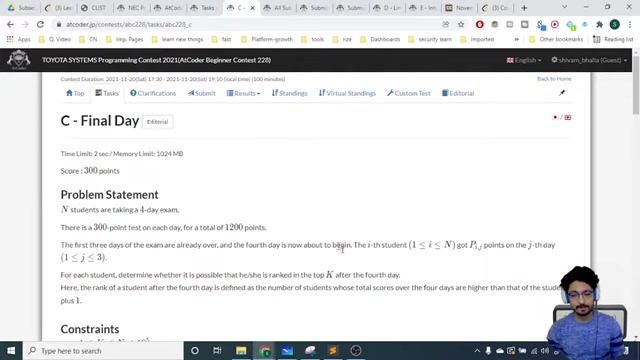
The "Final Day" problem presents a scenario where N students are taking a four-day exam, where each day's exam is worth 300 points, leading to a maximum score of 1200 points. The results of the first three days are already known, and the goal is to determine if a student can secure a top K rank after the fourth day's exam. This problem is centered around effectively manipulating the final exam score and its rank.
Understanding Rank Definition: Rank is defined by the number of students whose total scores across the four days are higher than the student plus one. This definition underscores that minimizing other students' scores while maximizing the target student's score is key to optimizing rank.
The essence of the "Final Day" challenge relies on strategic thinking, where you must consider all potential scores to deduce whether an individual can attain a top-tier ranking. To secure a desirable rank, students aim to score optimally on the final exam and simultaneously consider how their performance relates to that of their peers.
Understanding this context provides a solid footing for approaching the development of a solution that aligns with the defined constraints and problem goals. The problem isn't merely about coding; it is about strategically manipulating scores to achieve the specified ranks.
Constraints
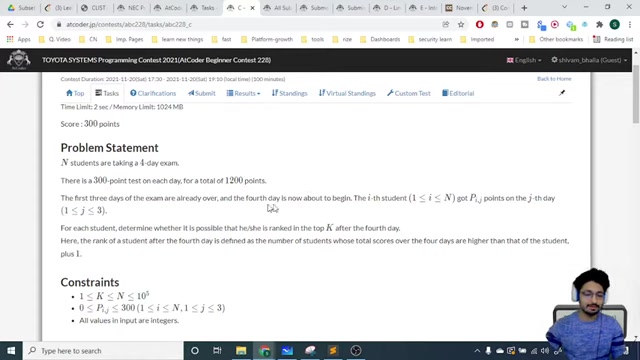
The problem constraints are critical in determining the appropriate solution strategies and optimizing code for performance. Understanding these constraints will help you navigate the problem efficiently.
- 1 ≤ K ≤ N ≤ 10^5: The number of top ranks (K) and the number of students (N) will influence algorithm design. Specifically, ensure to check on the edge cases
- 0 ≤ Pij ≤ 300 (1 ≤ i ≤ N, 1 ≤ j ≤ 3): The scores for each student on the first three days are capped at 300 points which limit possible overall scores.
- All values in input are integers: Integers reduce the complexity of numerical comparisons and data management.
These constraints suggest that time complexity is essential and also influences the types of binary search algorithms or sorting strategies that are applicable, given the maximum student count (N) of 100,000.
Input and Output Format
The input and output formats are designed to guide the algorithmic flow, ensuring that your program correctly processes data and presents results.
The format is as follows:
Input Format:
- The first line provides two integers: N (the number of students) and K (the target top rank).
- The subsequent N lines list the scores of each student on the first three days, with three integers Pi,1, Pi,2, Pi,3 per line.
Output Format:
Print N lines, indicating whether it's possible for each student to be ranked in the top K after the fourth day. Print “Yes” if possible, and “No” otherwise.
Understanding the input and output ensures clear data handling, as the program should reliably process student scores and return an appropriate “Yes” or “No” response based on the algorithmic outcome. For every student's data, you must compute whether a top K rank is potentially achievable and then provide a straightforward binary output based on these calculations.
Strategizing the Optimal Solution
Considering The 'Worst-Case' Scenario
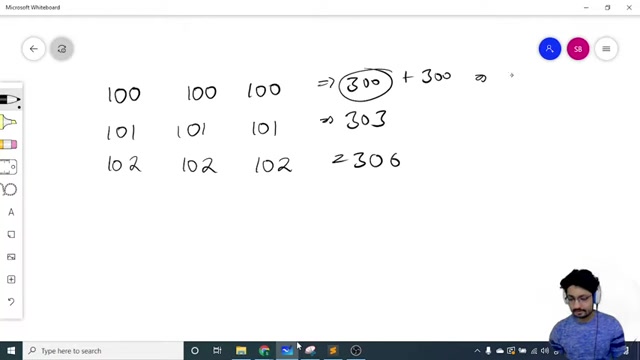
When facing a problem like "Final Day," the initial step involves framing the context to identify the critical factors at play. Recognizing that each student's ability to achieve a top K rank depends on their performance on the fourth day as well as their peers' performance, you can understand how that sets the stage for effective algorithm design.
Focus on Maximizing Points: The primary strategy should focus on maximizing an individual student's points on the fourth day since this is the only adjustable score after the third day. You must consider and evaluate potential point distributions to determine if scoring optimally on day four is sufficient to elevate the student into the top K ranks.
The 'Worst-Case' Thought Process: Evaluate a scenario where every other student also maximizes their score on the final day. Analyze and determine if our target student still lands in the top K. This approach helps discern whether simply optimizing one student’s score is viable or if you must delve deeper.
Thinking through the worst-case scenario will ensure that your solution accounts for the potential that all competing scores increase, and it gives you a benchmark on whether any manipulation of the fourth day scores can guarantee a top K finish.
Maximizing Points and Minimizing Competitors
To improve a student's rank on "Final Day," you have to maximize their score and minimize the scores of competitors. It is a dual-faceted approach.
- Maximizing: Assign the maximum possible score to a target student. It offers the best chance to increase the overall score.
- Minimizing: Evaluate what happens if every other student scores zero on day four. This extreme can tell us if the fourth-day score can ever help them achieve the top K.
This dual approach highlights that a student's ranking isn’t solely about maximizing their score but also about minimizing the comparative scores of competitors. It’s these strategies that ultimately decide whether students can alter their ranks on "Final Day."
Optimizing Time Complexity
Optimizing for time complexity is key to developing a viable solution for programming contests like the AtCoder Beginner Contest. Given the scale of possible inputs, inefficient algorithms can easily exceed the time limits, which can lead to failure.
If a more strategic approach isn't taken, time complexity for every student increases linearly, which leads to greater computational time.
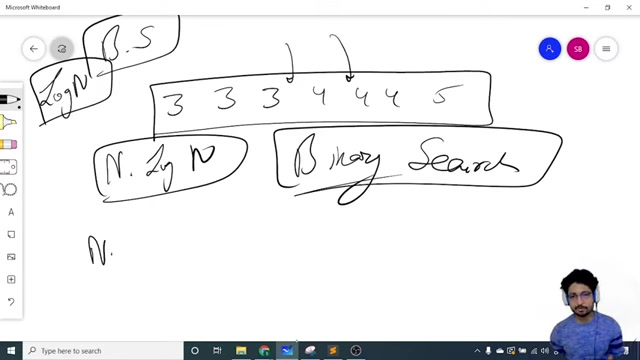
Sorting with N Log N Complexity: Using sorting algorithms, like those with N log N complexity, must be strategized to avoid inefficiently increasing the computational time with each student input.
Binary Search for Optimized Lookup Times: Employing a binary search may help lookup times when analyzing positions on a leaderboard since they allow lookup to happen in logarithmic time, which greatly reduces operations needed compared to linear search, especially when N (number of students) is large.
Considering these points, you can develop algorithms to minimize time complexity and optimize for efficiency. These adjustments are essential for any submission to remain competitive within the constraints of a programming contest.





Most people like


































Report
Please select a reason for reporting
- 13 Reasons to Switch from Snapchat to Text Messaging
- 7 Powerful Speech to Text Apps to Boost Productivity
- 10 Best Speech to Text Tools for Effortless Transcription
- 13 Free Tools to Easily Transcribe Audio to Text
- 15 Surprising Ways Google's Speech-to-Text Boosts Productivity
- 7 Best Free Online Audio to Text Transcription Tools
- 9 Tips to Transcribe Speech to Text Faster and Better
- 13 Best Speech to Text Software for Windows 10 in 2023
- 7 Tips for Choosing the Best Transcriber for Audio to Text
- 11 Reasons Why Dragon Speech-to-Text Apps are Game-Changers
- 6 Secrets to Enhance Your Speech to Text Transcription
- 6 Brilliant Ways to Boost Productivity with Talk-to-Text on Your MacBook
- 6 Ways Transcription Software Converts Audio to Text
- 8 Tips to Transcribe Speech to Text Like a Pro
- 6 Reasons IBM Watson Speech to Text is a Game-Changer
- 14 Powerful Ways Talk-to-Text Improves Your Workflow
- 12 Top Windows Speech-to-Text Software for Efficient Transcription
- 12 Game-Changing Benefits of Apple's Speech to Text Technology
- 9 Powerful Use Cases for AWS Speech to Text Technology
- 10 Easy Steps to Transcribe YouTube Videos to Text
- transcription audio en texte
- online audio transcription
- free audio file transcription
- free ai audio transcription
- audio transcription service
- audio transcription online free
- audio transcription free online
- audio to transcription software
- audio and transcript
- ai audio transcription free
- voice recording to text converter
- translate voice recording to text
- record voice to text
- audio recording to text converter
- voice recording and transcription
- chatgpt voice to text
- gmail voice to text
- speech to text reader
- speech to text ai free
- speech to talk
- How to Use AI Tools to Find Internal Linking Opportunities Across a Business Website
- Discover Your Perfect Haircut with AI Hairstyle Apps
- Free Reputation Calculator Tools: How They're Adapting to Score AI Visibility, Not Just Rankings
- Design Professional Flyers for Free on Your Phone
- Best Free Flyer Maker Apps for Android: Design Like a Pro
- How to Know If Your Business Is Ready for an AI Customer Service Agent
- Revolutionizing Storytelling: From Novels to Screenplays with AI
- Create Engaging Animated Explainer Videos with a Free AI Tool
- Stop Multi-Subscribing: Benchmark Top AI Visual Models in One Canvas
- Best Seedance 2.5 API Provider: Every Price on the Market, Checked at Source
- Top AI Social Media Management Tools: Automate Your Content Strategy
- Free AI Text to Video Generator: Create Stunning Videos from Text
- Discover 17 ChatGPT Alternatives: A Comprehensive Comparison
- Character.AI vs. Janitor AI: Which AI Chat Platform Reigns Supreme?
- Top Virtual Assistant Companies in 2026: Reviews, Pricing, and Plans Compared
- Unveiling FaceCheck.ID: Revolutionizing Reverse Image Searches with AI
- 11 Best AI Dialers in 2026: Features, Pricing, Pros and Cons
- How I Direct Consistent AI Clips: A Hands-On Guide to Multi-Model Generation
- A Realistic Review of the Photo Generator Image Tool
- Playwright MCP Server: Automated Web Testing with Agent Mode

Copyright ©2026 toolify