































Table of Contents
- Key Points
- Demystifying Artificial Intelligence
- Real-World Applications of Artificial Intelligence
- Getting Started with AI: A Practical Guide
- Pricing Models for AI Services and Tools
- Pros and Cons of Implementing AI
- Key Features of AI-Powered Systems
- Diverse Use Cases Across Industries
- Frequently Asked Questions About AI
- Related Questions About AI



Demystifying Artificial Intelligence
What is Artificial Intelligence?
Artificial Intelligence (AI) is a wide-ranging branch of computer science concerned with building smart machines capable of performing tasks that typically require human intelligence. These tasks include learning, problem-solving, decision-making, Speech Recognition, and visual perception.
The Core Idea Behind AI
At its core, AI aims to create systems that can mimic human cognitive functions. This involves developing algorithms and models that enable computers to analyze data, identify patterns, and make predictions or decisions based on those patterns. The ultimate goal is to create machines that can think and act rationally.
AI in Everyday Life
AI is already a pervasive force in our daily lives. From virtual assistants like Siri and Alexa to recommendation systems on Netflix and Amazon, AI is silently powering many of the technologies we use every day. Understanding AI is crucial for navigating the modern world and preparing for the future.
The Evolution of AI
AI is not a new concept. Its origins can be traced back to the mid-20th century, with early pioneers like Alan Turing exploring the possibility of creating thinking machines. However, recent advancements in computing power, data availability, and algorithmic techniques have led to an explosion of progress in the field. Today, AI is advancing at an unprecedented rate, transforming industries and creating new opportunities.
AI vs. Human Intelligence
While AI can excel at specific tasks, particularly those involving large datasets and complex calculations, it's important to recognize the differences between AI and human intelligence. Human intelligence is characterized by creativity, emotional understanding, and common sense – qualities that are still challenging for AI to replicate. However, AI can augment human capabilities, allowing us to solve problems more efficiently and effectively.
Ethical Considerations
As AI becomes more integrated into our lives, ethical considerations are paramount. Issues such as bias in algorithms, privacy concerns, and the potential for job displacement need to be addressed to ensure that AI is used responsibly and for the benefit of all.
The Future of AI
The future of AI is bright. We can expect to see even more sophisticated AI systems that can handle increasingly complex tasks. AI will likely play a key role in solving some of the world's most pressing challenges, from climate change to Healthcare. Embracing AI and understanding its potential is essential for creating a better future.
In essence, artificial intelligence is a discipline dedicated to recreating human-like problem-solving abilities in machines and computer systems. This can include a range of tasks such as the ability to understand natural language, recognize patterns, and make decisions based on data analysis. In today's digital age, AI is not just a theoretical concept, but a practical tool integrated into many aspects of life, from personal assistants on our smartphones to complex systems that manage logistics for global corporations.
Key AI concepts:
- Problem-Solving: Developing algorithms that allow machines to find solutions to complex problems.
- Learning: Training machines to improve their performance on a task by exposing them to data.
- Decision-Making: Creating systems that can make autonomous decisions based on available data and predefined rules.
- Natural Language Processing: Enabling machines to understand, interpret, and generate human language.
- Visual Perception: Equipping machines with the ability to “see” and interpret images and videos.
By focusing on these areas, AI seeks to create systems that not only automate tasks but also enhance human capabilities, enabling us to solve problems more efficiently and effectively. As AI continues to evolve, its potential to transform industries and improve lives is virtually limitless.
The Relationship Between AI, Machine Learning, and Deep Learning
Machine learning and deep learning are subsets of artificial intelligence. Machine learning is a method of training algorithms to learn from data without being explicitly programmed.
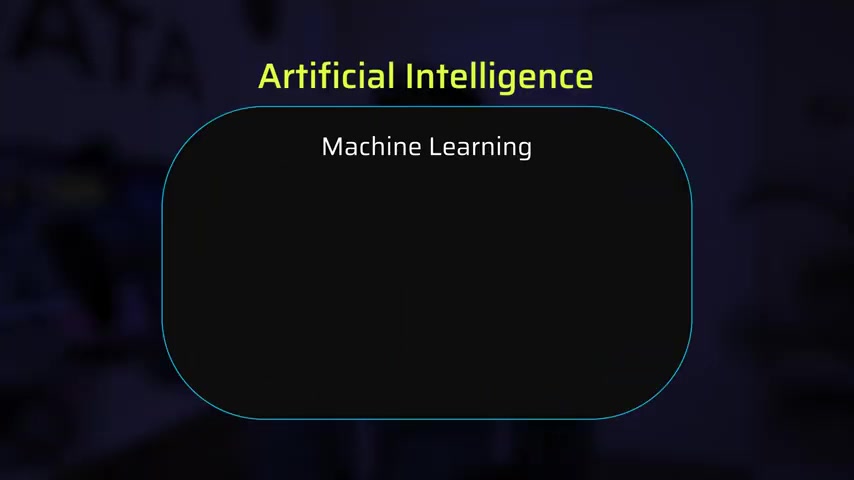
Instead of relying on predefined rules, machine learning models identify patterns in data and use those patterns to make predictions or decisions.
Machine Learning: Learning from Data
Machine learning is a subset of AI that focuses on enabling machines to learn from data. Instead of explicitly programming a machine to perform a specific task, machine learning algorithms are trained on data, allowing them to learn patterns and relationships and make predictions or decisions based on those patterns. Machine learning algorithms can be used for a wide range of tasks, including Image Recognition, natural language processing, and fraud detection.
Key Types of Machine Learning:
- Supervised Learning: The algorithm is trained on labeled data, where the correct output is known.
- Unsupervised Learning: The algorithm is trained on unlabeled data, where the algorithm must discover patterns and relationships on its own.
- Reinforcement Learning: The algorithm learns by interacting with an environment and receiving rewards or penalties for its actions.
Deep Learning: Advanced Neural Networks
Deep learning is a more advanced form of machine learning that uses artificial neural networks with multiple layers (hence “deep”) to analyze data. These neural networks are inspired by the structure and function of the human brain. Deep learning models can automatically learn complex features from raw data, making them particularly well-suited for tasks such as image and speech recognition.
Key Aspects of Deep Learning:
- Neural Networks: Deep learning models are based on artificial neural networks, which are composed of interconnected nodes that process and transmit information.
- Multiple Layers: Deep learning models have multiple layers of neural networks, allowing them to learn increasingly complex features from data.
- Backpropagation: The process of training deep learning models by adjusting the weights of the connections between nodes based on the error in the model’s predictions.
How AI, Machine Learning, and Deep Learning Work Together
AI is the broad concept of creating intelligent machines. Machine learning is one approach to achieving AI by enabling machines to learn from data. Deep learning is a more advanced type of machine learning that uses neural networks to analyze data. Think of it like this: AI is the umbrella, machine learning is a subset of AI, and deep learning is a subset of machine learning.
AI, ML, and DL Applications
- AI: Autonomous vehicles, virtual assistants, fraud detection
- Machine Learning: Recommendation systems, spam filtering, medical diagnosis
- Deep Learning: Image recognition, speech recognition, natural language processing
The Future of AI, ML, and DL
The fields of AI, machine learning, and deep learning are constantly evolving. As computing power increases and more data becomes available, we can expect to see even more advanced AI systems that can solve increasingly complex problems. Ethical considerations will be essential to ensure AI is used responsibly and for the benefit of all.
In summary, while AI is the overarching field, machine learning offers the methods, and deep learning uses complex neural networks to achieve advanced learning capabilities. Understanding how these technologies interrelate and build upon each other is critical for anyone looking to navigate the world of artificial intelligence. These technologies are not mutually exclusive; rather, they represent different levels of abstraction and sophistication in the quest to create intelligent machines. Each plays a unique role, and together, they are driving innovation in various fields, from healthcare to finance to entertainment.
Real-World Applications of Artificial Intelligence
Autonomous Driving
One of the most exciting applications of AI is in the field of autonomous driving. Self-driving cars use AI algorithms to perceive their surroundings, make decisions, and navigate roads without human intervention. This technology has the potential to revolutionize transportation, making it safer, more efficient, and more accessible.

How Autonomous Vehicles Work
Autonomous vehicles rely on a combination of sensors, including cameras, radar, and lidar, to gather information about their environment. AI algorithms then process this data to create a 3D map of the surroundings, identify objects such as cars, pedestrians, and traffic signs, and plan a safe and efficient route. The AI system also needs to be able to handle unexpected situations, such as sudden changes in traffic or adverse weather conditions.
Benefits of Autonomous Driving
- Reduced Accidents: Autonomous vehicles have the potential to significantly reduce traffic accidents by eliminating human error, which is a major cause of crashes.
- Increased Efficiency: Autonomous vehicles can optimize traffic flow and reduce congestion by coordinating their movements with other vehicles.
- Improved Accessibility: Autonomous vehicles can provide transportation for people who are unable to drive, such as the elderly or people with disabilities.
Challenges of Autonomous Driving
- Safety Concerns: Ensuring the safety of autonomous vehicles is a major challenge, as the AI system needs to be able to handle a wide range of unexpected situations.
- Regulatory Issues: Regulations for autonomous vehicles are still evolving, and there are many legal and ethical questions that need to be addressed.
- Technological Limitations: Autonomous driving technology is still under development, and there are many technical challenges that need to be overcome before self-driving cars can become widely available.
The Future of Autonomous Driving
The future of autonomous driving is bright. As the technology continues to improve and regulations become more established, we can expect to see more self-driving cars on the road. Autonomous vehicles have the potential to transform transportation and create a safer, more efficient, and more accessible world.
Natural Language Processing and Content Generation
Natural Language Processing (NLP) is a branch of AI that focuses on enabling computers to understand, interpret, and generate human language. NLP is used in a wide range of applications, including chatbots, virtual assistants, language translation, and content generation.

How NLP Works
NLP algorithms use various techniques to analyze and process text, including tokenization, parsing, sentiment analysis, and machine translation. These algorithms can identify the meaning of words and sentences, understand the context of a conversation, and generate text that is grammatically correct and semantically meaningful.
Applications of NLP
- Chatbots: Chatbots use NLP to understand and respond to customer inquiries, providing automated Customer Service.
- Virtual Assistants: Virtual assistants like Siri and Alexa use NLP to understand voice commands and provide information or perform tasks.
- Language Translation: NLP can be used to Translate text from one language to another automatically.
- Content Generation: NLP can be used to generate text, such as articles, product descriptions, and social media posts.
The Rise of Content Generation
One of the most exciting applications of NLP is content generation. AI-powered content generation tools can automatically create high-quality text on a wide range of topics. This technology has the potential to revolutionize content creation, making it faster, more efficient, and more accessible.
Examples of Content Generation Tools
- ChatGPT: A large language model that can generate text, translate languages, and answer questions.
- GPT-3: A powerful language model that can be used for a wide range of content generation tasks.
- Copy.ai: A content generation tool that specializes in creating marketing copy.
Ethical Considerations
As with all AI technologies, ethical considerations are important in the use of NLP and content generation. Issues such as plagiarism, bias in algorithms, and the potential for misinformation need to be addressed to ensure that NLP is used responsibly and for the benefit of all.





Most people like




























Report
Please select a reason for reporting
- 13 Reasons to Switch from Snapchat to Text Messaging
- 7 Powerful Speech to Text Apps to Boost Productivity
- 10 Best Speech to Text Tools for Effortless Transcription
- 13 Free Tools to Easily Transcribe Audio to Text
- 15 Surprising Ways Google's Speech-to-Text Boosts Productivity
- 7 Best Free Online Audio to Text Transcription Tools
- 9 Tips to Transcribe Speech to Text Faster and Better
- 13 Best Speech to Text Software for Windows 10 in 2023
- 7 Tips for Choosing the Best Transcriber for Audio to Text
- 11 Reasons Why Dragon Speech-to-Text Apps are Game-Changers
- 6 Secrets to Enhance Your Speech to Text Transcription
- 6 Brilliant Ways to Boost Productivity with Talk-to-Text on Your MacBook
- 6 Ways Transcription Software Converts Audio to Text
- 8 Tips to Transcribe Speech to Text Like a Pro
- 6 Reasons IBM Watson Speech to Text is a Game-Changer
- 14 Powerful Ways Talk-to-Text Improves Your Workflow
- 12 Top Windows Speech-to-Text Software for Efficient Transcription
- 12 Game-Changing Benefits of Apple's Speech to Text Technology
- 9 Powerful Use Cases for AWS Speech to Text Technology
- 10 Easy Steps to Transcribe YouTube Videos to Text
- transcription audio en texte
- online audio transcription
- free audio file transcription
- free ai audio transcription
- audio transcription service
- audio transcription online free
- audio transcription free online
- audio to transcription software
- audio and transcript
- ai audio transcription free
- voice recording to text converter
- translate voice recording to text
- record voice to text
- audio recording to text converter
- voice recording and transcription
- chatgpt voice to text
- gmail voice to text
- speech to text reader
- speech to text ai free
- speech to talk
- Create Engaging Animated Explainer Videos with a Free AI Tool
- Stop Multi-Subscribing: Benchmark Top AI Visual Models in One Canvas
- Best Seedance 2.5 API Provider: Every Price on the Market, Checked at Source
- AI OnlyFans: How to Generate $30,000/Month (Legally)
- Transform Your Script into an Engaging Video with AI Video Maker!
- AI Marketing Automation: A Comprehensive Guide for Small Businesses
- Midjourney Alternative for Anime Art Creators: Why PixAI May Be Better for Character Workflows
- 10 Things Most People Get Wrong About AI Image Search
- AI Girlfriend Apps: Top Choices Redefining Relationships 2025
- How to Reduce Quoting Errors in Salesforce with AI-Assisted Quote Creation
- AI Resume Builders: EnhanceCV, ResumeNerd AI, & Teal Compared
- ResumeAI: Crafting ATS-Optimized Resumes with AI
- AI in Resume Writing: A New Era for Job Seekers
- AI Resume Tools: Streamline Your Job Search and Land Your Dream Role
- AI Resume Optimization: The Right Way to Land Interviews
- Crafting a Killer Resume with AI: A Step-by-Step Guide
- Crafting a Winning Resume: AI Tools and Expert Tips
- AI Job Search: Level Up Your Career with AI Automation
- Empower Your Career Journey: Dynamic Resumes with AI
- AI Resume Builder: Create Professional Resumes Effortlessly

Copyright ©2026 toolify