































Table of Contents
- Key Points
- What are Script Structures?
- Benefits of Using Script Structures
- How to Implement Script Structures
- Pricing
- Pros and Cons
- Core Features
- Use Cases for Script Structures
- Frequently Asked Questions (FAQ)
- Related Questions


What are Script Structures?
Definition and Purpose
Script structures are a knowledge representation scheme designed to capture sequences of events that commonly occur in specific contexts.
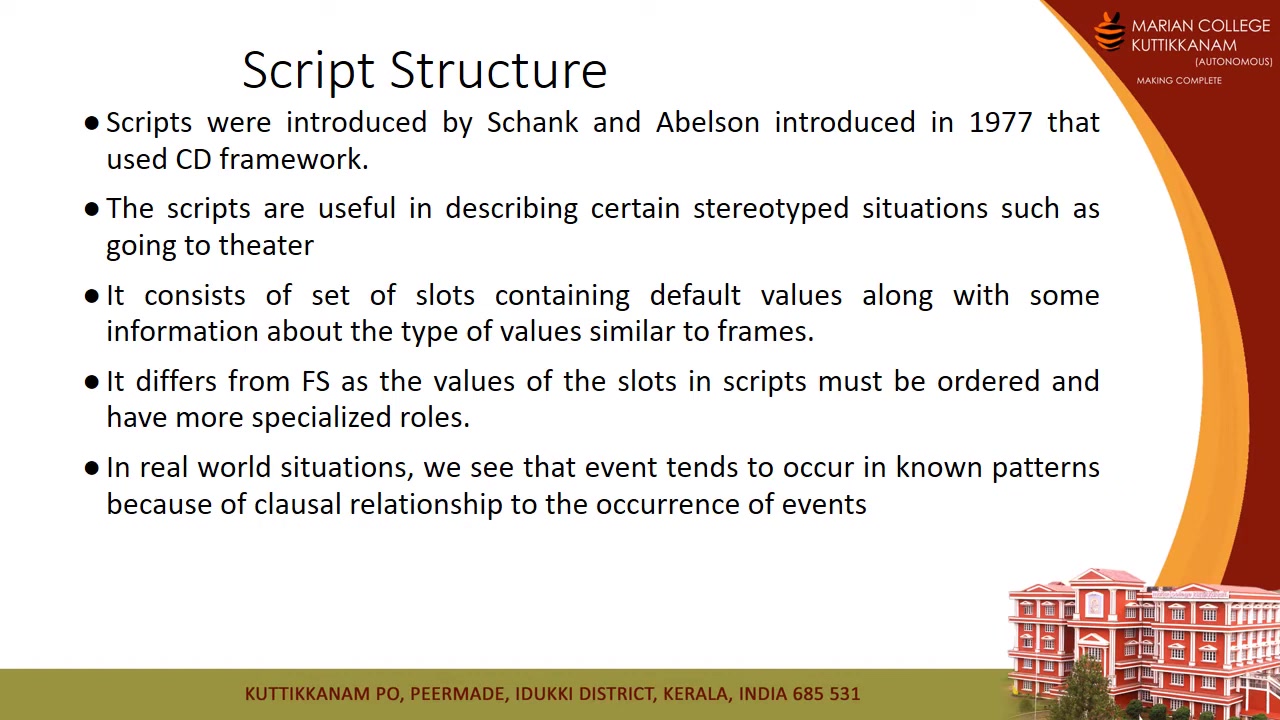
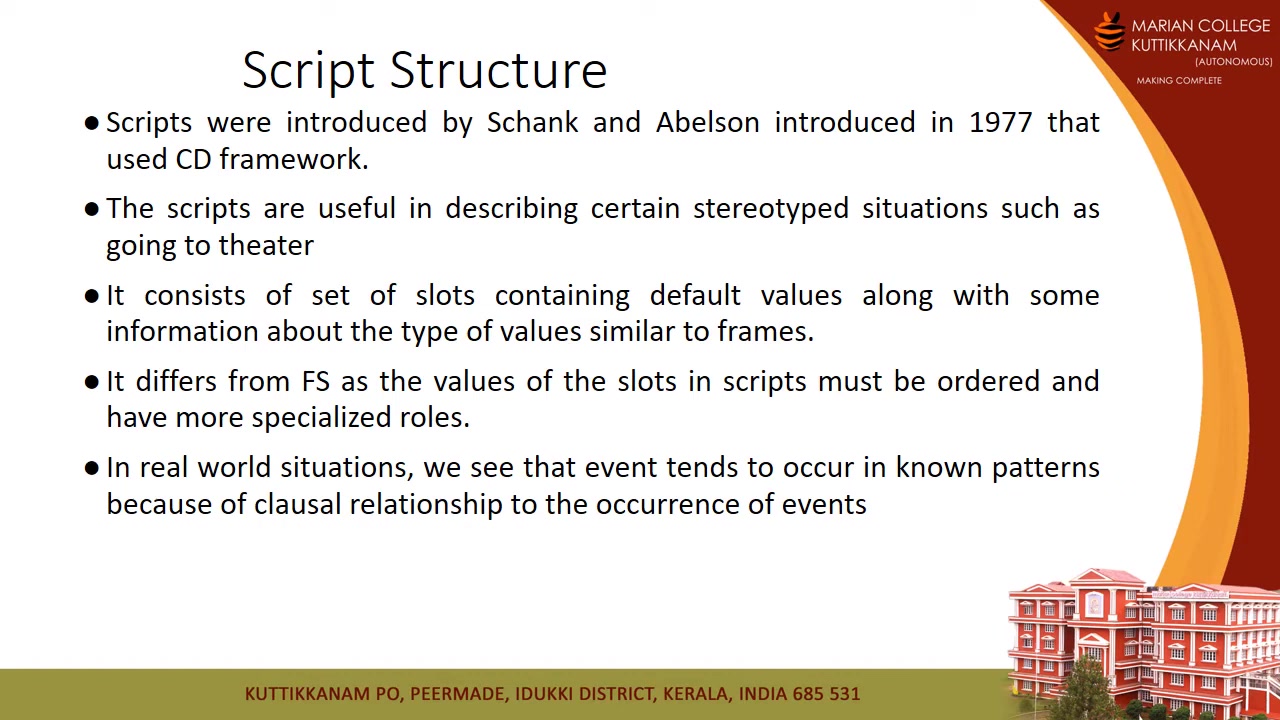
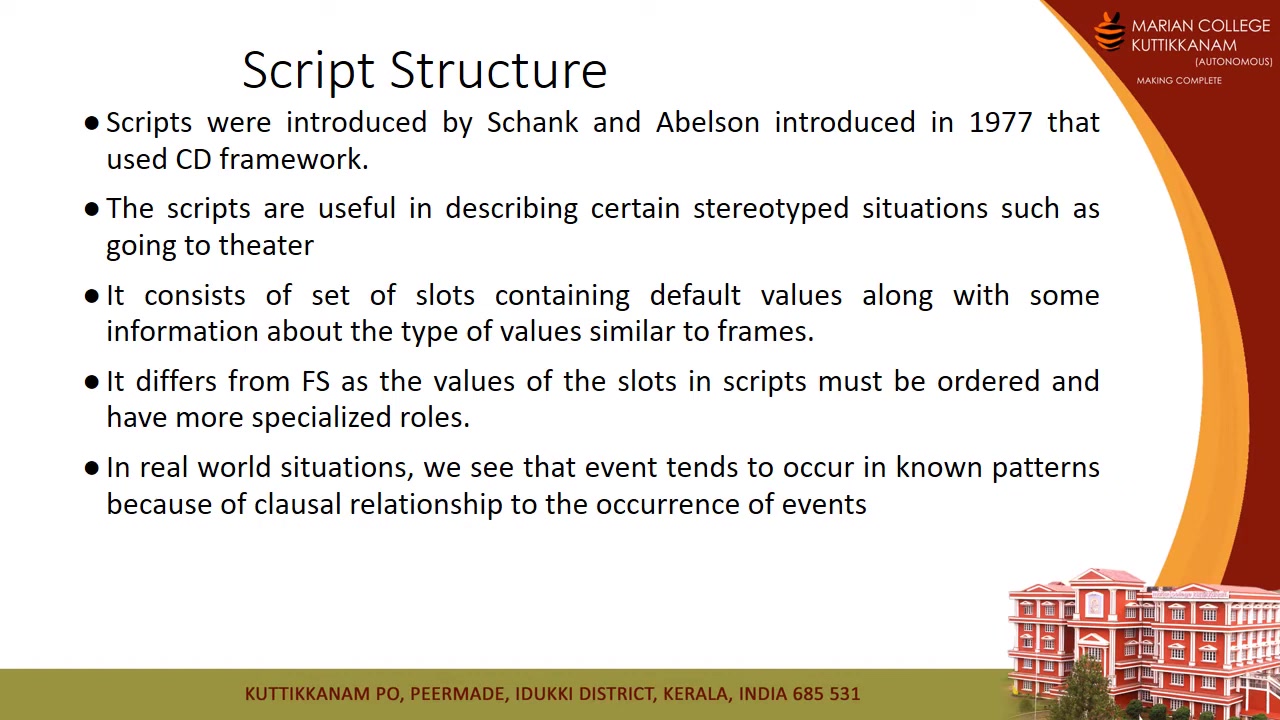
Introduced by Roger Schank and Robert Abelson in 1977, scripts provide a framework for understanding and reasoning about everyday situations. They are particularly useful for natural language processing, enabling AI systems to interpret stories and predict upcoming events.
The primary purpose of scripts is to provide a structured representation of typical event sequences. They allow AI systems to make inferences, fill in missing information, and understand the underlying intentions and goals of actors in a given Scenario. Imagine, for instance, an AI system that encounters the sentence, 'John went to a restaurant.' Without additional context, the system might struggle to grasp the full picture. However, if the system has access to a 'restaurant script,' it can infer that John likely ordered food, ate, paid the bill, and left. This ability to infer and reason about events is crucial for AI systems that operate in complex, real-world environments.
The concept of scripts is deeply rooted in the idea that human knowledge is organized around prototypical situations. We don't simply memorize isolated facts; instead, we build mental models of common events and activities. Scripts aim to capture these mental models in a formal, computational manner. By providing a structured representation of event sequences, scripts enable AI systems to leverage this type of common-sense knowledge.
Key characteristics of script structures:
- Sequential organization: Scripts are organized as a sequence of events, reflecting the temporal order in which these events typically occur.
- Stereotypical situations: Scripts are designed to represent stereotypical situations, such as going to a restaurant, attending a meeting, or visiting a doctor.
- Default values: Scripts contain default values for various elements, such as actors, objects, and locations. These default values can be used to fill in missing information and make inferences.
- Causal relationships: Scripts capture the causal relationships between events, indicating how one event leads to another.
- Multiple perspectives: Scripts can be adapted to represent multiple perspectives on the same event. For example, a 'restaurant script' could be viewed from the perspective of the customer, the waiter, or the chef.
In essence, scripts are a powerful tool for representing knowledge about common events and activities. They provide a structured framework for understanding and reasoning about real-world scenarios, enabling AI systems to make inferences, fill in missing information, and predict upcoming events. As we delve deeper into this article, we will explore the various components of script structures, their benefits, and their applications in AI systems.
Historical Context and Development
The development of script structures emerged from the field of artificial intelligence in the late 1970s.
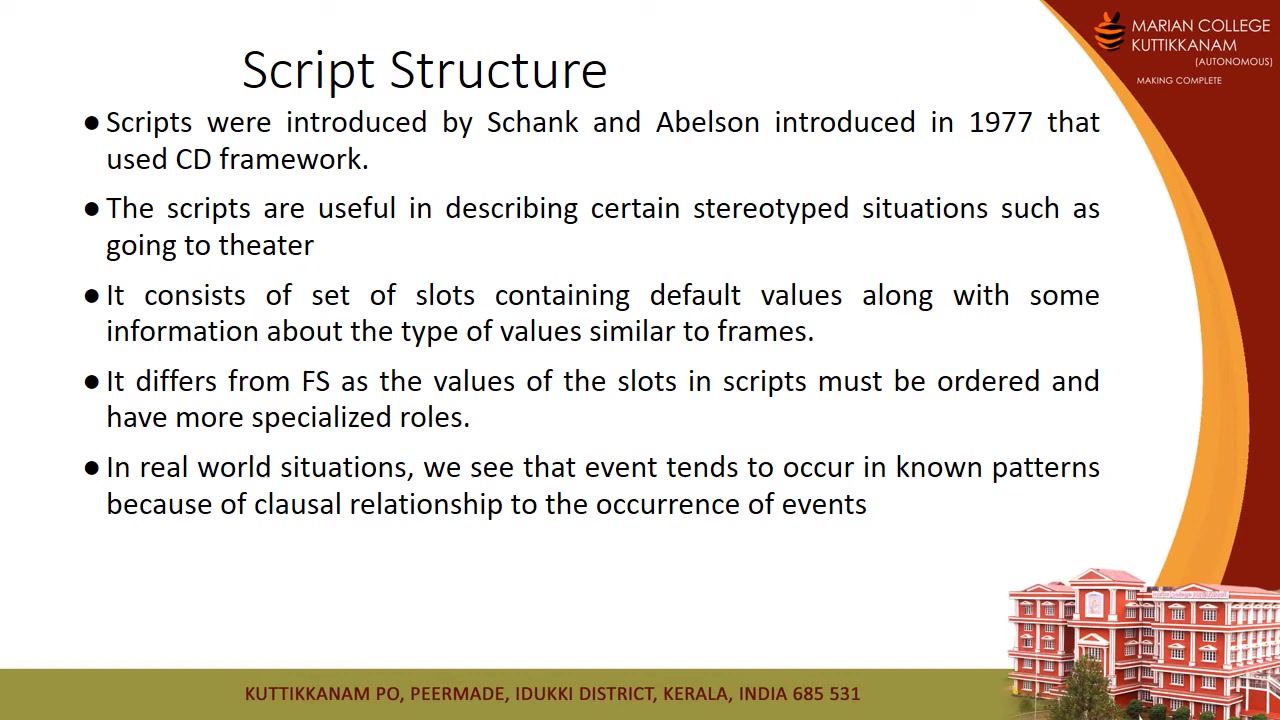
Roger Schank and Robert Abelson, prominent figures in AI research, introduced scripts as a way to address the limitations of existing knowledge representation techniques. At the time, AI systems struggled to understand and reason about natural language, particularly in the context of stories and narratives.
Traditional AI approaches relied on representing knowledge as isolated facts and rules. However, this approach proved inadequate for capturing the richness and complexity of human understanding. Schank and Abelson recognized that human knowledge is often organized around prototypical situations and event sequences. They argued that AI systems needed a way to represent this type of common-sense knowledge in a structured and computational manner.
Their work built upon earlier research in cognitive science and psychology, which had explored the role of schemas and scripts in human memory and understanding. Schemas are mental frameworks that organize and interpret information, while scripts are a specific type of schema that represents sequences of events. Schank and Abelson adapted these concepts for use in AI, creating a formal representation scheme that could be used to model real-world scenarios.
The initial implementation of script structures involved defining a set of components that captured the key elements of an event sequence. These components included actors, objects, locations, and actions. Scripts were organized as a sequence of events, with each event representing a specific action or state change. The events were linked together by causal relationships, indicating how one event led to another.
The early applications of script structures focused on natural language understanding. AI systems used scripts to interpret stories, answer questions, and generate summaries. For example, a system might use a 'restaurant script' to understand a story about a person eating at a restaurant. The script would allow the system to infer that the person likely ordered food, ate, paid the bill, and left. This ability to infer and reason about events was a significant step forward in natural language processing.
Over time, script structures have been refined and extended. Researchers have explored various ways to represent scripts, including using formal languages and graphical notations. They have also developed techniques for learning scripts from data, allowing AI systems to automatically acquire knowledge about common events and activities.
Today, script structures continue to be a valuable tool in AI research and development. They are used in a wide range of applications, including natural language processing, robotics, and computer vision. As AI systems become more sophisticated, script structures will likely play an increasingly important role in enabling them to understand and reason about the complex world around us.
Core Components of a Script Structure
A script structure is comprised of several key components that work together to represent a sequence of events. These components include:
- Script Name: Each script has a unique name that identifies the event or activity it represents (e.g., 'Restaurant Script,' 'Doctor Visit Script').
- Roles: Roles define the participants involved in the script (e.g., customer, waiter, chef in the 'Restaurant Script'). Each role has associated expectations and responsibilities.
- Props: Props are the objects and resources required for the script to unfold (e.g., menu, table, food, money in the 'Restaurant Script').
- Entry Conditions: These are the conditions that must be met for the script to be activated (e.g., customer is hungry and enters the restaurant).
- Results: Results describe the outcome or state change that occurs after the script is executed (e.g., customer is no longer hungry, restaurant earns money).
- Scenes: Scenes are the individual steps or events that make up the script. Each scene consists of a sequence of actions and events that typically occur in a particular order.
Example: Restaurant Script
Let's consider a Simplified example of a 'Restaurant Script' to illustrate these components:
- Script Name: Restaurant Script
- Roles: Customer, Waiter, Chef
- Props: Menu, Table, Food, Money
- Entry Conditions: Customer is hungry and enters the restaurant.
- Results: Customer is no longer hungry, Restaurant earns money.
- Scenes:
- Entering: Customer enters the restaurant.
- Seating: Customer is seated at a table.
- Ordering: Customer orders food from the waiter.
- Eating: Chef prepares the food, and the waiter brings it to the customer. The customer eats the food.
- Paying: Customer pays the bill to the waiter.
- Leaving: Customer leaves the restaurant.
Each scene can be further broken down into a sequence of actions and events. For example, the 'Ordering' scene might involve the customer reading the menu, asking the waiter for recommendations, and placing their order.
Script structures can also incorporate default values for various elements. For instance, the 'Restaurant Script' might assume that the customer will order an appetizer, a main Course, and a drink. These default values can be used to fill in missing information and make inferences.
However, they can also be overridden if the system receives contradictory information. For example, if the system learns that the customer is on a diet, it might infer that they will not order an appetizer or a dessert.
By combining these components, script structures provide a flexible and powerful way to represent knowledge about common events and activities. They enable AI systems to understand and reason about real-world scenarios, make inferences, and predict upcoming events.
How Script Structures Differ From Frames
While both script structures and frames are knowledge representation techniques, they differ in several key aspects. Frames, developed by Marvin Minsky, represent objects or concepts as a collection of attributes and values. Scripts, on the other HAND, represent sequences of events.
Key Differences:
| Feature | Frame | Script |
|---|---|---|
| Representation | Objects and concepts | Sequences of events |
| Organization | Attributes and values | Scenes and actions |
| Focus | Static knowledge | Dynamic knowledge |
| Ordering | No inherent order | Events are ordered sequentially |
| Use Cases | Describing objects and their properties | Understanding and reasoning about event sequences |
| Default Values | Provide default values for attributes | Provide default values for roles, props, and actions |
Ordering is a crucial distinction. In scripts, the order of events is significant, reflecting the temporal sequence in which they typically occur. In frames, attributes and values are not inherently ordered.
Another difference lies in their focus. Frames primarily focus on representing static knowledge about objects and concepts, while scripts focus on representing dynamic knowledge about events and activities.
Consider the example of representing a 'dog.' A frame would capture attributes such as breed, size, color, and temperament. A script, however, would be used to represent a sequence of events involving a dog, such as 'walking the dog' or 'playing fetch with the dog.'
Both frames and scripts have their strengths and weaknesses. Frames are well-suited for representing objects and their properties, while scripts are better suited for understanding and reasoning about event sequences. In some cases, they can be used together to provide a more comprehensive representation of knowledge.
Choosing Between Frames and Scripts:
The choice between frames and scripts depends on the specific application and the type of knowledge being represented. If the goal is to describe objects and their properties, frames are the better choice. If the goal is to understand and reason about event sequences, scripts are the better choice. In some cases, a hybrid approach that combines both frames and scripts may be the most effective.
| Scenario | Best Choice | Justification |
|---|---|---|
| Describing a car | Frame | Frames excel at representing objects and their attributes (e.g., make, model, color, engine size). |
| Understanding a car accident | Script | Scripts are ideal for representing sequences of events (e.g., car approaches intersection, driver fails to stop, collision occurs). |
| Representing a classroom | Frame | Frames can effectively represent the components of a classroom (e.g., desks, chairs, whiteboard, teacher). |
| Understanding a lesson | Script | Scripts can be used to represent the sequence of events that occur during a lesson (e.g., teacher introduces topic, students ask questions, lesson ends). |
Ultimately, the decision to use frames, scripts, or a combination of both depends on the specific needs of the application and the nature of the knowledge being represented.
Benefits of Using Script Structures
Advantages of Implementing Script Structures in AI
Script structures offer several advantages for representing knowledge and reasoning about events in AI systems:
- Inference: Scripts enable AI systems to make inferences about missing information. By providing a structured representation of typical event sequences, scripts allow systems to fill in gaps in their knowledge and draw conclusions about what likely occurred.
- Prediction: Scripts allow AI systems to predict upcoming events. By understanding the sequence of events that typically occur in a given context, systems can anticipate what is likely to happen next.
- Understanding: Scripts facilitate natural language understanding. By providing a framework for interpreting stories and narratives, scripts enable AI systems to grasp the meaning of text and understand the intentions and goals of actors.
- Planning: Scripts can be used for planning and decision-making. By representing the sequence of actions required to achieve a goal, scripts can guide AI systems in developing plans and making choices.
- Explanation: Scripts can provide explanations for observed events. By mapping events onto a known script, systems can provide a coherent explanation of why those events occurred.
Enhanced Reasoning Capabilities:
Script structures significantly enhance the reasoning capabilities of AI systems, particularly in situations involving common-sense knowledge and real-world scenarios. By providing a structured representation of event sequences, scripts enable systems to:
- Reason about time: Scripts capture the temporal order of events, allowing systems to reason about when things happened and how long they lasted.
- Reason about causality: Scripts capture the causal relationships between events, allowing systems to understand how one event leads to another.
- Reason about intentions: Scripts capture the goals and intentions of actors, allowing systems to understand why they are performing certain actions.
- Handle uncertainty: Scripts can incorporate uncertainty by allowing for alternative event sequences and probabilities. This enables systems to reason about situations where the outcome is not certain.
- Adapt to new situations: Scripts can be adapted to new situations by modifying or extending existing scripts. This allows systems to learn and adapt to new environments and scenarios.
Examples of Benefits in Action:
- Customer Service Chatbot: A chatbot using script structures can understand customer inquiries about order status, shipping times, and returns, providing accurate and helpful responses.
- Robotics in Manufacturing: Robots equipped with scripts can perform complex assembly tasks by following a pre-defined sequence of actions, ensuring efficiency and precision.
- Medical Diagnosis Systems: AI systems using scripts can analyze patient symptoms and medical history to identify potential diagnoses and suggest appropriate treatments.
In conclusion, the benefits of using script structures in AI systems are numerous and far-reaching. They provide a powerful tool for representing knowledge, reasoning about events, and enhancing the overall performance of AI systems in a wide range of applications.
How to Implement Script Structures
Steps for Building a Script Structure
Implementing script structures involves several steps:
- Identify the Target Scenario: Select the specific event or activity you want to represent (e.g., 'Grocery Shopping,' 'Attending a Concert').
- Define the Roles: Determine the key participants involved in the scenario (e.g., customer, cashier in 'Grocery Shopping').
- Identify the Props: List the objects and resources required for the script to unfold (e.g., shopping cart, groceries, money in 'Grocery Shopping').
- Determine the Entry Conditions: Specify the conditions that must be met for the script to be activated (e.g., customer needs groceries).
- Define the Results: Describe the outcome or state change that occurs after the script is executed (e.g., customer has groceries, store earns money).
- Break Down into Scenes: Divide the script into a sequence of scenes, each representing a step or event (e.g., entering the store, selecting items, paying, leaving the store in 'Grocery Shopping').
- Define Actions within Scenes: Detail the actions and events that occur within each scene.
This includes specifying who performs each action and what the consequences are.
- Incorporate Default Values: Add default values for various elements, such as the type of groceries a customer is likely to buy.
- Establish Causal Relationships: Indicate how one event leads to another, creating a chain of cause and effect.
- Test and Refine: Evaluate the script by simulating scenarios and making adjustments as needed.
Practical Implementation Tips:
- Start Small: Begin with a simple script and gradually add complexity as needed.
- Use a Formal Language: Consider using a formal language or notation to represent scripts, such as a logic-based language or a graphical notation.
- Leverage Existing Resources: Explore existing script libraries and knowledge bases for inspiration and reusability.
- Consider Multiple Perspectives: Develop scripts from different perspectives to capture the nuances of the scenario.
- Document Thoroughly: Document each script component, including roles, props, entry conditions, results, and scenes.
Implementing script structures can be a challenging but rewarding task. By following these steps and tips, you can create scripts that effectively represent knowledge and enable AI systems to reason about events in a Meaningful way.


Most people like










































Report
Please select a reason for reporting
- 13 Reasons to Switch from Snapchat to Text Messaging
- 7 Powerful Speech to Text Apps to Boost Productivity
- 10 Best Speech to Text Tools for Effortless Transcription
- 13 Free Tools to Easily Transcribe Audio to Text
- 15 Surprising Ways Google's Speech-to-Text Boosts Productivity
- 7 Best Free Online Audio to Text Transcription Tools
- 9 Tips to Transcribe Speech to Text Faster and Better
- 13 Best Speech to Text Software for Windows 10 in 2023
- 7 Tips for Choosing the Best Transcriber for Audio to Text
- 11 Reasons Why Dragon Speech-to-Text Apps are Game-Changers
- 6 Secrets to Enhance Your Speech to Text Transcription
- 6 Brilliant Ways to Boost Productivity with Talk-to-Text on Your MacBook
- 6 Ways Transcription Software Converts Audio to Text
- 8 Tips to Transcribe Speech to Text Like a Pro
- 6 Reasons IBM Watson Speech to Text is a Game-Changer
- 14 Powerful Ways Talk-to-Text Improves Your Workflow
- 12 Top Windows Speech-to-Text Software for Efficient Transcription
- 12 Game-Changing Benefits of Apple's Speech to Text Technology
- 9 Powerful Use Cases for AWS Speech to Text Technology
- 10 Easy Steps to Transcribe YouTube Videos to Text
- transcription audio en texte
- online audio transcription
- free audio file transcription
- free ai audio transcription
- audio transcription service
- audio transcription online free
- audio transcription free online
- audio to transcription software
- audio and transcript
- ai audio transcription free
- voice recording to text converter
- translate voice recording to text
- record voice to text
- audio recording to text converter
- voice recording and transcription
- chatgpt voice to text
- gmail voice to text
- speech to text reader
- speech to text ai free
- speech to talk
- Create Engaging Animated Explainer Videos with a Free AI Tool
- Stop Multi-Subscribing: Benchmark Top AI Visual Models in One Canvas
- Best Seedance 2.5 API Provider: Every Price on the Market, Checked at Source
- AI OnlyFans: How to Generate $30,000/Month (Legally)
- Transform Your Script into an Engaging Video with AI Video Maker!
- AI Marketing Automation: A Comprehensive Guide for Small Businesses
- Midjourney Alternative for Anime Art Creators: Why PixAI May Be Better for Character Workflows
- 10 Things Most People Get Wrong About AI Image Search
- AI Girlfriend Apps: Top Choices Redefining Relationships 2025
- How to Reduce Quoting Errors in Salesforce with AI-Assisted Quote Creation
- AI Resume Builders: EnhanceCV, ResumeNerd AI, & Teal Compared
- ResumeAI: Crafting ATS-Optimized Resumes with AI
- AI in Resume Writing: A New Era for Job Seekers
- AI Resume Tools: Streamline Your Job Search and Land Your Dream Role
- AI Resume Optimization: The Right Way to Land Interviews
- Crafting a Killer Resume with AI: A Step-by-Step Guide
- Crafting a Winning Resume: AI Tools and Expert Tips
- AI Job Search: Level Up Your Career with AI Automation
- Empower Your Career Journey: Dynamic Resumes with AI
- AI Resume Builder: Create Professional Resumes Effortlessly

Copyright ©2026 toolify