































Table of Contents
- Key Points
- Understanding the Xeon E5-2690 V4
- Cinebench R23 Benchmark Analysis
- Setting Up and Testing the Xeon E5-2690 V4
- Cost Analysis of the Xeon E5-2690 V4 in 2025
- Key Features of the Xeon E5-2690 V4 CPU
- Ideal Use Cases for the Xeon E5-2690 V4
- Frequently Asked Questions
- Related Questions



Understanding the Xeon E5-2690 V4
What is the Intel Xeon E5-2690 V4?
The Intel Xeon E5-2690 V4 is a processor belonging to the Broadwell-EP family. It was primarily designed for servers and high-end workstations, utilizing the LGA 2011-3 socket. Key specifications include 14 cores, 28 threads, a base clock of 2.6 GHz, and a turbo boost up to 3.5 GHz. The CPU also features 35 MB of L3 cache. It has a TDP (Thermal Design Power) of 135W, indicating its power consumption under load.
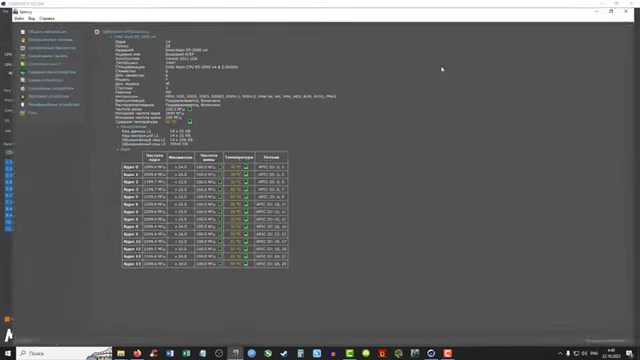
These processors were crucial for tasks needing substantial multitasking capabilities and parallel processing.
Compared to consumer CPUs of its era, the Xeon E5-2690 V4 prioritized core count and thread handling over raw clock speed. This makes it suited for rendering, video editing, virtualisation, and other professional applications.
While newer CPUs offer improved architectures and features, the E5-2690 V4 still remains a viable option, especially on a budget.
Xeon E5-2690 V4 Specifications
To fully grasp the potential of the Xeon E5-2690 V4, a look at its key specifications is important. Here is a breakdown:
- Cores/Threads: 14 cores, 28 threads
- Base Clock Speed: 2.6 GHz
- Max Turbo Frequency: 3.5 GHz
- Cache: 35 MB L3 Cache
- TDP: 135W
- Socket: LGA 2011-3
- Architecture: Broadwell-EP
These specifications highlight the CPU's multi-threading capabilities, which make it good for tasks involving parallel processing. However, the lower clock speeds might present a challenge in single-threaded applications. Modern CPUs, like the Intel Core i5-12400F, often boast higher clock speeds, which enhance their performance in tasks like gaming.
Cinebench R23 Benchmark Analysis
Cinebench R23: Multi-Core Performance
Cinebench R23 is a real-world benchmark that tests a CPU's performance capabilities based on Cinema 4D, Maxon’s award-winning 3D animation software. In this video, the Xeon E5-2690 V4 achieved a multi-core score of 11,980 points.
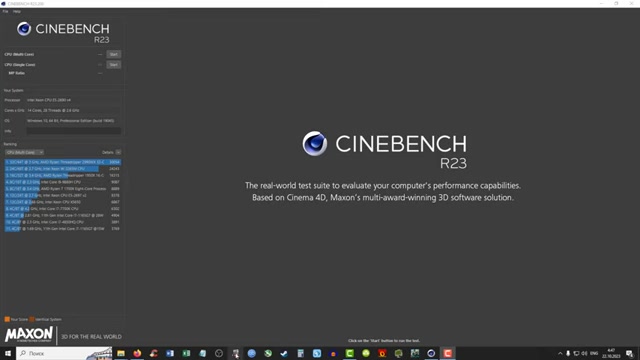
This score indicates its ability to handle computationally intensive tasks.
When assessing the Xeon E5-2690 V4, it is crucial to consider its performance in relation to modern CPUs. For instance, it's compared to the Intel Core i5-12400F and the Intel Core i7-9880H. The video highlights the importance of balancing cost and performance, particularly for users on a budget.
Temperature Monitoring During Benchmarking
Throughout the Cinebench R23 test, the CPU temperature was monitored using software like Speccy.
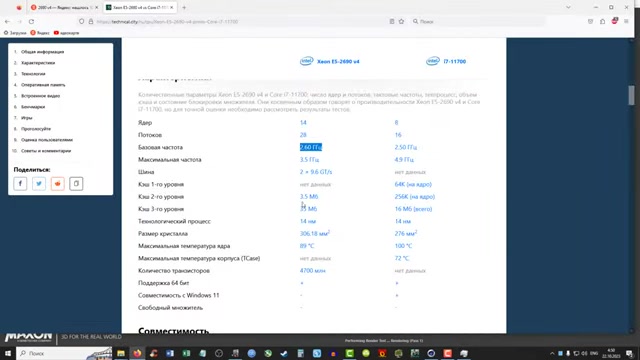
The recorded temperatures provide insights into the cooling efficiency needed to sustain performance. Under full load, the E5-2690 V4 reached a maximum temperature of 63°C during stress tests without a case and with a JONSBO CR-1200 CPU cooler. The video also mentions previous stress tests in CPU-Z, where the processor hit the same max temp of 63°C.
Effective cooling is crucial, especially considering the TDP of 135W. The video mentions earlier cooling configuration failures, highlighting the importance of a compatible and efficient cooling solution.
Setting Up and Testing the Xeon E5-2690 V4
Component Compatibility and Installation
To use the Xeon E5-2690 V4, you'll need a motherboard with an LGA 2011-3 socket. The video mentions using a Huananzhi X99 F8 motherboard. You’ll also need DDR4 ECC REG memory, which is often found in server setups. The video highlights some challenges faced during the build process, including cooling system failures and incompatibility issues with certain components.
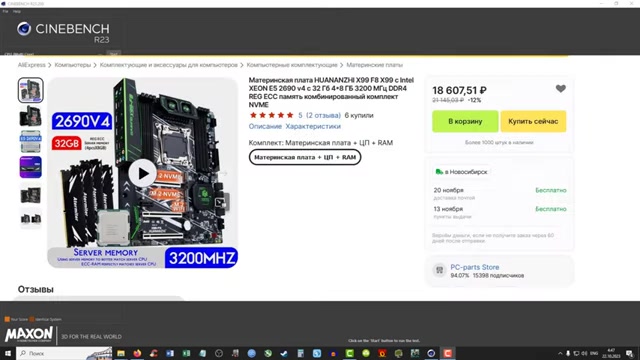
A compatible CPU cooler with sufficient TDP coverage is essential to prevent thermal throttling and ensure sustained performance.
It's important to ensure that all components are compatible before starting the build. Issues with incompatible coolers, as mentioned in the video, can be avoided with careful planning and research.
Running Benchmarks and Monitoring Performance
Once the system is built, you can assess the CPU’s performance using benchmarking tools like Cinebench R23 and CPU-Z. During the benchmarks, keep an eye on CPU temperatures using software like Speccy to ensure they remain within safe limits.
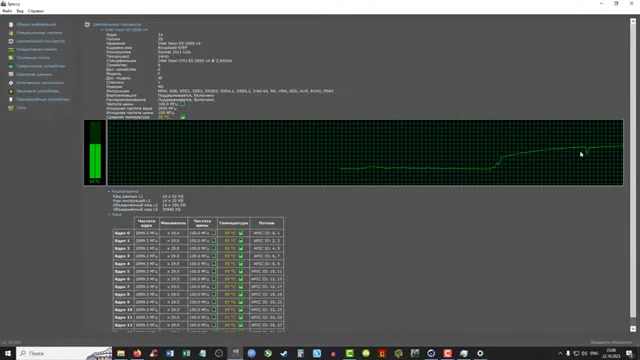
Performance metrics such as Cinebench scores and CPU clock speeds can be monitored to assess the CPU's capabilities.
The video demonstrates checking CPU load and temperature via the Task Manager and Speccy, offering a practical example of monitoring system performance during benchmark runs.





Most people like


































Report
Please select a reason for reporting
- 13 Reasons to Switch from Snapchat to Text Messaging
- 7 Powerful Speech to Text Apps to Boost Productivity
- 10 Best Speech to Text Tools for Effortless Transcription
- 13 Free Tools to Easily Transcribe Audio to Text
- 15 Surprising Ways Google's Speech-to-Text Boosts Productivity
- 7 Best Free Online Audio to Text Transcription Tools
- 9 Tips to Transcribe Speech to Text Faster and Better
- 13 Best Speech to Text Software for Windows 10 in 2023
- 7 Tips for Choosing the Best Transcriber for Audio to Text
- 11 Reasons Why Dragon Speech-to-Text Apps are Game-Changers
- 6 Secrets to Enhance Your Speech to Text Transcription
- 6 Brilliant Ways to Boost Productivity with Talk-to-Text on Your MacBook
- 6 Ways Transcription Software Converts Audio to Text
- 8 Tips to Transcribe Speech to Text Like a Pro
- 6 Reasons IBM Watson Speech to Text is a Game-Changer
- 14 Powerful Ways Talk-to-Text Improves Your Workflow
- 12 Top Windows Speech-to-Text Software for Efficient Transcription
- 12 Game-Changing Benefits of Apple's Speech to Text Technology
- 9 Powerful Use Cases for AWS Speech to Text Technology
- 10 Easy Steps to Transcribe YouTube Videos to Text
- transcription audio en texte
- online audio transcription
- free audio file transcription
- free ai audio transcription
- audio transcription service
- audio transcription online free
- audio transcription free online
- audio to transcription software
- audio and transcript
- ai audio transcription free
- voice recording to text converter
- translate voice recording to text
- record voice to text
- audio recording to text converter
- voice recording and transcription
- chatgpt voice to text
- gmail voice to text
- speech to text reader
- speech to text ai free
- speech to talk
- Meshy AI: How to Create 3D Models from Text and Images
- How SEO and Marketing Dashboards Empower Agencies to Drive Results
- How to Use AI Tools to Find Internal Linking Opportunities Across a Business Website
- Discover Your Perfect Haircut with AI Hairstyle Apps
- Free Reputation Calculator Tools: How They're Adapting to Score AI Visibility, Not Just Rankings
- Design Professional Flyers for Free on Your Phone
- Best Free Flyer Maker Apps for Android: Design Like a Pro
- How to Know If Your Business Is Ready for an AI Customer Service Agent
- Revolutionizing Storytelling: From Novels to Screenplays with AI
- Create Engaging Animated Explainer Videos with a Free AI Tool
- Meshy AI: How to Create 3D Models from Text and Images
- ASOMobile Helps Teams Benchmark App Store Screenshots Against Competitors
- How to Match LMS Software With Your Organization's Training Plan
- Revolutionizing Email Marketing Agency with AI
- How to Convert BTC to HNT
- Unleashing the Power of AI: Cognizant's Roadmap for Transformation
- Frame to Video Review: A Practical Look at Turning Two Still Frames Into Motion
- NVIDIA NIM: Revolutionizing Supply Chain Data Analysis with AI
- Top AI Tools That Help Brands Stand Out Offline (Not Just Online)
- Top 5 Cold Email Software: Maximize Your Outreach in 2025

Copyright ©2026 toolify