































Table of Contents
- Key Points
- The Dirty Secret of AI-Powered Knowledge Management
- Building a Strong Foundation
- How to Implement the Solution
- Pricing
- Slite - Pros & Cons
- Core Features
- Use Cases
- FAQ
- Related Questions


The Dirty Secret of AI-Powered Knowledge Management
The Illusion of Efficiency
Many companies rush to implement AI without addressing the underlying structure of their knowledge. This results in an illusion of efficiency, where AI searches across disparate systems, presenting potentially outdated or untrustworthy information. Employees spend time sifting through results, losing valuable productivity. This creates friction. The friction is often accepted as 'just part of your work', when it doesn't have to be that way.
The Foundation is Key
The presenter emphasizes that the foundational element of Knowledge Management is often skipped or underestimated.
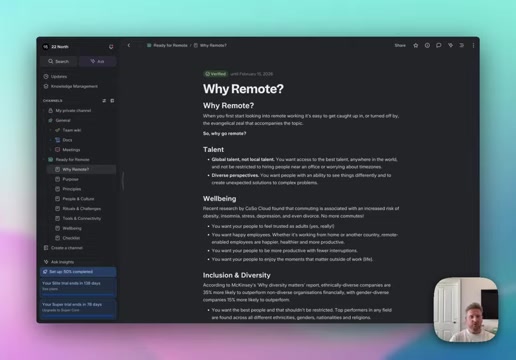
It’s tempting to layer AI on top of existing systems without verifying the information. But this creates a shaky base. A critical difference exists between AI that works, and AI that isn't adopted because it causes distrust. Search is a process that doesn't always work when implemented in these scenarios.
Building a Strong Foundation
Establishing Clear Ownership and Verification
Organizations frequently designate community champions or owners for content creation. While helpful, these roles often become add-ons to existing responsibilities. This leads to difficulties in maintaining information accuracy. What's truly clever are tools that allow collection of verified information. Proper workflows enable AI to deliver trusted answers.
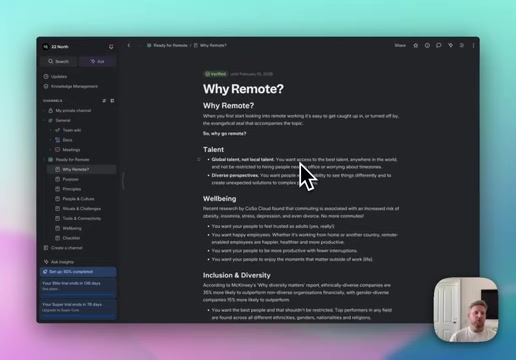
Consider the following approach:
- Content Ownership: Assign clear ownership to ensure accountability for updates and accuracy.
- Verification Process: Implement a system for verifying information, including regular reviews and updates.
- User Feedback: Encourage users to flag outdated or incorrect information, creating a feedback loop for continuous improvement.
Leveraging Knowledge Management Tools
Tools like Slite and Glean facilitate the creation of collections of verified information. Slite, highlighted in the video, serves as a knowledge management tool enabling content owners to easily verify information. The verification system is simple and streamlined:
-
Content Creation: Owners create and add content.
-
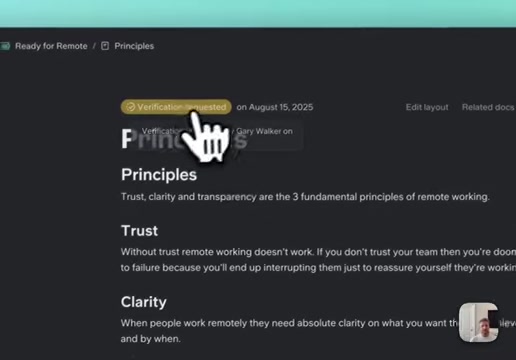
Verification: Owners verify the content's accuracy and set an expiration date.
-
Notifications: Owners receive notifications before the expiration date, prompting them to review and re-verify the information.
This keeps content fresh.
Maintaining Data Source Integrity
To build trust in your knowledge management system, data sources need proper set up. You need to establish this before implementing AI to get reliable results.
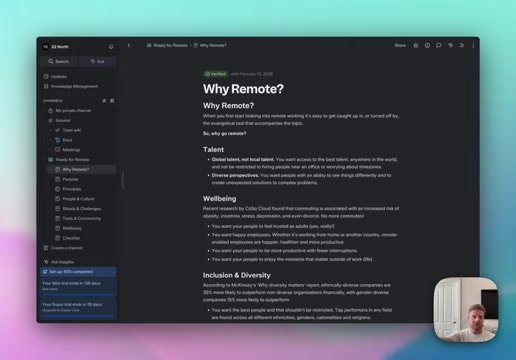
When implementing AI, connect it specifically to validated data rather than 'everything'. If information is scattered across different systems, you create an illusion of efficiency. You’re only searching different content. Instead, AI is looking to give the most relevant answer, but users can’t always trust it. You can configure your data sources and build a trust foundation by focusing on:
- Data Source Validation: Regularly check the integrity and accuracy of data sources
- Source Tagging: Tag your sources so that users know where the information is coming from and can assess the trustworthiness
- AI Scope Configuration: Refine your AI to prioritize and leverage your validated information sources.
How to Implement the Solution
Verifying information in a document
-
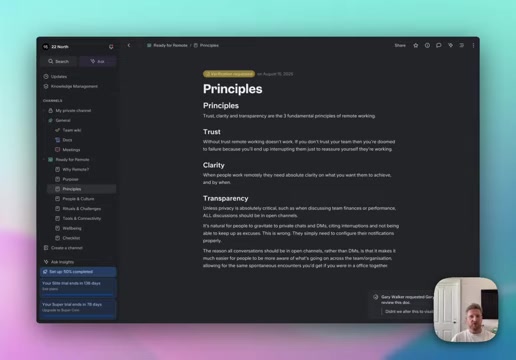
The presenter reviews an example of a Company Handbook in Slite.
-
He clicks the green Verified check.
-
He extends it a set amount of time.
-
End of January, a notification will come to check the content to update the verification.
-
He can request verification, flag it as outdated with a reason, which is then noted to document owner.
Core Features
Manage Docs
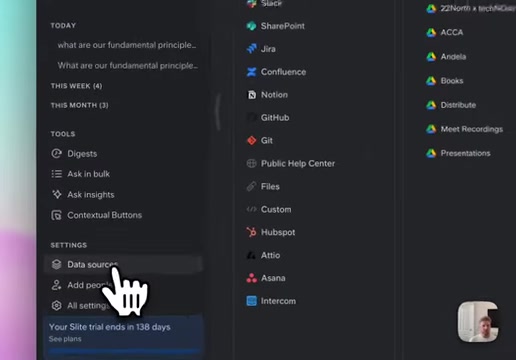
The video demonstrates that Slite's core feature is to manage and verify docs. You can mark them as verified or outdated.





Most people like



































Report
Please select a reason for reporting
- 13 Reasons to Switch from Snapchat to Text Messaging
- 7 Powerful Speech to Text Apps to Boost Productivity
- 10 Best Speech to Text Tools for Effortless Transcription
- 13 Free Tools to Easily Transcribe Audio to Text
- 15 Surprising Ways Google's Speech-to-Text Boosts Productivity
- 7 Best Free Online Audio to Text Transcription Tools
- 9 Tips to Transcribe Speech to Text Faster and Better
- 13 Best Speech to Text Software for Windows 10 in 2023
- 7 Tips for Choosing the Best Transcriber for Audio to Text
- 11 Reasons Why Dragon Speech-to-Text Apps are Game-Changers
- 6 Secrets to Enhance Your Speech to Text Transcription
- 6 Brilliant Ways to Boost Productivity with Talk-to-Text on Your MacBook
- 6 Ways Transcription Software Converts Audio to Text
- 8 Tips to Transcribe Speech to Text Like a Pro
- 6 Reasons IBM Watson Speech to Text is a Game-Changer
- 14 Powerful Ways Talk-to-Text Improves Your Workflow
- 12 Top Windows Speech-to-Text Software for Efficient Transcription
- 12 Game-Changing Benefits of Apple's Speech to Text Technology
- 9 Powerful Use Cases for AWS Speech to Text Technology
- 10 Easy Steps to Transcribe YouTube Videos to Text
- transcription audio en texte
- online audio transcription
- free audio file transcription
- free ai audio transcription
- audio transcription service
- audio transcription online free
- audio transcription free online
- audio to transcription software
- audio and transcript
- ai audio transcription free
- voice recording to text converter
- translate voice recording to text
- record voice to text
- audio recording to text converter
- voice recording and transcription
- chatgpt voice to text
- gmail voice to text
- speech to text reader
- speech to text ai free
- speech to talk
- How to Use AI Tools to Find Internal Linking Opportunities Across a Business Website
- Discover Your Perfect Haircut with AI Hairstyle Apps
- Free Reputation Calculator Tools: How They're Adapting to Score AI Visibility, Not Just Rankings
- Design Professional Flyers for Free on Your Phone
- Best Free Flyer Maker Apps for Android: Design Like a Pro
- How to Know If Your Business Is Ready for an AI Customer Service Agent
- Revolutionizing Storytelling: From Novels to Screenplays with AI
- Create Engaging Animated Explainer Videos with a Free AI Tool
- Stop Multi-Subscribing: Benchmark Top AI Visual Models in One Canvas
- Best Seedance 2.5 API Provider: Every Price on the Market, Checked at Source
- Top AI Social Media Management Tools: Automate Your Content Strategy
- Free AI Text to Video Generator: Create Stunning Videos from Text
- Discover 17 ChatGPT Alternatives: A Comprehensive Comparison
- Character.AI vs. Janitor AI: Which AI Chat Platform Reigns Supreme?
- Top Virtual Assistant Companies in 2026: Reviews, Pricing, and Plans Compared
- Unveiling FaceCheck.ID: Revolutionizing Reverse Image Searches with AI
- 11 Best AI Dialers in 2026: Features, Pricing, Pros and Cons
- How I Direct Consistent AI Clips: A Hands-On Guide to Multi-Model Generation
- A Realistic Review of the Photo Generator Image Tool
- Playwright MCP Server: Automated Web Testing with Agent Mode

Copyright ©2026 toolify