































Table of Contents
- Key Points
- Introduction to FileDrop's Document Conversion Tool
- Exploring Specific Document Conversion Use Cases
- Step-by-Step Guide: Converting Documents with FileDrop
- Understanding FileDrop’s Pricing Plans
- Weighing the Advantages and Disadvantages of FileDrop
- Key Features of FileDrop's Document Conversion
- Real-World Use Cases for FileDrop's Conversion Capabilities
- Common Queries About Document Conversion
- Frequently Asked Questions About FileDrop's Document Conversion


Introduction to FileDrop's Document Conversion Tool
What is FileDrop?
FileDrop is a versatile file processing platform designed to simplify how businesses manage and convert their documents. Offering a range of tools, FileDrop enables users to effortlessly convert documents between various formats, ensuring compatibility and accessibility across different systems.
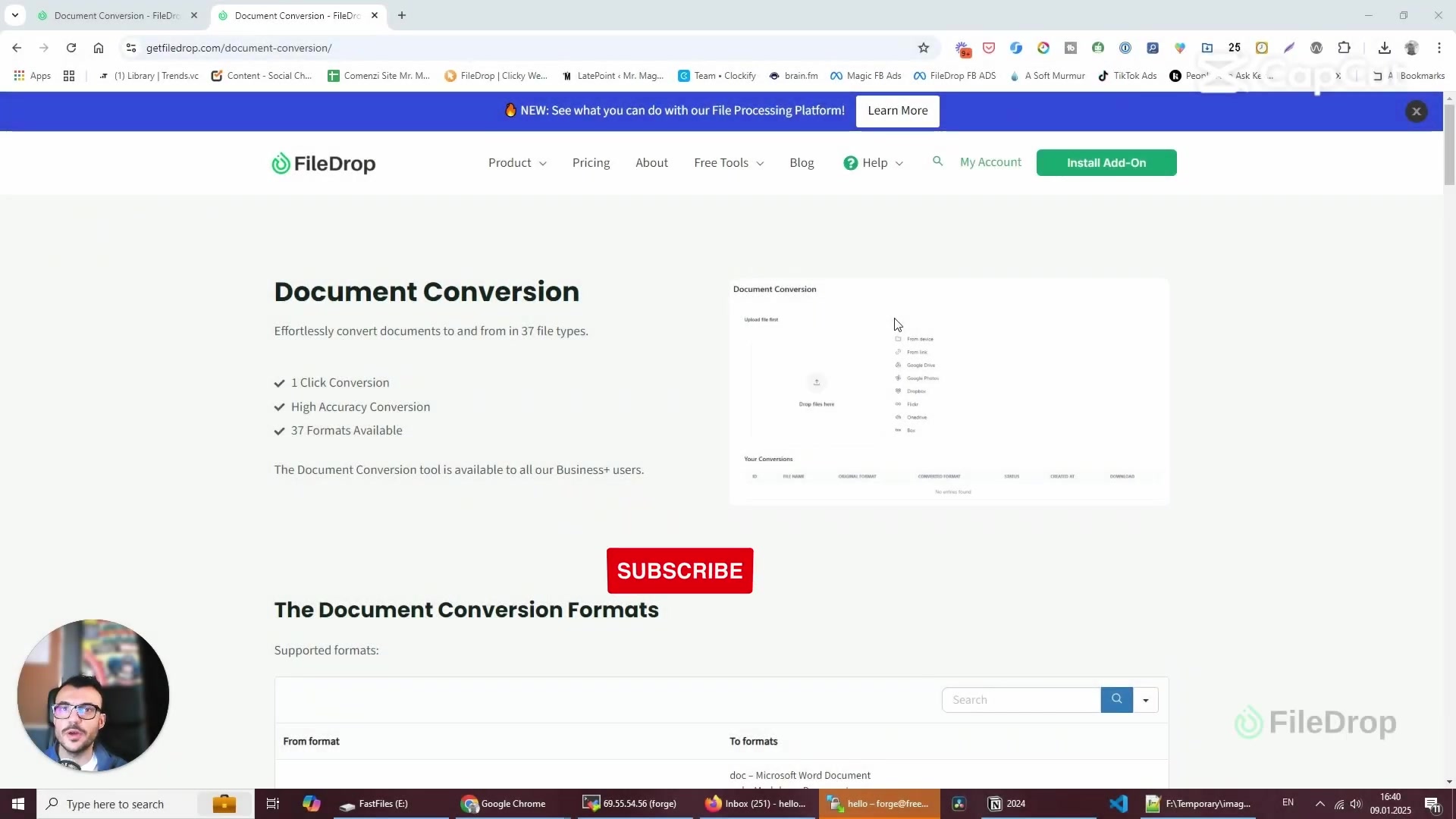
This document conversion capability is a standout feature, providing a streamlined solution for businesses aiming to optimize their document workflows. With FileDrop, converting documents becomes a one-click process, saving valuable time and resources. The platform supports over 37 file types, offering a wide array of conversion possibilities to suit diverse business requirements. The tool is available to all business users of FileDrop, making it an indispensable asset for organizations looking to enhance their document management capabilities. FileDrop ensures high accuracy during conversions, maintaining the integrity of the data while transforming files. From converting PDFs to editable WORD documents to transforming CSV files into Excel spreadsheets, FileDrop handles various tasks with precision and ease. This combination of features makes FileDrop a vital tool for any business seeking to streamline its document processes and improve overall efficiency. Document conversion is now simpler than ever, thanks to FileDrop’s user-centric design and robust functionality.
Why Document Conversion is Essential for Modern Businesses
In the modern business landscape, document conversion is not just a convenience—it's a necessity. The ability to seamlessly transform documents between different formats ensures that information can be accessed and utilized across various platforms and systems.
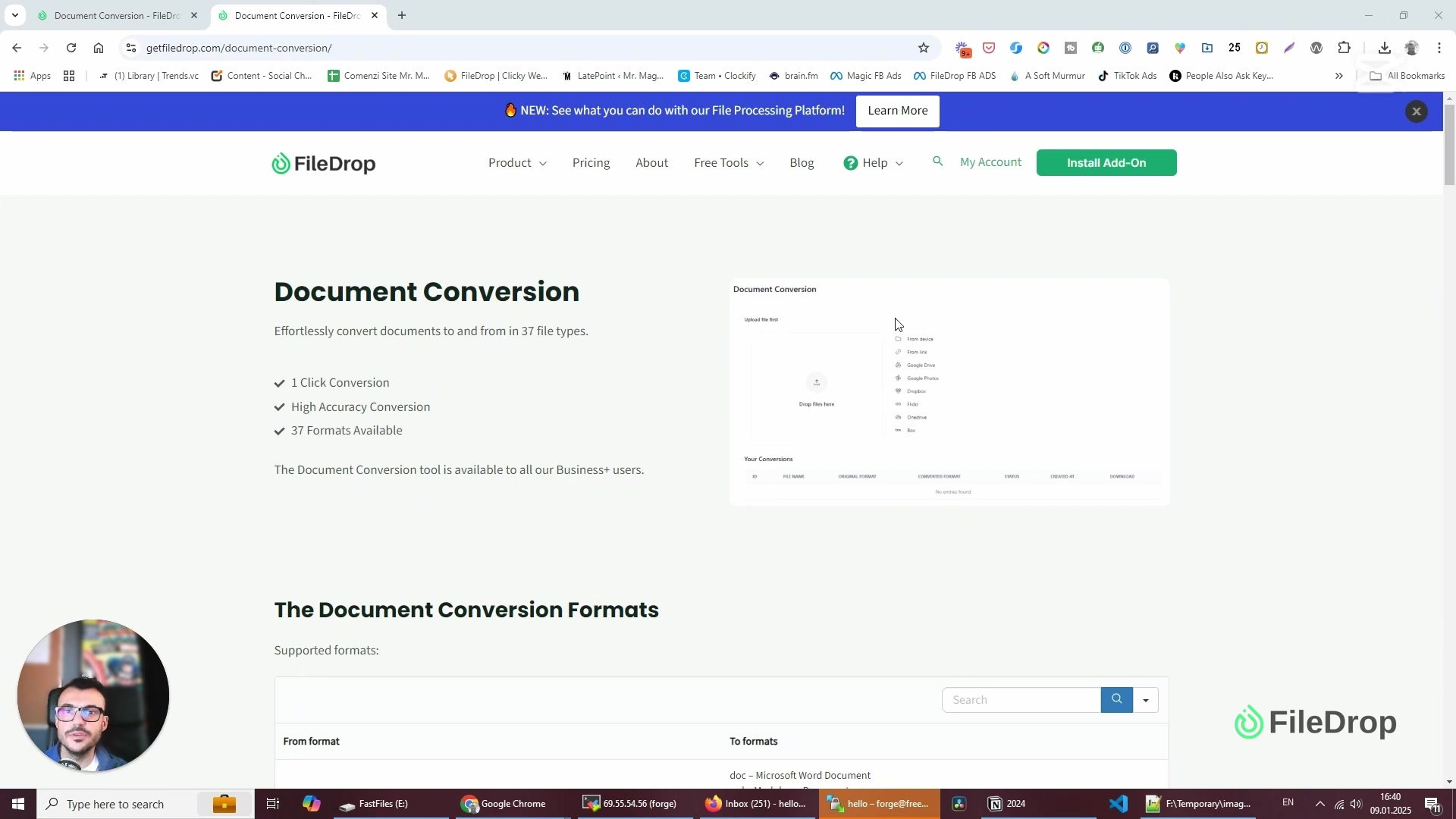
This flexibility is crucial for collaboration, data analysis, and compliance with industry standards. Document conversion eliminates barriers, allowing teams to work together efficiently regardless of their preferred software or operating systems. Consider the need to convert a scanned PDF into an editable Word document for revisions or transforming a complex CSV file into an easily digestible Excel spreadsheet for data analysis. These tasks are commonplace, and having a reliable conversion tool streamlines these processes, saving valuable time and resources. Moreover, compliance with industry-specific regulations often requires documents to be submitted in particular formats. A robust document conversion tool ensures that businesses can meet these requirements without hassle. By enabling seamless compatibility and accessibility, document conversion tools like FileDrop are indispensable for modern businesses seeking to optimize their operations and enhance their competitive edge. The ability to convert documents quickly and accurately ensures that information flows smoothly throughout the organization, empowering teams to make informed decisions and drive business growth.
Step-by-Step Guide: Converting Documents with FileDrop
Step 1: Access the Document Conversion Tool
First, navigate to FileDrop’s website and log into your account.

If you don't have an account, you can easily sign up for a free trial to explore the platform’s capabilities. Once logged in, locate the 'Document Conversion' option in the main menu or dashboard. Clicking this will take you to the document conversion interface, where you can begin the process of uploading and converting your files.
Step 2: Upload Your Document
In the document conversion interface, you'll find an upload area where you can drag and drop your files or select them from your computer.
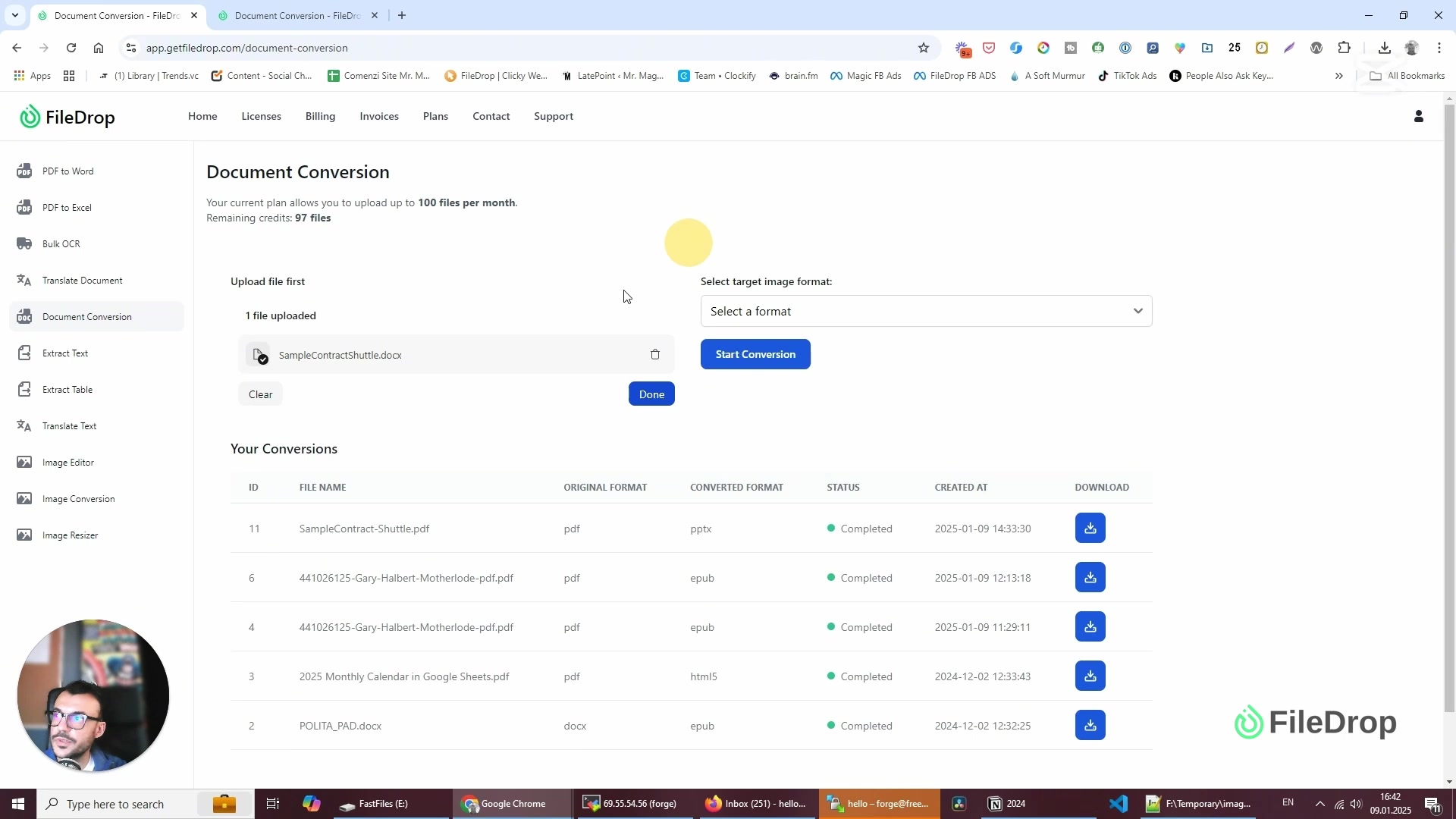
FileDrop supports various upload methods, including importing files directly from cloud storage services like Google Drive, Dropbox, OneDrive, and Box. Select the file you wish to convert and upload it to the platform. FileDrop can handle files of various sizes, but keep in mind that larger files may take longer to upload.
Step 3: Select the Target Format
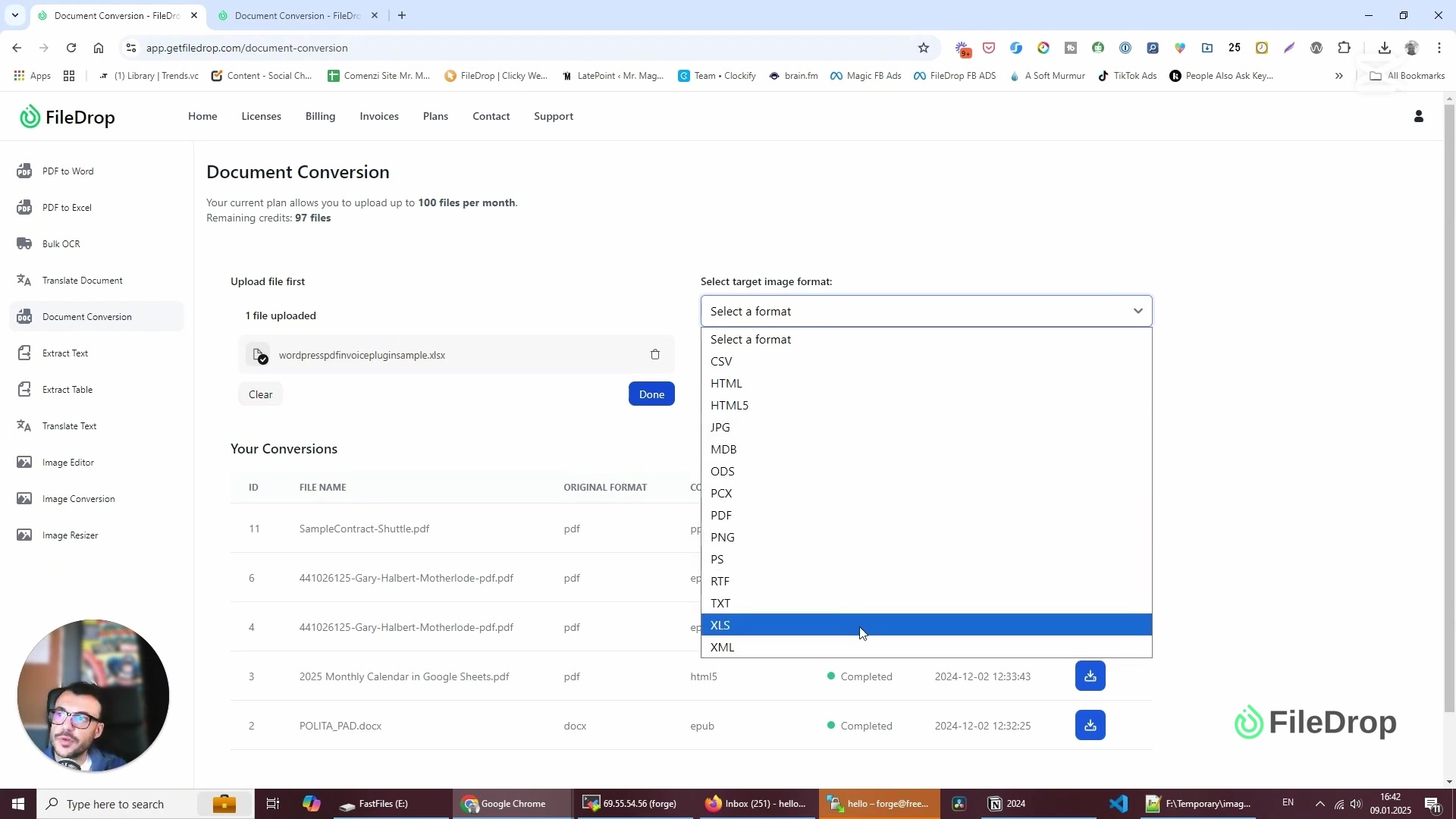
Once your file is uploaded, FileDrop will analyze the file type and present you with a list of available target formats.
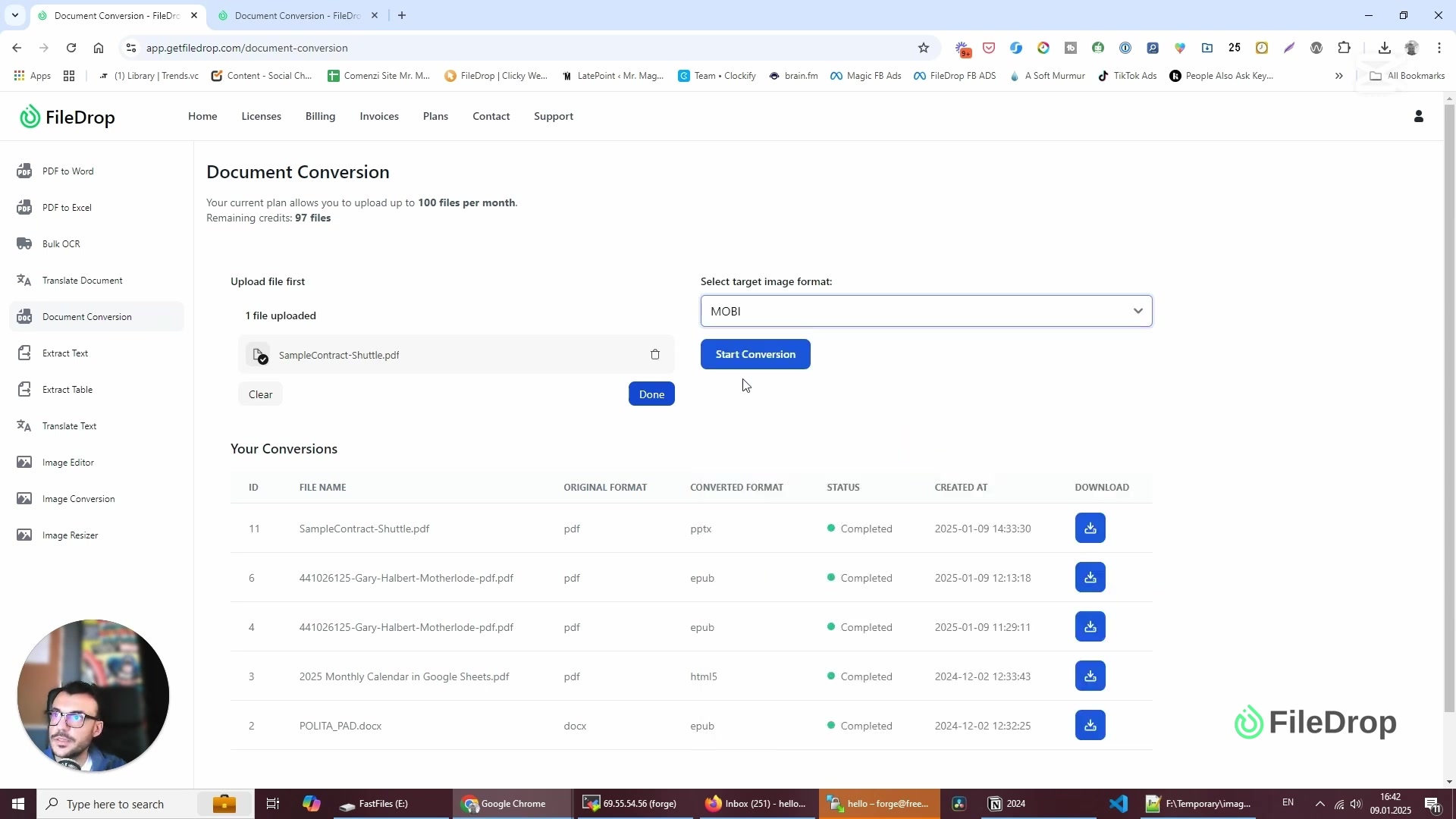
Choose the format that best suits your needs from the dropdown menu. FileDrop supports over 37 different file formats, so you'll likely find the one you're looking for. Common conversions include PDF to Word (DOCX), CSV to Excel (XLSX), and various image format conversions.
Step 4: Start the Conversion
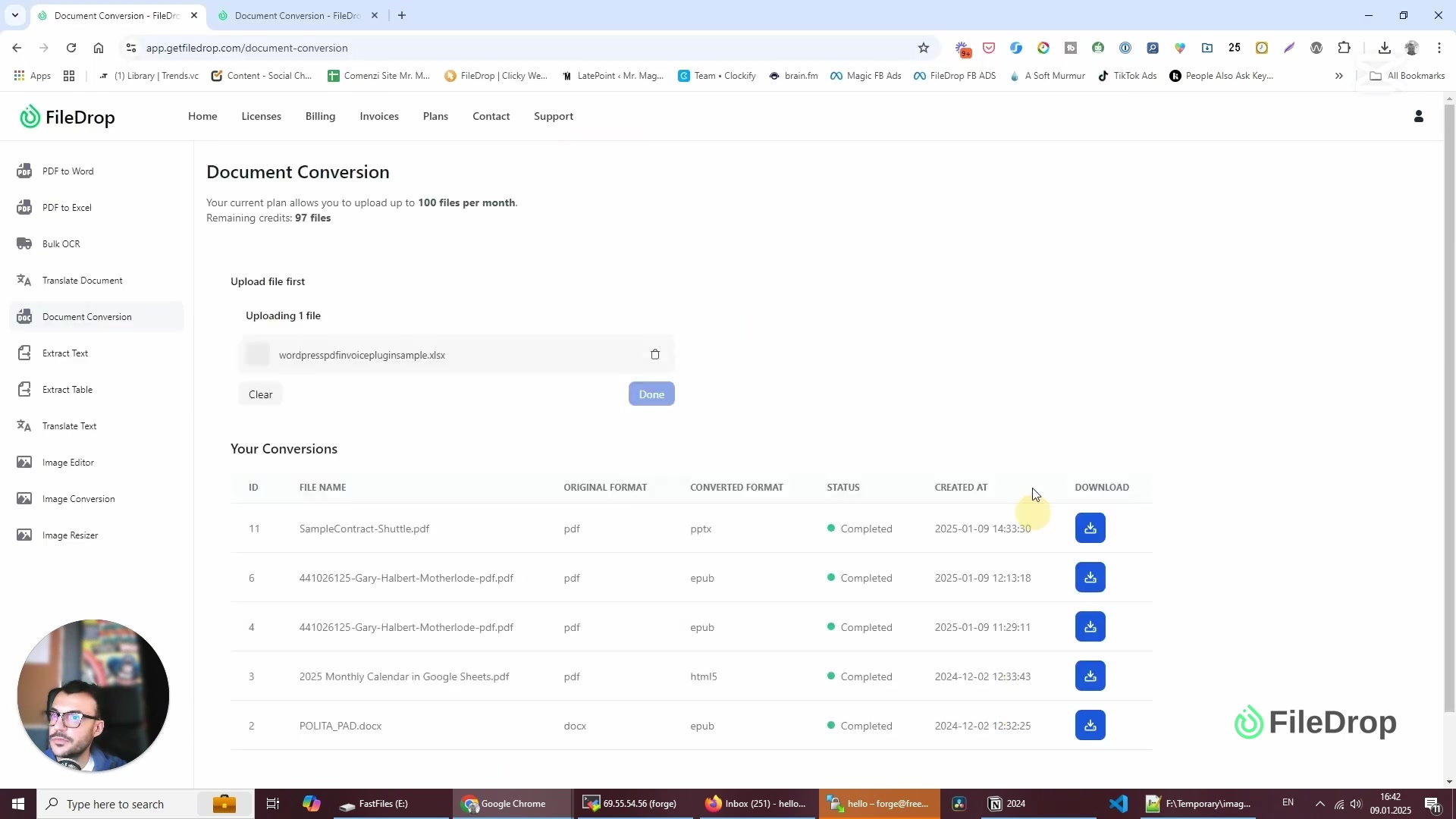
After selecting the target format, click the 'Start Conversion' button to initiate the conversion process. FileDrop will process your file and convert it to the chosen format. The conversion time will depend on the size of the file and the complexity of the conversion. You can monitor the progress of the conversion in the platform's conversion queue.
Step 5: Download the Converted File
Once the conversion is complete, FileDrop will notify you, and the converted file will be available for download. Click the 'Download' button next to the completed conversion in the queue. Save the file to your desired location on your computer. You can then open and use the converted file as needed.
Key Features of FileDrop's Document Conversion
Extensive File Format Support
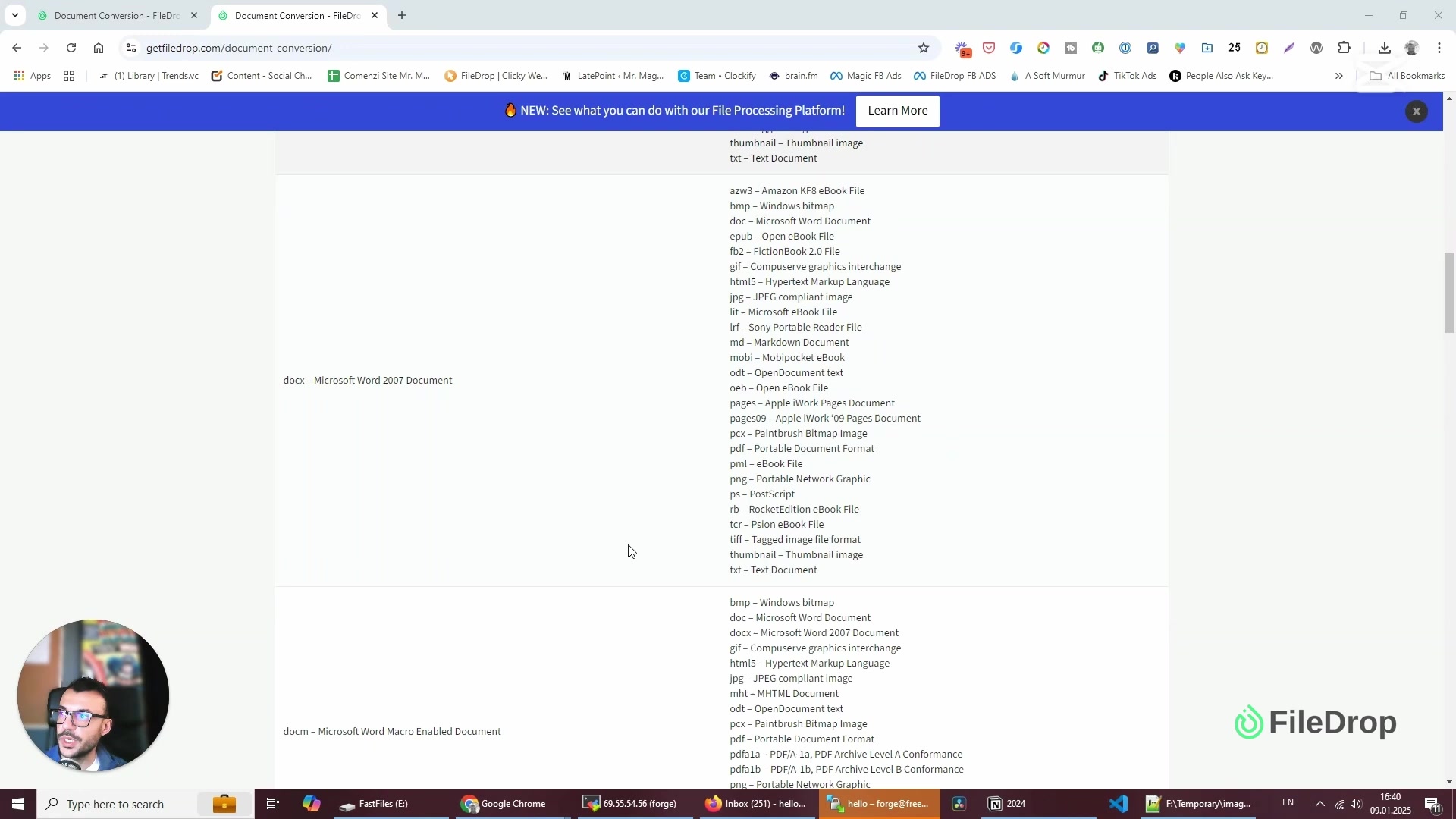
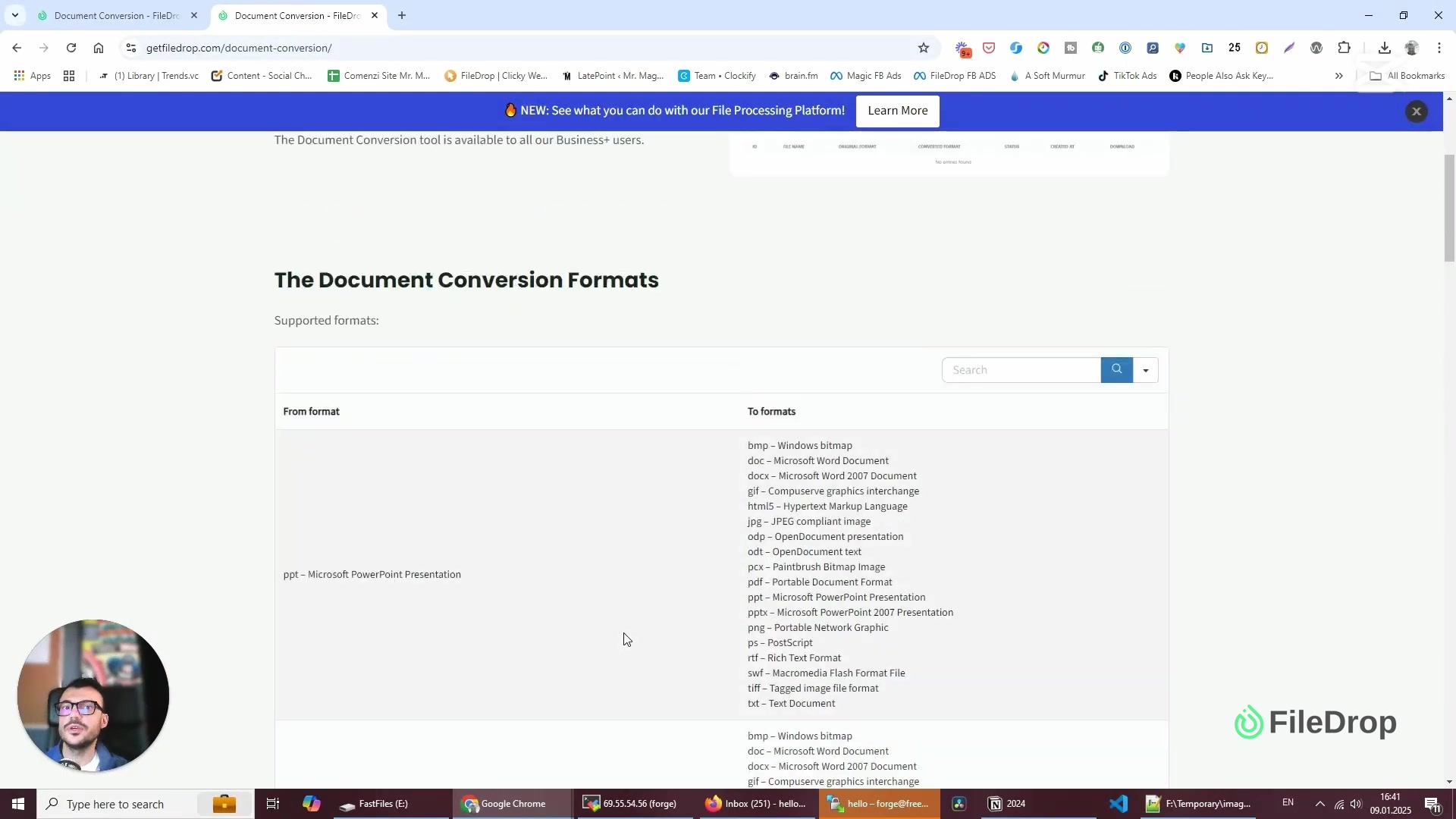
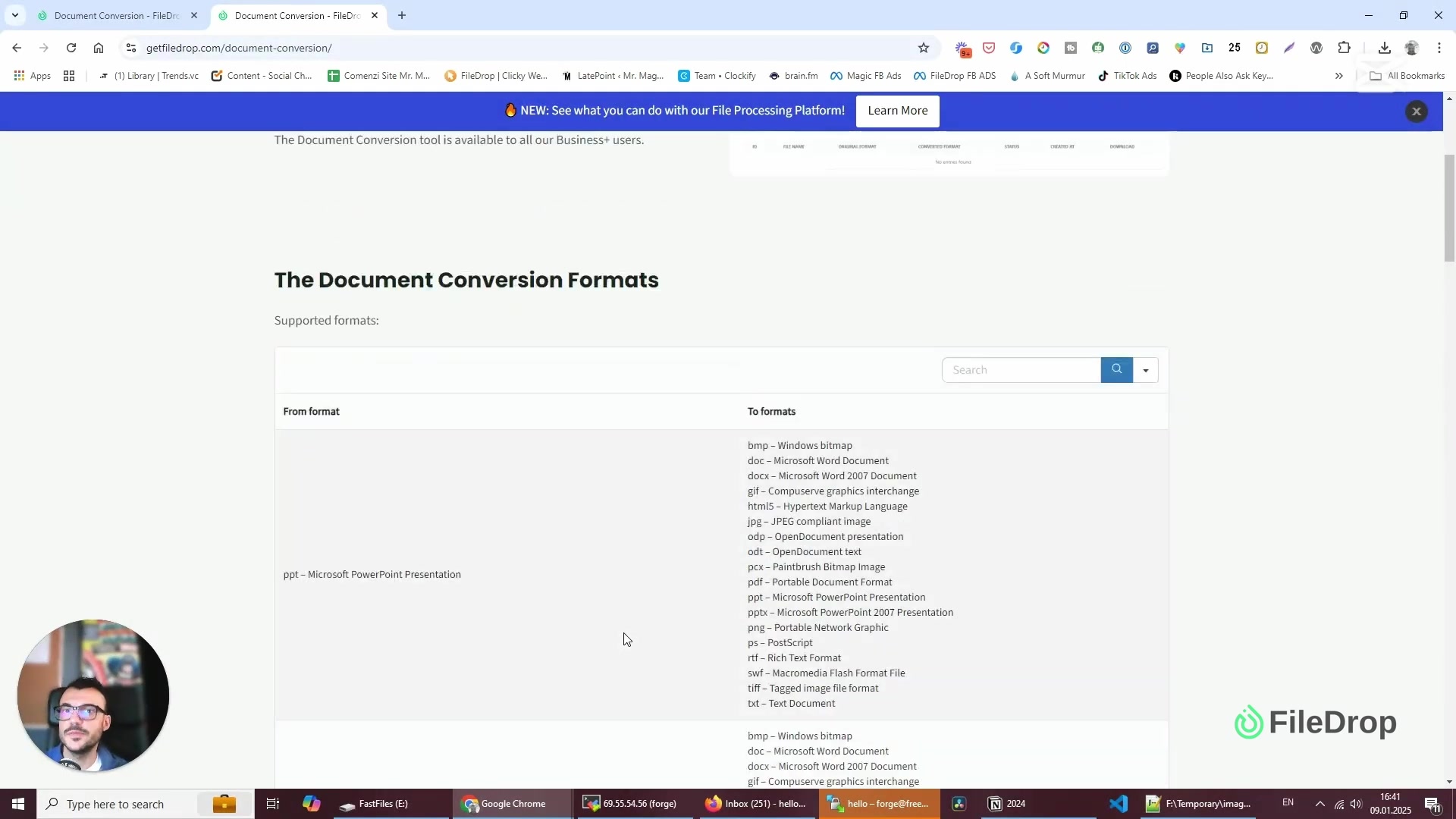
FileDrop distinguishes itself through its extensive support for numerous file formats, catering to a wide spectrum of document types. From conventional formats like DOCX, CSV, and PDF to more specialized extensions, FileDrop ensures compatibility across various systems and applications.
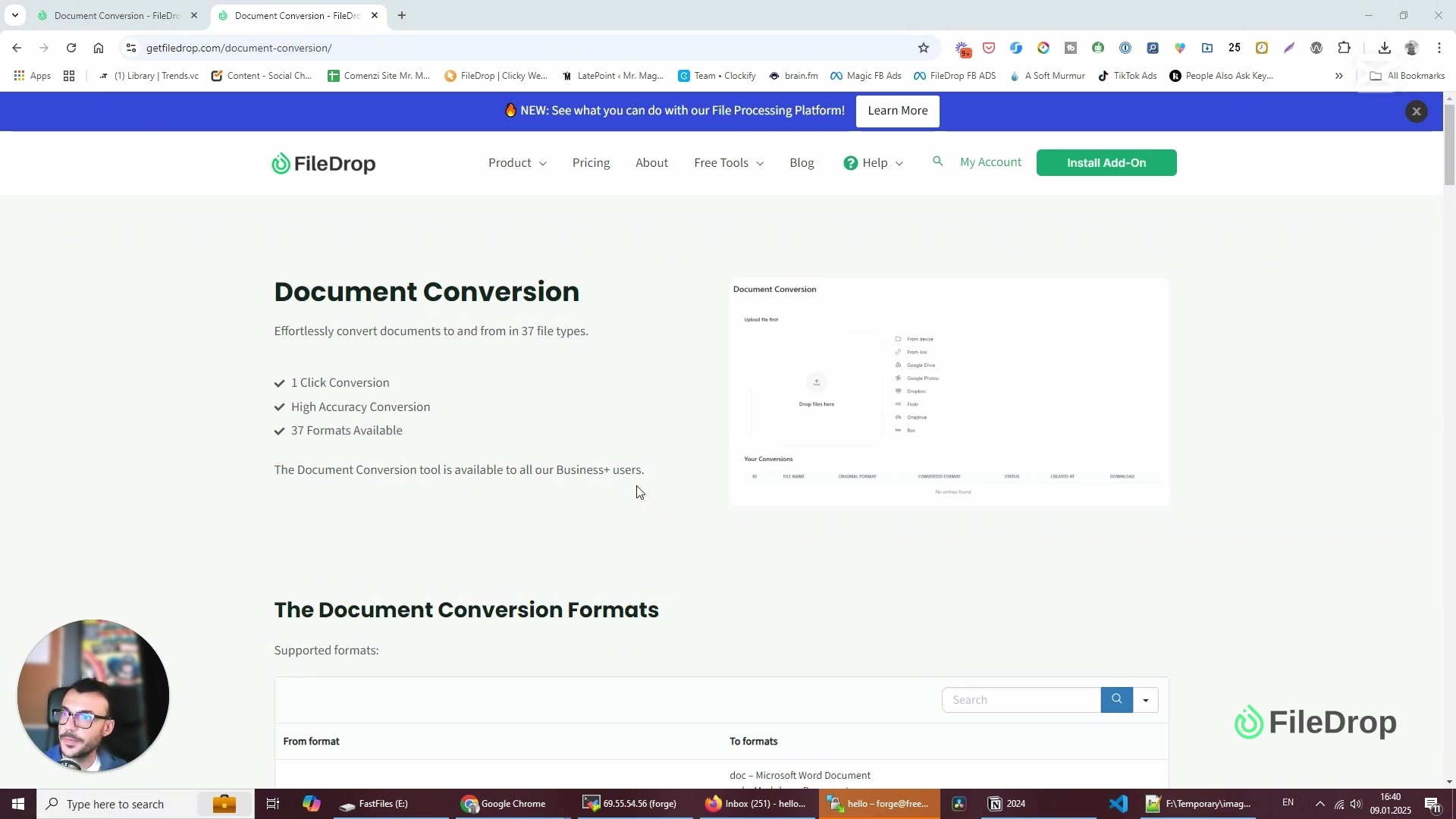
The platform’s capability to convert vector files and other unique formats further enhances its versatility, making it a comprehensive solution for all document conversion needs. This broad support helps businesses avoid compatibility issues, ensuring that every team member can access and work with the necessary documents regardless of their software preferences. The list of supported formats is continually updated, reflecting FileDrop's commitment to staying current with evolving industry standards. By supporting a diverse range of file types, FileDrop eliminates the need for multiple conversion tools, providing a centralized platform for all document processing tasks. This approach not only simplifies workflows but also reduces the potential for errors associated with using different conversion methods. With FileDrop, businesses can trust that their documents will be accurately converted, maintaining data integrity and ensuring seamless collaboration across the organization.
High Accuracy Conversion
Accuracy is paramount in document conversion, and FileDrop excels in this area. The platform is engineered to maintain the integrity of data during the conversion process, ensuring that the final output mirrors the original document as closely as possible.
This high level of accuracy is crucial for preserving important information, formatting, and layouts, especially when dealing with complex documents. FileDrop’s conversion algorithms are continuously refined to minimize discrepancies and ensure that the converted files are usable and reliable. Whether converting PDFs to editable Word documents or transforming spreadsheets for data analysis, FileDrop’s commitment to accuracy helps businesses avoid errors and rework. This reliability translates to time savings and improved productivity, as teams can trust that their converted documents are ready for immediate use. With FileDrop, businesses can confidently convert their documents, knowing that the information will remain intact and consistent. This focus on precision sets FileDrop apart as a trusted solution for document conversion, ensuring that data integrity is never compromised.
User-Friendly Interface
FileDrop's document conversion tool boasts a user-friendly interface, designed to simplify the entire conversion process. The platform's intuitive design allows users to easily upload files, select the desired output format, and initiate the conversion with just a few clicks.
This simplicity is key to enhancing productivity, as it reduces the learning curve and minimizes the time spent on document processing tasks. The interface provides clear instructions and visual cues, guiding users through each step of the conversion process. Whether you are a seasoned professional or a novice user, FileDrop’s straightforward design ensures a smooth and hassle-free experience. Moreover, the platform offers a clean and organized layout, making it easy to locate and access the various conversion options. This user-centric approach underscores FileDrop's commitment to providing a tool that is not only powerful but also accessible to everyone. With FileDrop, document conversion becomes a simple and efficient task, empowering businesses to focus on their core objectives rather than struggling with complex software.
Seamless Integration
FileDrop offers seamless integration with various cloud storage services like Google Drive, Dropbox, OneDrive, and Box, streamlining the document conversion process.
Users can directly import files from these platforms, eliminating the need to download and re-upload documents manually. This integration simplifies workflows, saving time and ensuring that documents are always up-to-date. By connecting FileDrop with your preferred cloud storage, you can create a centralized document management system that is both efficient and secure. The platform supports direct linking, allowing you to share converted files easily with team members and clients. This seamless integration enhances collaboration, ensuring that everyone has access to the latest versions of documents. FileDrop’s compatibility with these popular cloud services underscores its commitment to providing a versatile and user-friendly solution for document conversion. With FileDrop, managing and converting documents becomes an integrated part of your existing workflow, enhancing productivity and simplifying your daily tasks.
Efficient File Processing Platform
FileDrop serves as an efficient file processing platform, providing a centralized hub for all your document management needs. Beyond document conversion, FileDrop offers various tools for extracting text, translating documents, editing images, and more.
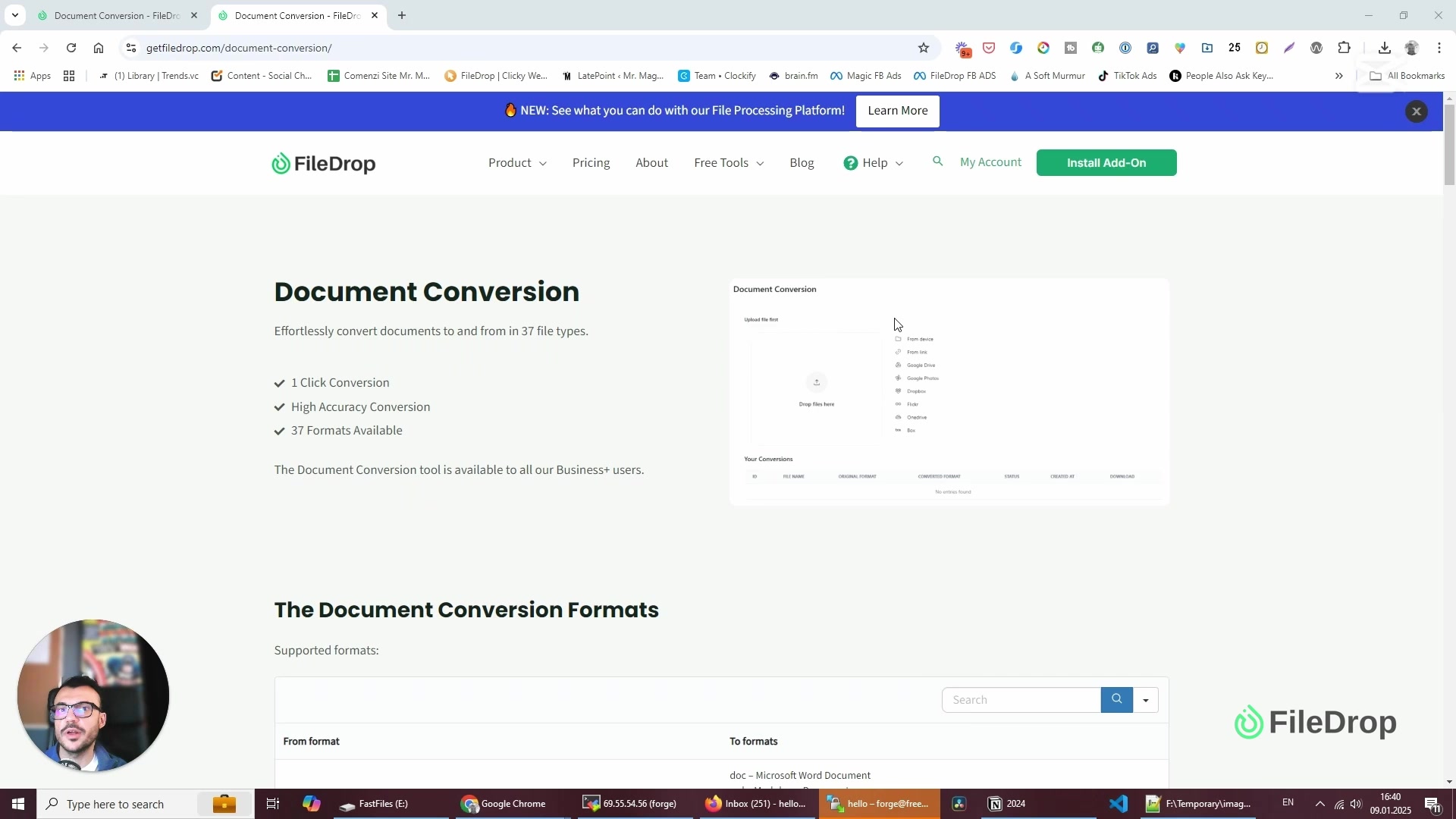
This comprehensive approach streamlines workflows, eliminating the need for multiple specialized applications. FileDrop's intuitive interface makes it easy to access and utilize these various features, empowering businesses to manage their documents effectively. The platform's scalability ensures that it can accommodate the needs of both small businesses and large enterprises. By centralizing file processing tasks, FileDrop promotes consistency and reduces the potential for errors. This holistic approach enhances productivity, enabling teams to focus on their core objectives rather than juggling different software solutions. With FileDrop, businesses can trust that their documents are being managed in a secure, efficient, and user-friendly environment.
Real-World Use Cases for FileDrop's Conversion Capabilities
Legal Document Processing
Law firms and legal departments often need to convert documents for various purposes, such as court filings, client communications, and internal record-keeping. FileDrop can streamline these processes by quickly converting legal documents to the required formats.
For example, a scanned PDF contract can be converted to an editable Word document for revisions, or a CSV file containing client data can be transformed into an Excel spreadsheet for analysis. FileDrop’s high accuracy ensures that legal documents are converted without errors, maintaining their integrity and reliability. By using FileDrop, legal professionals can save time, reduce the risk of mistakes, and ensure compliance with court requirements.
Academic Research and Collaboration
Researchers and academics frequently collaborate on projects that involve diverse document types. FileDrop can facilitate this collaboration by enabling seamless document conversion. A researcher might need to convert a colleague’s PDF report into an editable format for annotations, or transform a dataset from a CSV file into an Excel spreadsheet for analysis.
FileDrop’s intuitive interface and broad file format support make it easy for researchers to share and work on documents together, regardless of their preferred software or operating systems. This streamlines the research process, fostering greater collaboration and productivity.
Marketing Content Management
Marketing teams often work with various file types, including text documents, images, and spreadsheets. FileDrop can help manage marketing content by providing a centralized tool for document conversion. A marketer might need to convert a Word document into a PDF for distribution, or transform a CSV file containing campaign data into an Excel spreadsheet for reporting. FileDrop’s efficient file processing platform ensures that marketing content is always in the correct format, ready for use in campaigns, presentations, and other marketing activities. By using FileDrop, marketing teams can save time, maintain consistency, and optimize their content for maximum impact.







Most people like






























Report
Please select a reason for reporting
- 13 Reasons to Switch from Snapchat to Text Messaging
- 7 Powerful Speech to Text Apps to Boost Productivity
- 10 Best Speech to Text Tools for Effortless Transcription
- 13 Free Tools to Easily Transcribe Audio to Text
- 15 Surprising Ways Google's Speech-to-Text Boosts Productivity
- 7 Best Free Online Audio to Text Transcription Tools
- 9 Tips to Transcribe Speech to Text Faster and Better
- 13 Best Speech to Text Software for Windows 10 in 2023
- 7 Tips for Choosing the Best Transcriber for Audio to Text
- 11 Reasons Why Dragon Speech-to-Text Apps are Game-Changers
- 6 Secrets to Enhance Your Speech to Text Transcription
- 6 Brilliant Ways to Boost Productivity with Talk-to-Text on Your MacBook
- 6 Ways Transcription Software Converts Audio to Text
- 8 Tips to Transcribe Speech to Text Like a Pro
- 6 Reasons IBM Watson Speech to Text is a Game-Changer
- 14 Powerful Ways Talk-to-Text Improves Your Workflow
- 12 Top Windows Speech-to-Text Software for Efficient Transcription
- 12 Game-Changing Benefits of Apple's Speech to Text Technology
- 9 Powerful Use Cases for AWS Speech to Text Technology
- 10 Easy Steps to Transcribe YouTube Videos to Text
- transcription audio en texte
- online audio transcription
- free audio file transcription
- free ai audio transcription
- audio transcription service
- audio transcription online free
- audio transcription free online
- audio to transcription software
- audio and transcript
- ai audio transcription free
- voice recording to text converter
- translate voice recording to text
- record voice to text
- audio recording to text converter
- voice recording and transcription
- chatgpt voice to text
- gmail voice to text
- speech to text reader
- speech to text ai free
- speech to talk
- Create Engaging Animated Explainer Videos with a Free AI Tool
- Stop Multi-Subscribing: Benchmark Top AI Visual Models in One Canvas
- Best Seedance 2.5 API Provider: Every Price on the Market, Checked at Source
- AI OnlyFans: How to Generate $30,000/Month (Legally)
- Transform Your Script into an Engaging Video with AI Video Maker!
- AI Marketing Automation: A Comprehensive Guide for Small Businesses
- Midjourney Alternative for Anime Art Creators: Why PixAI May Be Better for Character Workflows
- 10 Things Most People Get Wrong About AI Image Search
- AI Girlfriend Apps: Top Choices Redefining Relationships 2025
- How to Reduce Quoting Errors in Salesforce with AI-Assisted Quote Creation
- AI Resume Builders: EnhanceCV, ResumeNerd AI, & Teal Compared
- ResumeAI: Crafting ATS-Optimized Resumes with AI
- AI in Resume Writing: A New Era for Job Seekers
- AI Resume Tools: Streamline Your Job Search and Land Your Dream Role
- AI Resume Optimization: The Right Way to Land Interviews
- Crafting a Killer Resume with AI: A Step-by-Step Guide
- Crafting a Winning Resume: AI Tools and Expert Tips
- AI Job Search: Level Up Your Career with AI Automation
- Empower Your Career Journey: Dynamic Resumes with AI
- AI Resume Builder: Create Professional Resumes Effortlessly

Copyright ©2026 toolify