































Table of Contents
- Key Points
- Understanding Interview Coder AI
- Ethical Considerations and Responsible Use
- Using Interview Coder AI: A Step-by-Step Guide
- Pricing Options: Free vs. Subscription Models
- Weighing the Advantages and Disadvantages
- Key Features of Interview Coder AI
- Practical Use Cases of Interview Coder AI
- Frequently Asked Questions (FAQ)
- Related Questions


Using Interview Coder AI: A Step-by-Step Guide
Downloading and Installing the AI Interview Assistant
The first step involves downloading Interview Coder AI from the official website (interviewcoder.co).
It supports both Mac and Windows operating systems, offering separate download links for each. Ensure that you download the version compatible with your system to avoid installation issues.
- Download for Mac: Click the "Download for Mac" button to begin the download. The file will be a .dmg file, which is a standard installer package for macOS.
- Download for Windows: Click the "Download for Windows" button. This will download an .exe file, the standard installer for Windows.
Installation Process (Mac):
- Locate the downloaded .dmg file in your Downloads folder.
- Double-click the .dmg file to mount the disk image.
- A new Finder window will open, displaying the application icon and a shortcut to the Applications folder.
- Drag the application icon to the Applications folder to install it.
- Once the installation is complete, you can eject the disk image by dragging it to the Trash or right-clicking and selecting "Eject."
Installation Process (Windows):
- Locate the downloaded .exe file in your Downloads folder.
- Double-click the .exe file to run the installer.
- A User Account Control (UAC) Prompt may appear, asking for permission to make changes to your device. Click "Yes" to continue.
- Follow the on-screen instructions to complete the installation. You may be prompted to select an installation directory and create a desktop shortcut.
After installation, launch Interview Coder AI. The initial setup may require you to create an account or log in with existing credentials. Follow the prompts to complete the setup process.
Next, you will need to configure Interview Coder AI to work with your preferred interview platform, such as Zoom, Google Meet, or HackerRank. This typically involves granting the tool necessary permissions to access your screen and interact with the coding environment. Each platform may have slightly different configuration steps.
Configuring for Zoom:
- Open Zoom and go to Settings.
- Navigate to the "Screen Sharing" section.
- Ensure that "Share computer sound" and "Optimize Screen Sharing for video clip" are enabled.
- In Interview Coder AI, select Zoom as your interview platform.
- Follow any additional instructions provided by the tool to ensure proper integration.
Configuring for Google Meet:
- Open Google Meet and start or join a meeting.
- In Interview Coder AI, select Google Meet as your interview platform.
- Grant the tool necessary permissions to access your screen.
- Follow any additional instructions provided by the tool to ensure proper integration.
To ensure that Interview Coder AI functions correctly, perform a test run before your actual interview. This involves starting a mock interview session and verifying that the AI assistance is working as expected. Check the following:
- Can the tool access your screen during screen sharing?
- Are the AI suggestions appearing in real-time?
- Is the AI interface hidden from the interviewer’s view?
If you encounter any issues during the test run, consult the tool’s documentation or contact customer support for assistance. Addressing these issues before your interview is critical to avoid any disruptions or detection during the actual session.
By following these steps, you can successfully download, install, and configure Interview Coder AI for your technical interviews. Remember to perform a thorough test run to ensure that the tool is functioning correctly and that you are comfortable using it.
Pricing Options: Free vs. Subscription Models
Understanding the Cost Structure of Interview Coder AI
The pricing structure for Interview Coder AI may vary depending on the features offered and the duration of access. Typically, such tools offer a basic free version with limited functionality and a subscription-based model for full access.

The free version often includes essential features that allow users to experience the tool’s core capabilities. This may include limited access to AI assistance, a restricted number of coding questions, or basic customer support. The free version is intended to give potential subscribers a taste of what the tool can do before committing to a paid plan.
The subscription model offers full access to all features and benefits. This typically includes:
- Unlimited AI Assistance: Access to real-time suggestions and code snippets for all LeetCode problems.
- Expanded Question Database: A comprehensive library of coding questions covering various topics and difficulty levels.
- Priority Customer Support: Dedicated support channels to address user queries and issues promptly.
- Advanced Features: Additional tools and functionalities to enhance the interview preparation experience.
Subscription plans may be offered on a monthly or annual basis. Monthly plans provide flexibility for users who need the tool for a short period, while annual plans offer cost savings for long-term users. The specific pricing may depend on the provider and the features included in each plan.
Subscription pricing is typically structured to provide better value for longer-term commitments. For instance, an annual subscription may cost less per month compared to a monthly subscription.
Factors that influence subscription pricing include the level of AI assistance, the size of the question database, the availability of advanced features, and the quality of customer support. Higher-priced plans typically offer more comprehensive support and advanced functionalities.
Review customer reviews and testimonials to assess whether the subscription is worth the investment. Look for feedback on the quality of AI assistance, the relevance of the question database, and the responsiveness of customer support.
Before committing to a subscription, evaluate your needs and budget. Consider how frequently you will use the tool and whether the benefits justify the cost. It may be more cost-effective to opt for a monthly plan if you only need the tool for a short period. However, if you plan to use it extensively over several months, an annual plan may be a better choice.
By understanding the pricing structure and carefully evaluating your needs, you can make an informed decision about whether Interview Coder AI is the right tool for your interview preparation journey.
Key Features of Interview Coder AI
Exploring the AI's Capabilities
Interview Coder AI boasts a range of features designed to aid candidates during technical interviews. These features aim to provide real-time assistance without being detected by the interviewer.

Here’s a breakdown of the key capabilities:
- Undetectable AI Assistance: The core feature is its ability to offer AI-driven support that remains invisible to interviewers during screen sharing. The tool masks its interface, ensuring that interviewers are unaware of the assistance being used.
- Real-time Code Suggestions: During coding challenges, Interview Coder AI provides real-time code suggestions and snippets. This can help candidates overcome roadblocks and write code more efficiently.
- Problem Analysis and Insights: The tool analyzes the coding questions presented during the interview and provides insights into potential solutions. This can help candidates understand the problem better and develop a more effective approach.
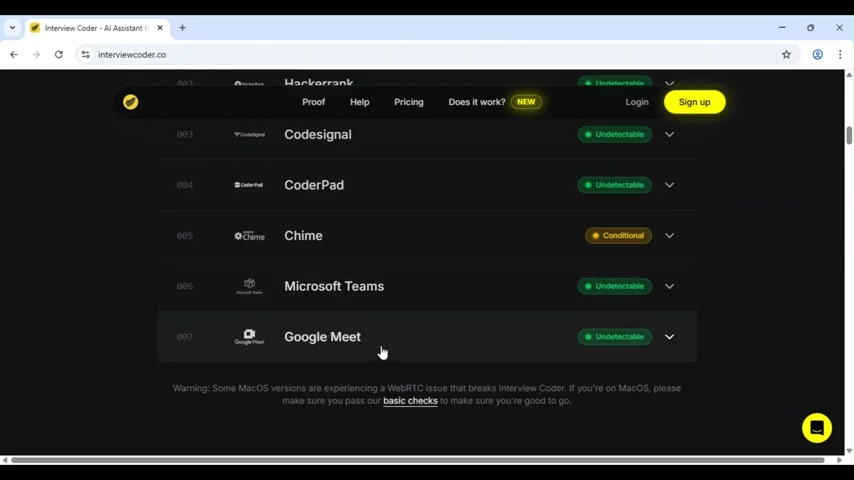
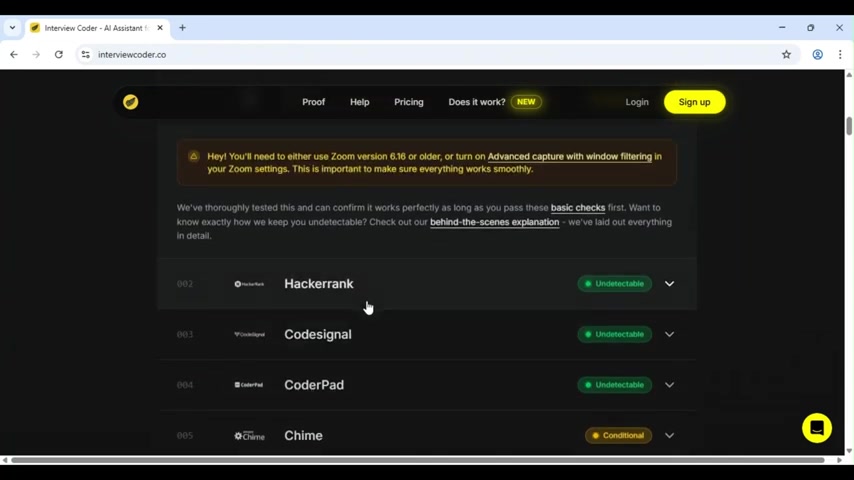
- Compatibility with Multiple Platforms: Interview Coder AI is designed to work with various platforms commonly used for remote interviews, including Zoom, Google Meet, Microsoft Teams, HackerRank, CoderPad, and more. This versatility ensures that candidates can use the tool regardless of the platform used by the interviewer.
- Customizable Settings: The tool offers customizable settings that allow users to tailor the AI assistance to their preferences. This may include adjusting the level of assistance, selecting preferred coding languages, and configuring keyboard shortcuts.
- Integration with Coding Environments: Interview Coder AI seamlessly integrates with popular coding environments, such as those used in HackerRank and CoderPad. This allows candidates to write and test code without switching between different applications.
- Question Database: The tool includes a comprehensive database of LeetCode-style coding questions covering various topics and difficulty levels. This allows candidates to practice and prepare for a wide range of challenges.
- Customer Support: Interview Coder AI offers customer support to address user queries and issues. This may include documentation, tutorials, and access to a support team.
To provide a structured overview, here is a table summarizing the key features of Interview Coder AI:
| Feature | Description |
|---|---|
| Undetectable AI Assistance | Offers real-time support without being detected by interviewers during screen sharing. |
| Real-time Code Suggestions | Provides code suggestions and snippets to help candidates write code more efficiently. |
| Problem Analysis | Analyzes coding questions and provides insights into potential solutions. |
| Platform Compatibility | Works with Zoom, Google Meet, Microsoft Teams, HackerRank, CoderPad, and more. |
| Customizable Settings | Allows users to tailor AI assistance to their preferences. |
| Coding Environment Integration | Seamlessly integrates with coding environments like HackerRank and CoderPad. |
| Question Database | Includes a comprehensive library of LeetCode-style coding questions. |
| Customer Support | Offers documentation, tutorials, and access to a support team. |
The real-time suggestions help candidates overcome coding obstacles and refine their coding approach. This feature is invaluable when facing time constraints during an interview.
These features collectively aim to provide a comprehensive support system for candidates navigating the challenges of technical interviews. However, the tool’s effectiveness and ethical implications are subjects of ongoing debate.
Practical Use Cases of Interview Coder AI
How Candidates Can Leverage the AI Tool
Interview Coder AI can be used in various scenarios to assist candidates in their technical interview preparation and performance. Here are some practical use cases:
- Practicing LeetCode Problems: Candidates can use the tool to practice solving LeetCode problems.
The AI assistance can provide real-time feedback and suggestions, helping them learn new coding techniques and improve their problem-solving skills.
- Simulating Interview Scenarios: Interview Coder AI can be used to simulate real interview scenarios. Candidates can practice coding under time constraints and with the pressure of being observed.
- Overcoming Roadblocks: During actual interviews, candidates can use the tool to overcome roadblocks. If they get stuck on a particular problem, the AI assistance can provide helpful suggestions and code snippets.
- Improving Code Efficiency: Candidates can use the tool to improve their code efficiency. The AI assistance can suggest more optimized coding techniques and help them write code faster.
- Gaining Confidence: Interview Coder AI can boost candidates’ confidence. Knowing that they have AI assistance available can reduce anxiety and improve their performance.
However, candidates should use these cases responsibly, recognizing that skill development should take precedence and over reliance must be avoided. By adopting a thoughtful and balanced approach, candidates can use Interview Coder AI to enhance their preparation and performance while upholding their professional integrity.







Most people like


































Report
Please select a reason for reporting
- 13 Reasons to Switch from Snapchat to Text Messaging
- 7 Powerful Speech to Text Apps to Boost Productivity
- 10 Best Speech to Text Tools for Effortless Transcription
- 13 Free Tools to Easily Transcribe Audio to Text
- 15 Surprising Ways Google's Speech-to-Text Boosts Productivity
- 7 Best Free Online Audio to Text Transcription Tools
- 9 Tips to Transcribe Speech to Text Faster and Better
- 13 Best Speech to Text Software for Windows 10 in 2023
- 7 Tips for Choosing the Best Transcriber for Audio to Text
- 11 Reasons Why Dragon Speech-to-Text Apps are Game-Changers
- 6 Secrets to Enhance Your Speech to Text Transcription
- 6 Brilliant Ways to Boost Productivity with Talk-to-Text on Your MacBook
- 6 Ways Transcription Software Converts Audio to Text
- 8 Tips to Transcribe Speech to Text Like a Pro
- 6 Reasons IBM Watson Speech to Text is a Game-Changer
- 14 Powerful Ways Talk-to-Text Improves Your Workflow
- 12 Top Windows Speech-to-Text Software for Efficient Transcription
- 12 Game-Changing Benefits of Apple's Speech to Text Technology
- 9 Powerful Use Cases for AWS Speech to Text Technology
- 10 Easy Steps to Transcribe YouTube Videos to Text
- transcription audio en texte
- online audio transcription
- free audio file transcription
- free ai audio transcription
- audio transcription service
- audio transcription online free
- audio transcription free online
- audio to transcription software
- audio and transcript
- ai audio transcription free
- voice recording to text converter
- translate voice recording to text
- record voice to text
- audio recording to text converter
- voice recording and transcription
- chatgpt voice to text
- gmail voice to text
- speech to text reader
- speech to text ai free
- speech to talk
- How to Use AI Tools to Find Internal Linking Opportunities Across a Business Website
- Discover Your Perfect Haircut with AI Hairstyle Apps
- Free Reputation Calculator Tools: How They're Adapting to Score AI Visibility, Not Just Rankings
- Design Professional Flyers for Free on Your Phone
- Best Free Flyer Maker Apps for Android: Design Like a Pro
- How to Know If Your Business Is Ready for an AI Customer Service Agent
- Revolutionizing Storytelling: From Novels to Screenplays with AI
- Create Engaging Animated Explainer Videos with a Free AI Tool
- Stop Multi-Subscribing: Benchmark Top AI Visual Models in One Canvas
- Best Seedance 2.5 API Provider: Every Price on the Market, Checked at Source
- Top AI Social Media Management Tools: Automate Your Content Strategy
- Free AI Text to Video Generator: Create Stunning Videos from Text
- Discover 17 ChatGPT Alternatives: A Comprehensive Comparison
- Character.AI vs. Janitor AI: Which AI Chat Platform Reigns Supreme?
- Top Virtual Assistant Companies in 2026: Reviews, Pricing, and Plans Compared
- Unveiling FaceCheck.ID: Revolutionizing Reverse Image Searches with AI
- 11 Best AI Dialers in 2026: Features, Pricing, Pros and Cons
- How I Direct Consistent AI Clips: A Hands-On Guide to Multi-Model Generation
- A Realistic Review of the Photo Generator Image Tool
- Playwright MCP Server: Automated Web Testing with Agent Mode

Copyright ©2026 toolify