































Table of Contents
- Key Points
- Understanding Linear Codes and Generator Matrices
- Invalid Code Words: The Key to Error Detection
- Using Linear Codes for Error Correction
- Linear Codes: Advantages and Disadvantages
- Frequently Asked Questions
- Related Questions


Understanding Linear Codes and Generator Matrices
The Concept of Linear Codes
Linear codes provide a structured approach to error correction. Instead of simply repeating data bits, they use mathematical properties to add redundancy in a smart way. This redundancy allows the receiver to detect and, in some cases, correct errors without requiring a retransmission. The power of linear codes lies in their ability to create a higher-dimensional space, which offers more room for valid code words to be separated from each other. This separation is key to identifying errors.
Generator Matrix: Projecting Messages into Higher Dimensions
At the heart of linear codes is the generator matrix (
). This matrix is a fundamental tool for encoding information. A generator matrix, typically denoted as G, serves as a transformation tool. It takes a binary message and projects it into a higher-dimensional space. By multiplying the original message vector with the generator matrix, the message transforms into a longer code word, adding redundancy that allows for error detection and correction. This process can be expressed mathematically as: *Code word = Message G**. The choice of generator matrix determines the specific properties of the code, including its error-correcting capabilities and efficiency.
Hamming (7,4) Code: An Example of a Linear Code
The Hamming (7,4) code is a classic example of a linear code. It takes a 4-bit message and expands it into a 7-bit code word. This adds three extra bits (parity check bits) that are calculated based on the original four data bits. This code can correct single-bit errors within the 7-bit code WORD. The Hamming (7,4) code exemplifies the projection of lower-dimensional messages (4D) into a higher-dimensional space (7D) for robust data transmission.
The Efficiency and Benefits
The Hamming (7,4) code strikes a balance between adding redundancy and maintaining a reasonable data transmission efficiency rate (57.1%). The ability to correct one error per seven bits of data provides valuable protection against transmission errors, making it a useful solution in many communication systems.
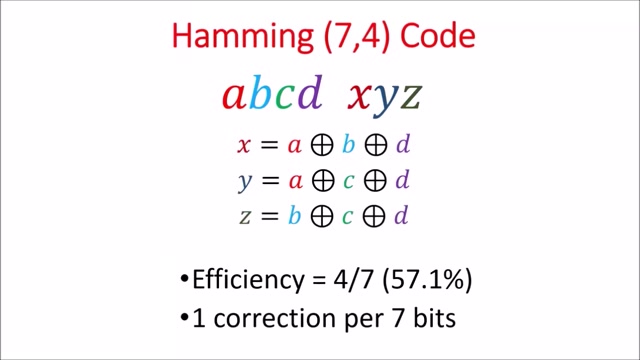
This is much more efficient than simply repeating the original message multiple times. Repeated messages have only a 4/12 (33.3%) efficiency if needing to repeat three times.
Invalid Code Words: The Key to Error Detection
Understanding the Role of Invalid Words
The concept of “invalid code words” is crucial to understanding how error correction works.
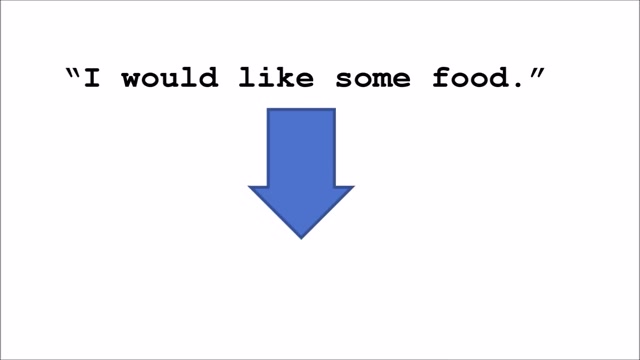
To illustrate, consider the English language. Words like 'ablaze,' 'able,' and 'abnormal' are valid words, as found in any dictionary. These form the set of valid code words for English communication. Now, consider combinations of letters like 'abmork' or 'ablu.' These letter combinations are not valid English words. They are "invalid words."
Why are Invalid Words Important?
Imagine you receive the word “wood” when you expected “food”. It is still a valid word and thus you have no idea an error occurred. However if you receive “alligabor”, you immediately recognize that as not being a real English word, which indicates that at least one of the letters is wrong. These invalid words, or 'non-code' words, become your signals to detect the error. By deliberately using only valid code words (the vocabulary in the dictionary), you can easily identify when something has been corrupted in transmission. This recognition forms the basis of error detection and correction techniques. Thus we now understand how valuable 'invalid words' can be in error correction.
Minimum Distance: Separating Valid Code Words
The effectiveness of an error-correcting code relies heavily on the minimum distance between valid code words. This distance refers to the number of bit positions that differ between any two valid code words. A larger minimum distance enables the detection and correction of more errors. The greater the minimum distance, the easier it is to distinguish a valid code word from a corrupted version. If all real words were only one letter off, and many real words exist, it would be difficult to know if you received the right word. This is why ensuring minimum distance via invalid words improves error detection.










Most people like


























Report
Please select a reason for reporting
- 13 Reasons to Switch from Snapchat to Text Messaging
- 7 Powerful Speech to Text Apps to Boost Productivity
- 10 Best Speech to Text Tools for Effortless Transcription
- 13 Free Tools to Easily Transcribe Audio to Text
- 15 Surprising Ways Google's Speech-to-Text Boosts Productivity
- 7 Best Free Online Audio to Text Transcription Tools
- 9 Tips to Transcribe Speech to Text Faster and Better
- 13 Best Speech to Text Software for Windows 10 in 2023
- 7 Tips for Choosing the Best Transcriber for Audio to Text
- 11 Reasons Why Dragon Speech-to-Text Apps are Game-Changers
- 6 Secrets to Enhance Your Speech to Text Transcription
- 6 Brilliant Ways to Boost Productivity with Talk-to-Text on Your MacBook
- 6 Ways Transcription Software Converts Audio to Text
- 8 Tips to Transcribe Speech to Text Like a Pro
- 6 Reasons IBM Watson Speech to Text is a Game-Changer
- 14 Powerful Ways Talk-to-Text Improves Your Workflow
- 12 Top Windows Speech-to-Text Software for Efficient Transcription
- 12 Game-Changing Benefits of Apple's Speech to Text Technology
- 9 Powerful Use Cases for AWS Speech to Text Technology
- 10 Easy Steps to Transcribe YouTube Videos to Text
- transcription audio en texte
- online audio transcription
- free audio file transcription
- free ai audio transcription
- audio transcription service
- audio transcription online free
- audio transcription free online
- audio to transcription software
- audio and transcript
- ai audio transcription free
- voice recording to text converter
- translate voice recording to text
- record voice to text
- audio recording to text converter
- voice recording and transcription
- chatgpt voice to text
- gmail voice to text
- speech to text reader
- speech to text ai free
- speech to talk
- Revolutionizing Storytelling: From Novels to Screenplays with AI
- Create Engaging Animated Explainer Videos with a Free AI Tool
- Stop Multi-Subscribing: Benchmark Top AI Visual Models in One Canvas
- Best Seedance 2.5 API Provider: Every Price on the Market, Checked at Source
- AI OnlyFans: How to Generate $30,000/Month (Legally)
- Transform Your Script into an Engaging Video with AI Video Maker!
- AI Marketing Automation: A Comprehensive Guide for Small Businesses
- Midjourney Alternative for Anime Art Creators: Why PixAI May Be Better for Character Workflows
- 10 Things Most People Get Wrong About AI Image Search
- AI Girlfriend Apps: Top Choices Redefining Relationships 2025
- Top 4 Face Swap Generator Tools to Transform Your Visual Content
- Master Canva's Video Background Remover with 5 Essential Tips
- Mastering Microsoft Stream: Video Management Tips & Tricks
- AI Video Generation: Extend AI Videos for Free
- Master Loom: Create and Share Professional Videos with AI
- Create Captivating AI News Videos: Step-by-Step Guide
- Create Your Own AI News Channel with AI-Powered News Video Generator and AI Lip Sync
- Unleash the Power of Heygen AI: Create Unlimited Videos for Free!
- Kapwing Smart Cut: AI Video Editing for Creators & Marketers
- Upscale Video Quality with UniFab Upscaler AI: A Complete Guide

Copyright ©2026 toolify