































Table of Contents
- Key Points
- Understanding the Importance of Resource Optimization
- OptaPlanner: A Deep Dive
- Vehicle Routing with OptaPlanner
- OptaPlanner Pricing
- The Advantages and Disadvantages of OptaPlanner
- Key Features of OptaPlanner
- Diverse Use Cases Across Industries
- Frequently Asked Questions
- Related Questions



Understanding the Importance of Resource Optimization
The High Cost of Inefficient Planning
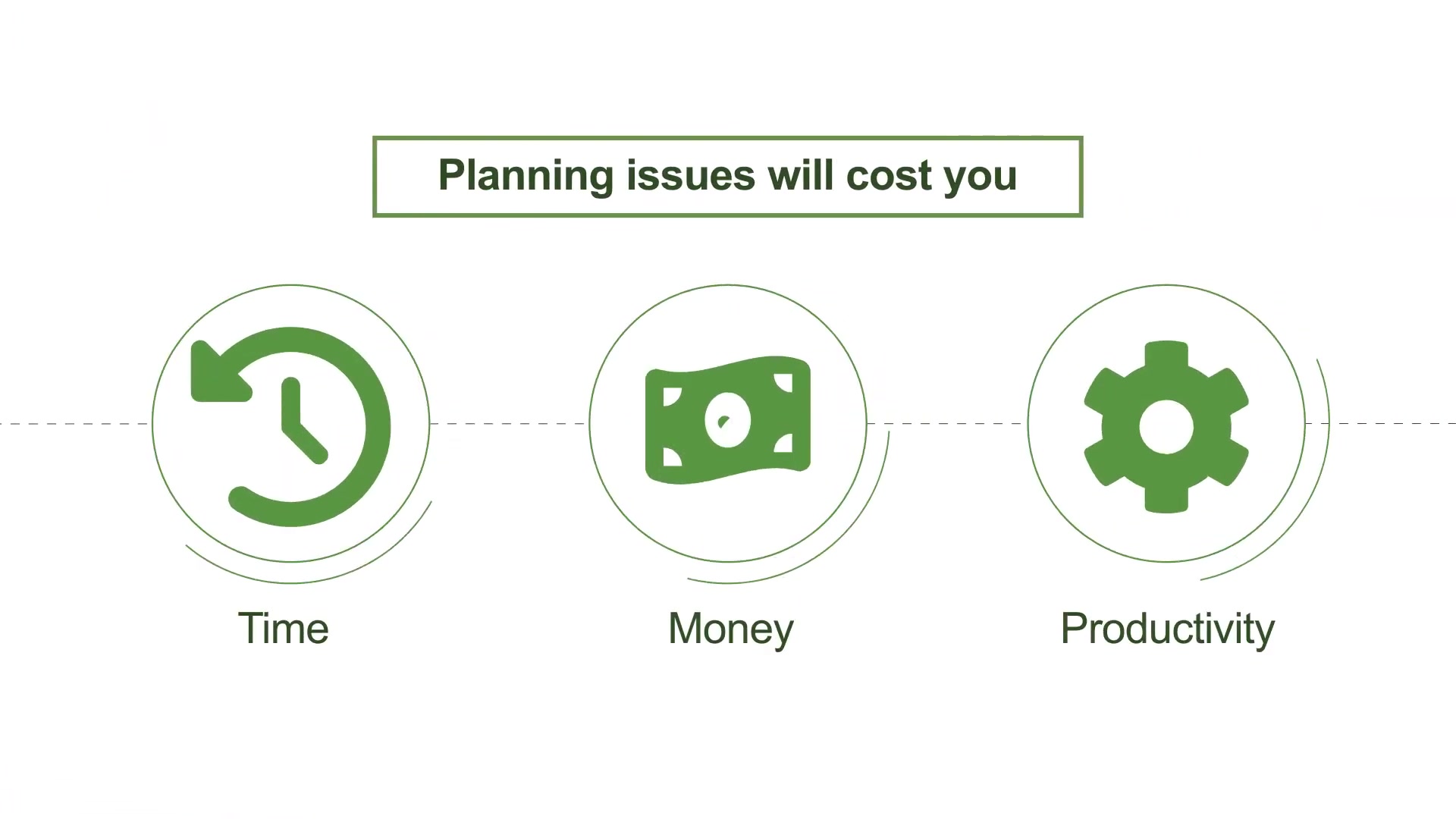
Inefficient planning and resource allocation can significantly impact your bottom line. Planning issues can cost you valuable time, leading to missed deadlines and project delays.
It also takes money in the form of wasted resources, increased operational costs, and lost revenue opportunities. Suboptimal planning can reduce productivity, affecting employee morale and overall output. Businesses need to take steps to make sure everything is scheduled in an optimal way. In order to keep all of these things from happening it takes having the right software.
Consider a scenario where a delivery company struggles with inefficient route planning. Drivers may spend excessive time on the road, consuming more fuel and increasing vehicle maintenance costs. Delivery schedules become unpredictable, leading to customer dissatisfaction. By implementing OptaPlanner, the company could automate and optimize its routes, reducing travel time, fuel consumption, and improving on-time delivery rates.
Why Traditional Methods Fall Short
Many organizations still rely on manual methods or basic spreadsheets for Scheduling and resource allocation. These approaches often struggle with the complexity of real-world scenarios.
They can't handle constantly changing constraints, are prone to errors, and can't quickly adapt to new challenges. Manual scheduling becomes a time-consuming and frustrating task, diverting resources away from core business activities.
OptaPlanner is designed to overcome these limitations. By leveraging advanced algorithms and constraint satisfaction techniques, OptaPlanner automates the planning process, considers all relevant factors, and generates optimized solutions that are impossible to achieve manually. This solution addresses planning issues with automated and fast solutions.
OptaPlanner: A Deep Dive
What Sets OptaPlanner Apart?
OptaPlanner is a lightweight planning engine that integrates directly into your Java and Kotlin applications.
It solves complex scheduling and resource optimization problems, giving you the best possible plan for your specific business needs. Unlike traditional planning systems that rely on rigid rules and manual adjustments, OptaPlanner uses constraint satisfaction to find optimal or near-optimal solutions. OptaPlanner takes into account goals, resources, and constraints. OptaPlanner's key strength lies in its adaptability. It can be tailored to model a wide range of planning scenarios, from simple scheduling tasks to highly complex logistical operations. This is a flexible and powerful product that can be used in any kind of business.
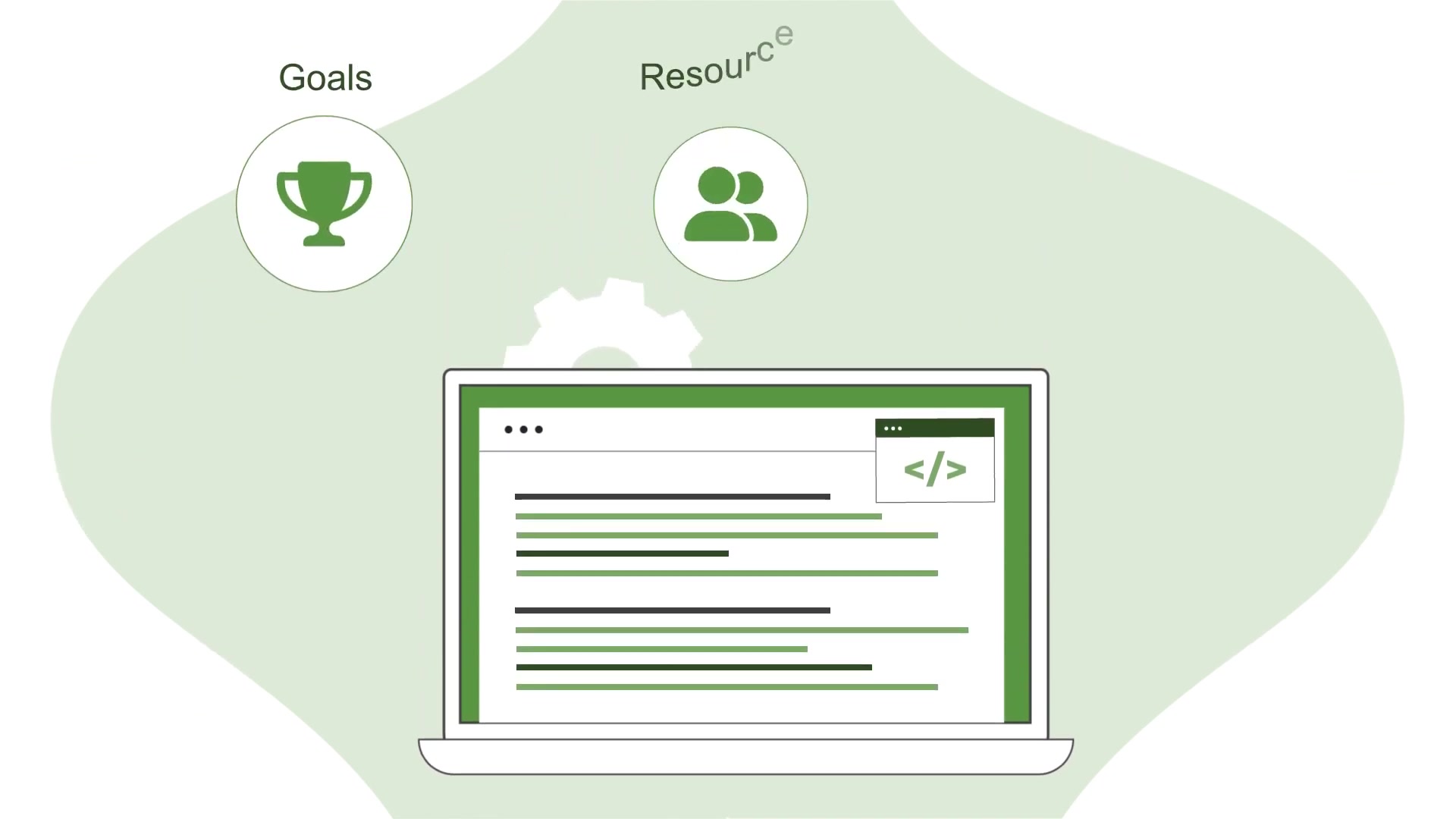
Goals include items like profit, cost savings, and efficiency. Resources consist of available personnel, equipment, materials, and time. Constraints can be hard, indicating restrictions that cannot be broken (e.g. an employee must be qualified for a particular task), or soft, signifying preferences that should be maximized or minimized (e.g. minimizing overtime). OptaPlanner can be used to find an equilibrium that satisfies all of these things.
OptaPlanner offers features like:
- Vehicle Routing: Optimize delivery routes, minimize travel times, and reduce fuel consumption by efficiently managing vehicle fleets. This module focuses on optimizing routes for any vehicle type.
- Employee Rostering:

Automate staff scheduling, balance workload distribution, and ensure compliance with labor regulations, which is important for hospitals, retail businesses, and many other industries.
- Maintenance Scheduling: Optimize maintenance schedules, minimize downtime, and maximize equipment lifespan by strategically allocating resources for repairs and inspections.
- School Timetabling: Create efficient class schedules, optimize resource allocation, and accommodate student and teacher preferences to improve educational outcomes.
- Call Center Optimization: Improve Customer Service, minimize waiting times, and balance agent workload by intelligently routing calls based on skills and availability. This is a big industry that needs constant, real-time updates.
Vehicle Routing with OptaPlanner
Optimizing Delivery Routes
Vehicle routing is a classic optimization problem with numerous real-world applications. OptaPlanner can be used to find the most efficient routes for delivery trucks, service vehicles, or even public transportation systems. Let’s examine the practical steps you can take to implement vehicle routing with OptaPlanner:
-
Inputting Locations: To start, input all the locations that you will need for routing. You can enter specific addresses, or latitude and longitude coordinates.
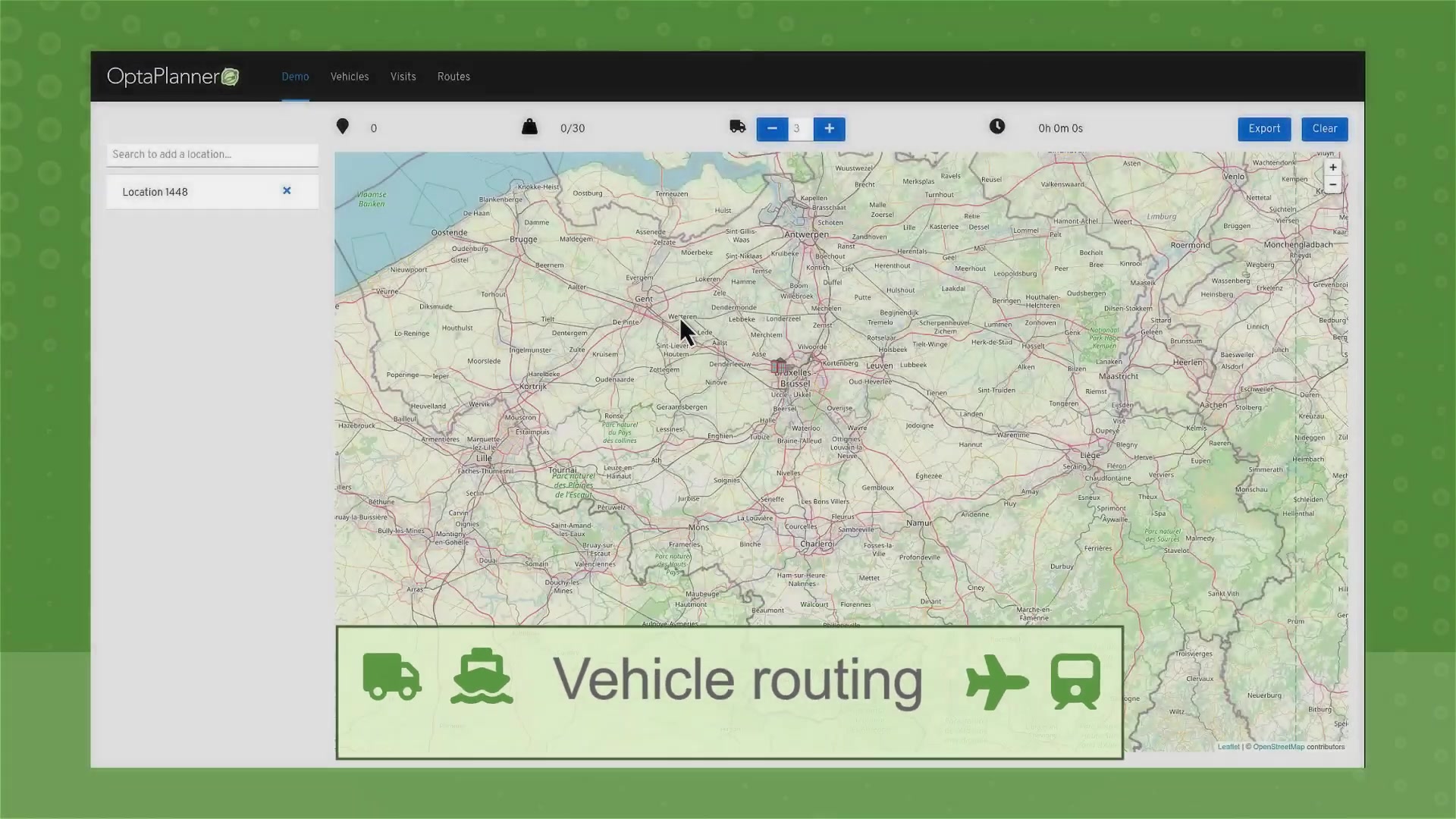
Inputting this correctly is crucial. Make sure that all the data is right and all the places are identified so that the routing can be optimal.
-
Adjusting Vehicle Count: Set the number of vehicles that you will need. A fleet of vehicles will need the right planning and adjustment to make sure that there are no delays in logistics. The software can be configured so that the appropriate amount of vehicles are used, and that all the routes are optimized based on the amount of vehicles that there are. If you add another vehicle, it will automatically optimize the schedule to adapt to having more vehicles on the route.
-
Generate Routes: You need to add locations to the software to generate the optimal route. Generate the best vehicle routes that fit the delivery locations based on your needs. The software is dynamic and can be configured in many ways.
-
Reduce Routes and Travel Times: The software will help you reduce routes and travel times, resulting in more efficiency and fewer hours worked. OptaPlanner employs different solving techniques to find the best outcome.
By incorporating OptaPlanner into your vehicle routing system, you can significantly reduce travel times, fuel costs, and vehicle wear-and-tear. It gives you the ability to route any vehicle type to different locations. It helps you stay on schedule and keep your deliveries happening consistently.
Employee Rostering with OptaPlanner
Employee rostering is the process of creating schedules for employees, assigning them to specific shifts or tasks. OptaPlanner can help businesses optimize employee schedules, ensuring adequate staffing levels, balancing workload distribution, and complying with labor regulations. The steps to implement employee rostering with OptaPlanner are:
-
Add Employees: Compile your employees so that the software can assign shifts effectively. Enter each employees name, contract information, skill proficiencies, and short ID.
-
Schedule: Create a schedule so that employees can be assigned certain slots. Click the scheduling button to assign your employees.
-
Optimize Shifts: Optimize shifts to fulfill all of your business needs. OptaPlanner will help you find a way to schedule that is suitable for your business.
With OptaPlanner, you can efficiently manage your workforce, reduce labor costs, and improve employee satisfaction.
Maintenance Scheduling with OptaPlanner
Maintenance scheduling involves planning and coordinating maintenance activities to ensure equipment reliability and minimize downtime. OptaPlanner can optimize maintenance schedules by considering factors such as equipment age, usage patterns, and maintenance resource availability. The steps to perform maintenance scheduling with OptaPlanner are:
-
Rental Car Maintenance Schedule Solver: Ensure that you are using the correct software. The rental car maintenance schedule solver is essential for optimizing maintenance times.
-
Solve: Solve the maintenance times to find the best outcome. The software does all the calculations for you.
-
Manager View: Take a look at the manager view to see how your maintenance schedule is laid out. You can drag and drop to change maintenance scheduling.
By implementing OptaPlanner for maintenance scheduling, you can reduce downtime, extend equipment lifespan, and minimize maintenance costs.
School Timetable Scheduling
School timetabling involves creating schedules for teachers and students that fit the school's needs. OptaPlanner can help the software run and optimize the school timetable. The software is helpful for running a school in a cost efficient manner. The steps to use this scheduling tool are as follows:
- Generate Timetable: OptaPlanner can generate a timetable for school teachers and students. It can be configured to run by teacher, by room, or by student group.

By implementing OptaPlanner for school timetable scheduling, you can reduce downtime, extend equipment lifespan, and minimize maintenance costs.
Call Center Optimization
Call center optimization can help the call center assign incoming calls to agents effectively. The steps to using OptaPlanner in the call center are as follows:
-
Call Center Realtime Scheduling: The software is programmed to help you assign incoming calls to the right agents. Optimize to reduce customer waiting time.
-
Solve: Click the solve button to make sure that incoming calls are optimally assigned. The software is dynamic and fast.
By implementing OptaPlanner for call center optimization, you can reduce downtime, extend equipment lifespan, and minimize maintenance costs.



Most people like



































Report
Please select a reason for reporting
- 13 Reasons to Switch from Snapchat to Text Messaging
- 7 Powerful Speech to Text Apps to Boost Productivity
- 10 Best Speech to Text Tools for Effortless Transcription
- 13 Free Tools to Easily Transcribe Audio to Text
- 15 Surprising Ways Google's Speech-to-Text Boosts Productivity
- 7 Best Free Online Audio to Text Transcription Tools
- 9 Tips to Transcribe Speech to Text Faster and Better
- 13 Best Speech to Text Software for Windows 10 in 2023
- 7 Tips for Choosing the Best Transcriber for Audio to Text
- 11 Reasons Why Dragon Speech-to-Text Apps are Game-Changers
- 6 Secrets to Enhance Your Speech to Text Transcription
- 6 Brilliant Ways to Boost Productivity with Talk-to-Text on Your MacBook
- 6 Ways Transcription Software Converts Audio to Text
- 8 Tips to Transcribe Speech to Text Like a Pro
- 6 Reasons IBM Watson Speech to Text is a Game-Changer
- 14 Powerful Ways Talk-to-Text Improves Your Workflow
- 12 Top Windows Speech-to-Text Software for Efficient Transcription
- 12 Game-Changing Benefits of Apple's Speech to Text Technology
- 9 Powerful Use Cases for AWS Speech to Text Technology
- 10 Easy Steps to Transcribe YouTube Videos to Text
- transcription audio en texte
- online audio transcription
- free audio file transcription
- free ai audio transcription
- audio transcription service
- audio transcription online free
- audio transcription free online
- audio to transcription software
- audio and transcript
- ai audio transcription free
- voice recording to text converter
- translate voice recording to text
- record voice to text
- audio recording to text converter
- voice recording and transcription
- chatgpt voice to text
- gmail voice to text
- speech to text reader
- speech to text ai free
- speech to talk
- Meshy AI: How to Create 3D Models from Text and Images
- How SEO and Marketing Dashboards Empower Agencies to Drive Results
- How to Use AI Tools to Find Internal Linking Opportunities Across a Business Website
- Discover Your Perfect Haircut with AI Hairstyle Apps
- Free Reputation Calculator Tools: How They're Adapting to Score AI Visibility, Not Just Rankings
- Design Professional Flyers for Free on Your Phone
- Best Free Flyer Maker Apps for Android: Design Like a Pro
- How to Know If Your Business Is Ready for an AI Customer Service Agent
- Revolutionizing Storytelling: From Novels to Screenplays with AI
- Create Engaging Animated Explainer Videos with a Free AI Tool
- Meshy AI: How to Create 3D Models from Text and Images
- ASOMobile Helps Teams Benchmark App Store Screenshots Against Competitors
- How to Match LMS Software With Your Organization's Training Plan
- Revolutionizing Email Marketing Agency with AI
- How to Convert BTC to HNT
- Unleashing the Power of AI: Cognizant's Roadmap for Transformation
- Frame to Video Review: A Practical Look at Turning Two Still Frames Into Motion
- NVIDIA NIM: Revolutionizing Supply Chain Data Analysis with AI
- Top AI Tools That Help Brands Stand Out Offline (Not Just Online)
- Top 5 Cold Email Software: Maximize Your Outreach in 2025

Copyright ©2026 toolify